In this article06 +
Creating an online marketplace gives you the chance to connect buyers and sellers in a structured, scalable way. But success doesn’t come from code alone, it starts with a strong marketplace idea and a clear plan for how to serve your target audience.
Each step matters: from shaping your concept and conducting market research, to selecting a marketplace business model that fits your goals.
Design, functionality, and the user journey all contribute to how your platform performs and grows.
This guide will walk you through how to build a marketplace from the ground up, with practical insights to help you simplify development, define clear features, and build something users actually want.
What is a Marketplace?
A marketplace is an online platform where buyers and sellers exchange goods or services. Unlike a traditional online store managed by one seller, a marketplace website hosts multiple vendors, each offering their products or services under the same digital roof.
This setup makes it easier to facilitate transactions between businesses or individuals, helping them reach new markets and operate more efficiently.
Platforms like Airbnb, Etsy, or Amazon are common examples, each providing structure, visibility, and systems that support thousands of sellers.
Before you build an online marketplace, it’s important to understand the marketplace business model you’ll adopt. Different platforms require different architectures, so some teams compare custom software vs. off-the-shelf options early to avoid being boxed in later on.
You might lean toward horizontal marketplaces that span several categories or vertical platforms focused on a specific niche. Both models aim to connect users in a way that builds trust and generates long-term value.
Every step in creating an online marketplace matters.
That includes the technology stack, pricing structure, and even how you collect user feedback. Strong marketplace software supports secure payment processing, listing tools, and vendor dashboards, so the experience works for everyone involved.
What’s the Difference Between a Marketplace and an eCommerce Website?
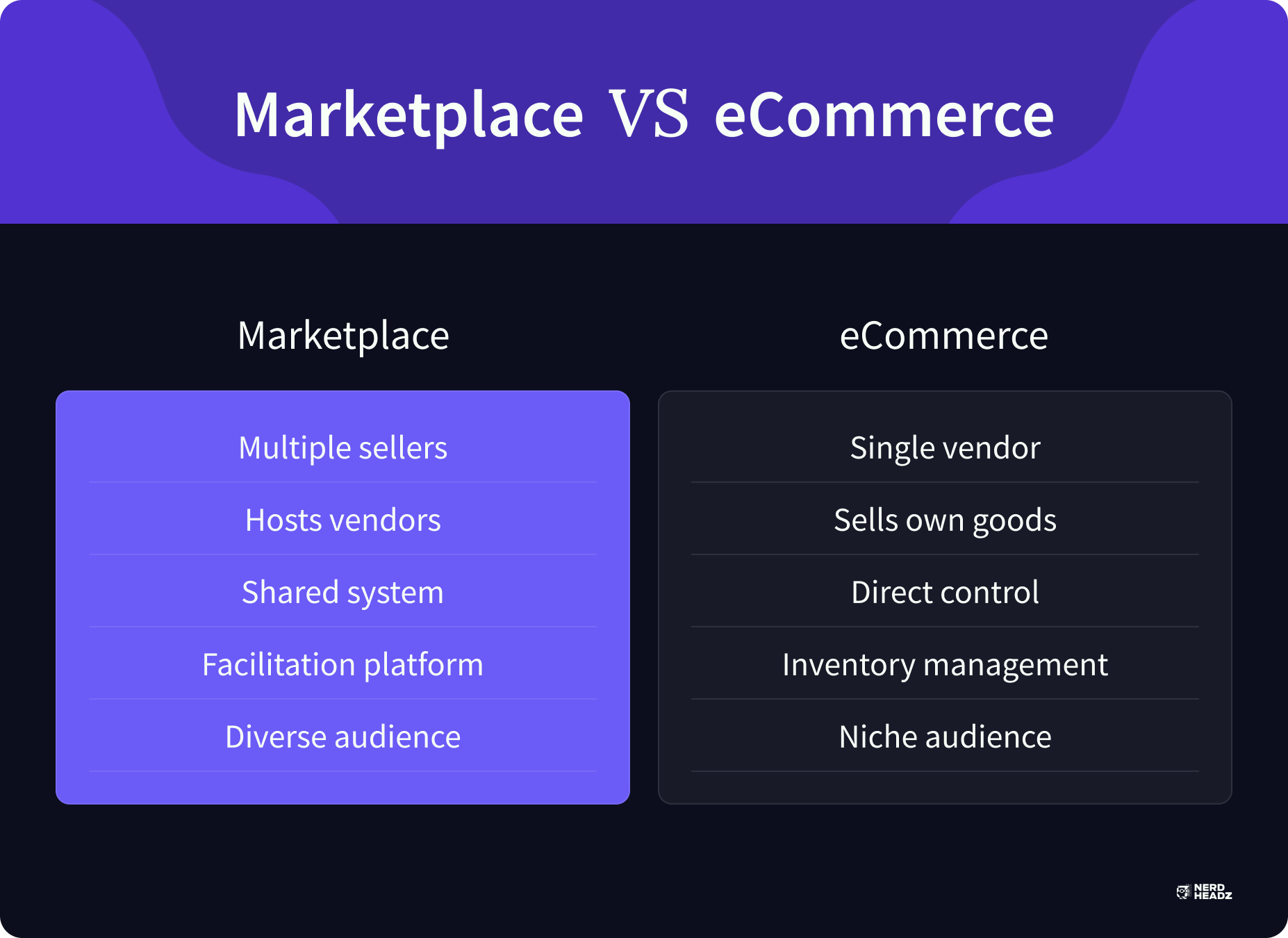
At first glance, marketplaces and eCommerce websites may look similar, but their structure and purpose are quite different.
An eCommerce website typically supports a single vendor selling directly to customers. The business handles everything: product listings, payment processing, shipping, and customer service. It’s a direct, one-to-one setup.
A marketplace website, by contrast, is designed to facilitate transactions between multiple sellers and buyers. The platform itself doesn’t sell anything, it simply provides the tools for vendors to list their items and reach a wider target audience.
Examples like Etsy, eBay, and Amazon make this model familiar.
When comparing the two, the business model is key. An eCommerce store gives you full control over inventory and branding but limits variety. A marketplace platform brings more complexity but also scale, thanks to its multi-vendor setup and ability to attract new markets.
If you're trying to build a marketplace, consider how the underlying marketplace software handles seller onboarding, transaction management, and platform policies. You’ll also need a robust payment system that works across use cases and seller types.
Your choice depends on your business idea, the audience you're serving, and your long-term goals for growth and flexibility.
Types of Marketplaces
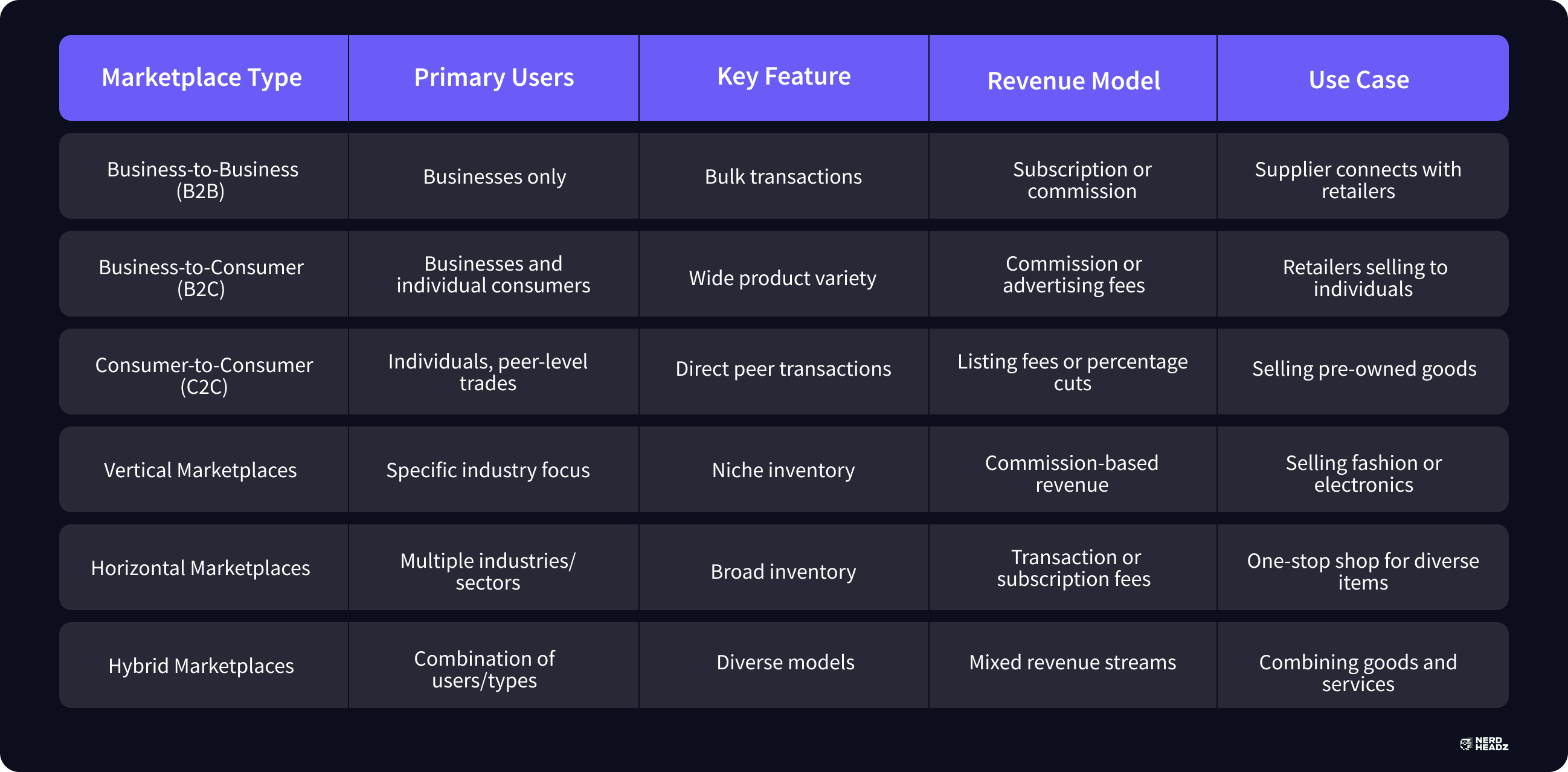
Business-to-Business (B2B) Marketplaces
Business-to-business marketplaces are designed for companies to buy and sell products or services directly with other companies.
These online marketplace platforms serve as centralized hubs for bulk orders, specialized goods, or recurring services, offering buyers a streamlined way to find vendors that fit their criteria.
Unlike consumer-focused platforms, B2B models require features that handle complex pricing structures and invoicing. Built-in tools for payment processing, pricing strategy adjustments, and marketplace software integrations help manage the detailed needs of each transaction.
To build a marketplace in the B2B space, you’ll need to tailor your features to industry expectations.
For example, marketplace website development might include dashboards for quote tracking, support for ERP integrations, or customized seller analytics.
The marketplace business model in this space often revolves around listing fees, subscription tiers, or transaction fees, depending on how vendors prefer to operate.
Working with a skilled development team helps uncover the needs of your target market and plan accordingly. This step ensures the platform’s structure can support large-scale transactions while addressing industry-specific challenges.
Business-to-Consumer (B2C) Marketplaces
Business-to-consumer marketplaces connect businesses with individual shoppers. These platforms simplify purchasing by offering a range of products or services in one place, making it easier for consumers to compare, choose, and buy.
When you build a marketplace for B2C users, focus on creating a smooth buyer journey.
A clean layout, responsive design, and reliable payment system are essential. The platform must also support multiple currencies and offer personalized features that guide the user from discovery to checkout.
Popular marketplace websites like Amazon or Etsy succeed because of how well they match buyers with relevant listings. A strong marketplace business model here often includes transaction fees, seller subscriptions, or upsells like promoted listings.
Scalable marketplace software supports vendors with tools to track performance, manage inventory, and improve customer engagement. Partnering with a development team that understands both mobile and desktop design helps ensure the final platform adapts as traffic grows.
To attract sellers, invest in marketing strategies that highlight platform value.
Research-backed UX decisions, reliable support, and secure infrastructure are key to building a successful marketplace that retains users long-term.
Consumer-to-Consumer (C2C) or Peer-to-Peer (P2P) Marketplaces
C2C or peer-to-peer marketplaces connect individuals who want to buy, sell, or exchange goods and services directly with one another. These platforms support personal transactions without a centralized seller, making them ideal for users looking for more flexible, casual interactions.
A successful online marketplace in this space must prioritize trust.
Features like ratings, reviews, and identity verification help people feel secure during exchanges. Platforms like Airbnb and eBay are classic examples, they show how user feedback systems and built-in protections can encourage continued engagement.
If you plan to build a marketplace using this model, focus on simplicity.
Mobile responsiveness, fast payment processing, and clear item listings matter. You’ll also want features like dispute resolution tools and messaging between users to improve the experience.
From a revenue standpoint, common options include listing fees, flat-rate charges, or monthly or yearly fees for featured placement. These revenue streams give the marketplace owner room to experiment with what works best for their target market.
A strong foundation in marketplace app development helps ensure mobile users can list, search, and transact easily, which is key to driving retention in service marketplaces or resale-focused platforms. Check out our list of the best online marketplace examples.
Vertical Marketplaces
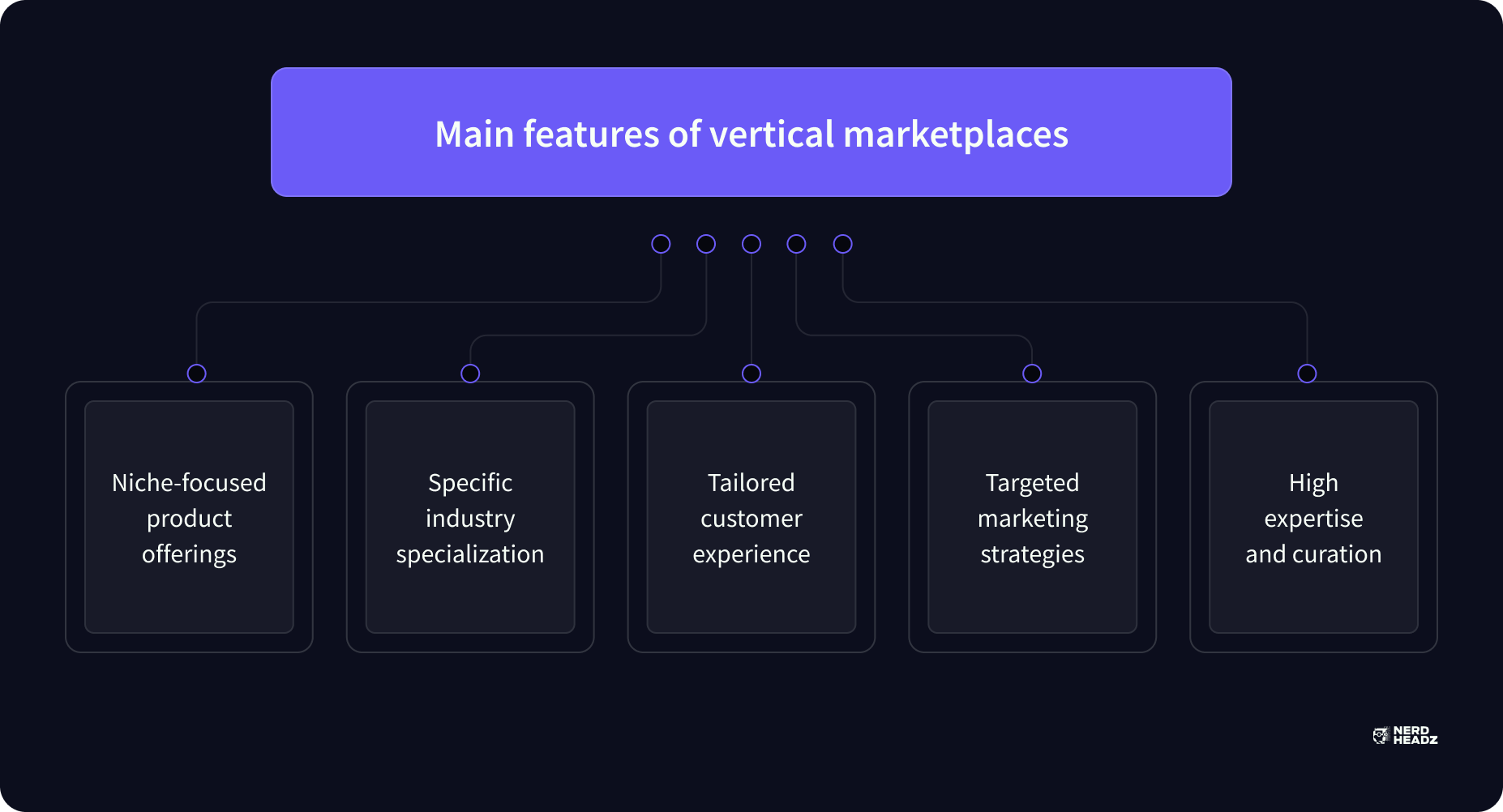
Vertical marketplaces serve a clearly defined target audience by focusing on one industry, category, or user need. Instead of spreading wide like horizontal marketplaces, these platforms specialize in offering curated listings, tailored experiences, and highly relevant features.
Think of custom marketplace sites built just for healthcare tools, handmade items, or photography gear. This focus helps users avoid clutter and connect with sellers offering exactly what they need.
That clarity is a major draw for both buyers and sellers.
When you build a marketplace in a vertical niche, success depends on market research and feature alignment. What’s considered essential in real estate, for example, will differ from what users expect in a platform for local artisans.
To create a successful marketplace, prioritize elements like seller vetting, niche-specific search filters, and targeted content that builds trust within your niche.
The business model here often includes listing fees, subscriptions, or tiered payment processing. Aligning monetization with seller expectations is critical. Investing in specialized marketplace software allows for tailored experiences while keeping your platform scalable.
This focused format supports strong communities and long-term loyalty, especially when backed by a capable development team.
Horizontal Marketplaces
Horizontal marketplaces span multiple vendors and industries, offering broad product or service categories under one platform. These platforms attract a wide target audience by solving a universal problem: convenience.
Users come to horizontal platforms expecting variety.
To avoid clutter at scale, many startups reference how to choose the right software development agency to get guidance on architecture and scalability.
From electronics and clothing to freelance services or cleaning supplies, everything lives in one interface. Think of online marketplace websites like Amazon or Craigslist, they offer scale and choice without locking users into a single niche.
This wide reach supports multiple revenue streams, including transaction fees, featured listings, or seller subscriptions. The challenge is maintaining organization and usability as the catalog grows.
Building a successful marketplace in this model requires an excellent marketplace website structure. You’ll need:
- Intuitive search and filtering
- Easy-to-use seller dashboards
- Scalable systems that handle thousands of listings
Your development team should focus on creating efficient infrastructure and flexible admin controls to keep everything running smoothly. As with any marketplace project, clear value for both buyers and sellers must stay central to every decision.
Hybrid Marketplaces
Hybrid marketplaces combine traits from business-to-consumer and peer-to-peer models. They allow individuals and companies to operate side-by-side, offering products, services, or rentals on the same marketplace platform.
What makes this format effective is its flexibility.
These hybrid builds often start from structured visual tools. If that’s your case, explore AI visual development and how it supports diverse user needs.
A freelancer can list their services next to a retailer offering physical goods. This mixed format attracts a broad target audience while giving sellers the structure they need. Amazon and Facebook Marketplace are two high-visibility examples of this model in action.
Because these platforms support multi vendor marketplaces, it’s essential to build infrastructure that can manage a wide range of use cases. Think: user dashboards, tiered payment processing, dynamic inventory tools, and scalable messaging systems.
The best hybrid platforms balance convenience with control.
A great marketplace app gives users the power to manage listings on the go, while the backend handles everything from analytics to dispute resolution.
Listing fees, transaction fees, and subscription tiers work well for monetization, particularly when based on seller goals and audience size. A smart business model supports growth without overwhelming users.
Success depends on marketplace website development that can adapt to different seller types and audience expectations.
That’s why working with a knowledgeable development team is critical when you create a custom marketplace website that serves both sides effectively.
How to Create a Marketplace
Define Your Idea
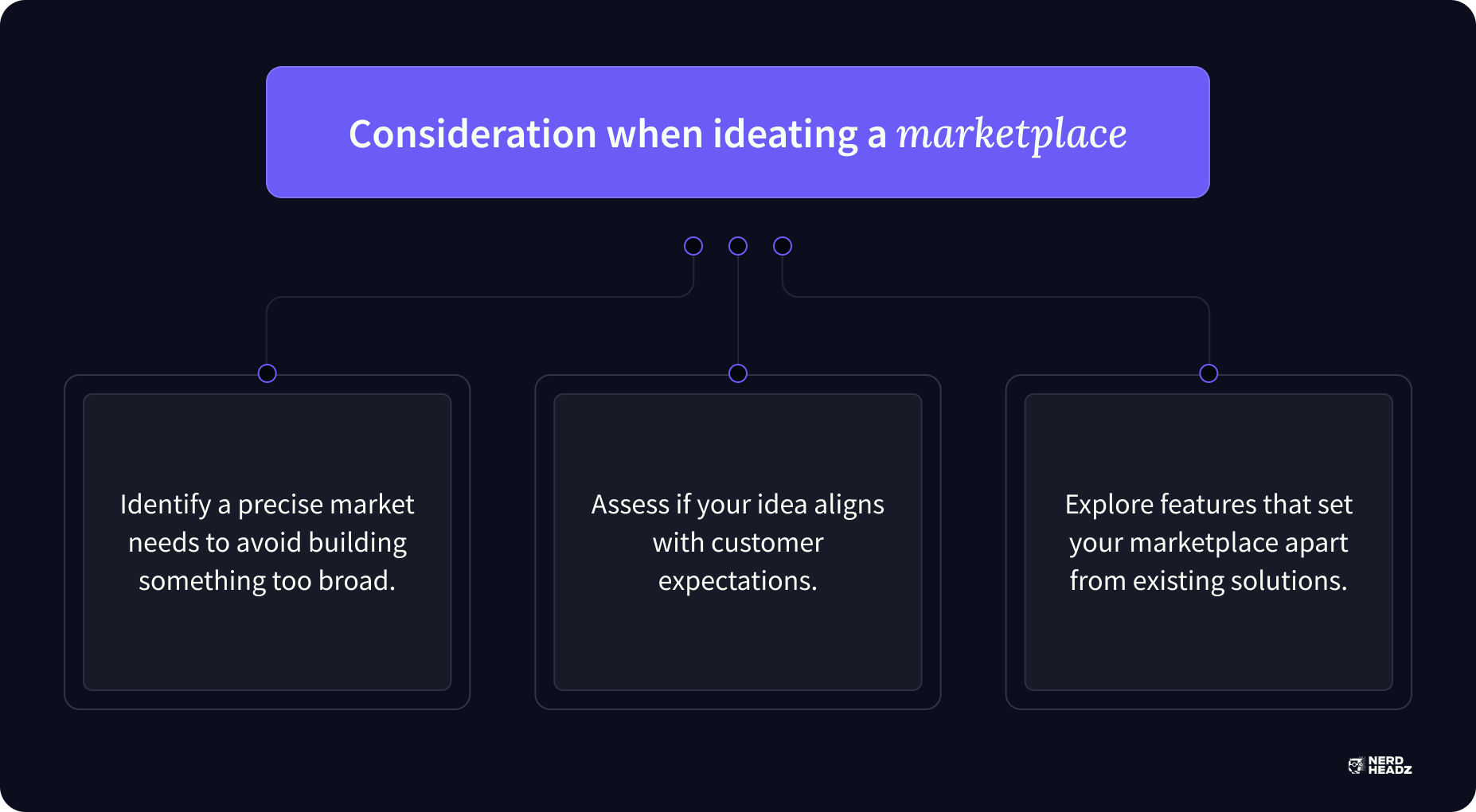
Every successful online marketplace starts with a clear concept. Before you dive into features or design, take time to shape a strong marketplace idea, similar to building a Minimum Viable Product (MVP) that addresses a real problem for a specific target audience.
Look for inefficiencies, underserved communities, or fragmented solutions.
What’s missing in existing platforms? Could your idea facilitate transactions in a faster, safer, or more personalized way?
Clarity now saves headaches later. Define:
- The specific need your platform will address
- How your idea differs from other online marketplace models
- Why your solution matters to the people using it
Whether you plan to create a rental marketplace, a service platform, or something entirely new, your business model and long-term goals should be anchored in solving a meaningful problem.
This step helps you stay focused during development and sets the tone for your messaging, features, and growth strategies.
Conduct Market Research
Validating your marketplace idea starts with research.
Great concepts fall flat without user interest or demand, so don’t skip this step. Thorough market research helps uncover what your target market needs and where existing solutions fall short. Founders who follow the path outlined in how startups can attract early adopters often see better engagement during launch.
Look at current online marketplace trends in your niche. Study platforms with similar audiences. What features do users praise or criticize? Are there common complaints you could solve better?
Strong research tactics include:
- Reviewing competitor reviews and usage patterns
- Hosting feedback sessions with potential users
- Testing demand with landing pages or pre-launch surveys
You’re not just collecting data, you’re building the foundation for a successful marketplace. Research insights will guide decisions on your business model, feature set, and marketing strategies later.
Teams that invest in this step gain a clearer path to building something people actually want, and are more likely to pay for.
Choose Business Model
Your business model defines how the platform works and how you’ll generate revenue. A clear structure also shapes the experience for users and sellers, so this decision impacts everything from pricing to trust.
In most cases, the right model depends on factors like transaction type, product complexity, and long-term control, which are all important factors to weigh when choosing a custom software development.
There’s no one-size-fits-all answer.
Some marketplace businesses charge transaction fees on each sale. Others rely on listing fees, subscriptions, or freemium tiers that unlock premium visibility.
As you evaluate options, ask:
- Will you charge buyers, sellers, or both?
- What pricing model makes sense for your category, rental marketplaces, services, or products?
- Can you experiment with multiple revenue streams as the platform grows?
Early testing is helpful. Launch a limited version, measure seller adoption, and adjust your pricing strategy accordingly.
Your marketplace concept should guide how value flows, without driving users away. The best models balance growth potential with fairness, giving sellers reason to stay while supporting platform sustainability.
Define Platform’s Functionality
The right features turn your marketplace idea into something people rely on. Start by identifying what your users need to complete transactions quickly and confidently.
At a minimum, your online marketplace should offer:
- Seller onboarding that’s fast and intuitive
- A secure, flexible payment system
- Search and filtering that match how users actually shop
For comparison, we’ve seen similar features prioritized in how to build a no-code SaaS, where user flow and payment logic drive retention.
For multi vendor marketplaces, consider how sellers will manage inventory, track performance, and respond to buyers. Building personalized dashboards and messaging tools makes the experience more usable, and more likely to retain sellers.
To improve trust, include reviews that appear throughout the buyer journey, not just after checkout.
If you’re working in rental marketplaces or services, additional scheduling or verification tools may also be necessary.
Defining these requirements early, before writing code, is a key part of the software development lifecycle (SDLC), especially if you want to avoid rework or delays during development.
Your development team should prioritize responsive design so the platform works well across devices. Whether on desktop or mobile, users should be able to navigate listings, pay, and communicate without friction.
Well-defined functionality bridges the gap between concept and value, and sets the tone for long-term success.
Develop the Platform
Once functionality is defined, it’s time to build. Development isn’t just about writing code, it’s about creating a stable, intuitive, and scalable marketplace website that serves both sellers and buyers.
Decide early whether you're using marketplace builders, customizing off-the-shelf tools, or going fully bespoke. Each option has tradeoffs in speed, cost, and flexibility.
You can also explore AI website builders for generating early UI ideas before jumping into full development.
To create a marketplace that’s built to last, prioritize:
- High-quality UI/UX for easy navigation
- Early integration of robust security measures
- Scalable infrastructure that grows with your marketplace business
The tools you choose, Bubble, FlutterFlow, or custom stacks, should support future updates without requiring a full rebuild. For no-code teams, these decisions often start by comparing no-code vs full-code software development to weigh long-term tradeoffs.
Teams using visual platforms often start by learning how to build an app without coding, then gradually customize features that need more flexibility.
Work closely with engineers and quality assurance engineers during this stage. Catching bugs early reduces post-launch headaches. And because online marketplace systems often involve third-party APIs (like payment processing), thorough technical testing matters.
If you’re building a marketplace app, the mobile experience must be just as strong. Mobile responsiveness isn’t optional, it’s expected.
Test Marketplace
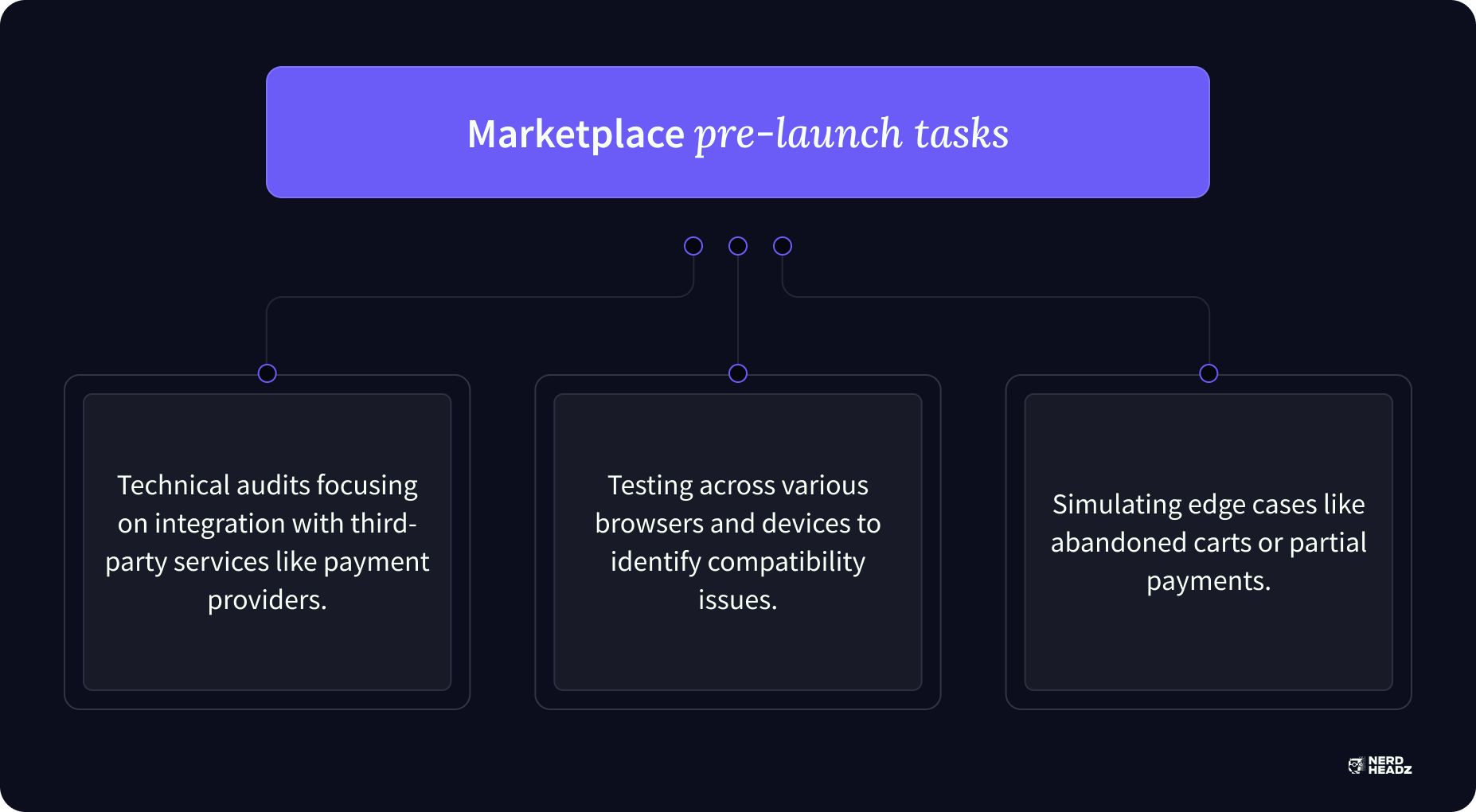
Before launch, thorough testing protects your marketplace website from surprise issues that could frustrate users or stall growth. This stage simulates real-world interactions, from product listings and payment processing to account creation and refunds.
The goal is to make sure your online marketplace behaves reliably under pressure. Page speed, browser compatibility, mobile responsiveness, and error handling all matter.
Include these tasks in your QA plan:
- Simulate buyer journeys, including edge cases like abandoned carts
- Test API integrations (especially third-party services)
- Verify workflows for multiple vendors, like shipping preferences or profile updates
If you’re launching a marketplace app, test across devices and operating systems. Small bugs can have a big impact if they block sellers or confuse buyers.
Working with experienced quality assurance engineers helps uncover problems early. A strong testing phase leads to fewer complaints post-launch, and keeps your platform’s reputation intact as you grow.
Before shipping, review best practices for QA testing to improve quality and minimize bugs at launch.
Launch Marketplace
The launch phase sets the tone for your entire marketplace business. A smooth debut builds momentum and helps early users form positive habits, while glitches or confusion can lead to drop-off.
Start by onboarding a small, curated group of vendors and buyers. This gives you time to refine workflows, fix overlooked bugs, and collect early user feedback. Then gradually expand as confidence grows.
To drive attention during launch:
- Offer incentives that attract sellers, such as reduced listing fees or early visibility
- Use targeted campaigns to activate your target market
- Share platform updates or testimonials on your brand’s channels
If you’re launching a marketplace website, test your onboarding, support system, and mobile experience in parallel. Each interaction shapes your platform’s reputation from day one.
Don’t treat launch as the end of the marketplace project, it’s the beginning of real learning. The timeline for updates depends on what you’re shipping, but this is where knowing how long it takes to build an app can guide how often to release improvements without overwhelming users.
Collect Feedback
After launch, your online marketplace needs constant input from users to improve.
Honest user feedback is one of the most valuable resources for identifying pain points, testing new ideas, and increasing retention.
As your product matures, read why SaaS startups work with software development agencies to scale to see how outside teams support iteration.
Set up structured ways to listen:
- Run surveys focused on specific features or workflows
- Monitor support tickets for recurring friction
- Track user behavior to spot where people drop off or hesitate
If your marketplace platform serves multiple vendors, talk to them directly. Their insights will help fine-tune seller tools, payout processes, or even your payment system. The goal is to make participation feel easy and rewarding.
Strong feedback loops protect you from wasting resources on features nobody uses. They also help you pivot faster when the target market changes or expectations shift.
Ongoing iteration is what separates a one-off launch from a successful marketplace that stays relevant.
Grow and Scale
Once your platform is live and stable, the next phase is expanding your marketplace business, both in reach and value. Growth comes from serving new audiences while improving the experience for existing users.
To explore cost structure and sustainability at this stage, see how to make a budget for software development.
Key strategies include:
- Localizing your online marketplace for new regions, languages, and currencies
- Partnering with influencers or niche brands to attract more users
- Adding features like AI recommendations or seller performance analytics
If you built a marketplace app, make sure it evolves alongside user behavior. Mobile-first users expect updates, smoother flows, and real-time communication with vendors.
In multi vendor marketplaces, scaling means giving sellers better tools. This could include advanced dashboards, easier inventory syncing, or new ways to manage listings.
The right infrastructure makes growth sustainable, just like in enterprise app development, where scaling securely and reliably is critical.. That means optimizing your payment processing, tightening security, and improving support systems as your platform gets busier.
Above all, stay flexible. Even the most well-planned marketplace website needs adjustments as user expectations change.
Growth isn’t just more users; smarter systems adapt without breaking. As your audience grows, revisit your priorities using benchmarks like those shared in questions every business should ask software development agencies.
Develop your Marketplace with NerdHeadz
At NerdHeadz, we build custom marketplaces that match your goals, audience, and monetization plans. Our team doesn’t just write code, we partner with you to create a scalable, high-performing marketplace website that grows with your business.
Here’s how we approach it:
- Discovery phase: We align your marketplace idea with real market needs, defining what success looks like from day one.
- Custom architecture and design: No templates. We design everything from scratch, optimized for traffic, payment processing, and mobile use.
- Iterative testing and deployment: We run performance checks at every stage and provide ongoing improvements based on real usage and user feedback.
Need a marketplace mobile app? Our developers can launch mobile-friendly platforms that handle complex workflows and seller needs.
Whether you’re starting from scratch or rebuilding an existing online marketplace, we deliver modern solutions backed by proven tools, top engineering talent, and full post-launch support.
We’ve also been recognized in multiple rankings, including NerdHeadz among the top 3 Bubble no-code agencies worldwide, which reflects our focus on custom marketplaces and performance.
If your marketplace project needs a fast, capable team that understands both product and tech, reach out. We’re ready to help you build a marketplace that stands out.
Conclusion
Building a successful marketplace takes more than just launching a site, it’s a structured process that starts with a solid marketplace idea and evolves through research, planning, development, and iteration.
Each step plays a role: validating your concept with market research, choosing the right business model, mapping out features, and selecting tools that support both buyers and multiple vendors. From selecting a payment flow to refining the mobile experience, details matter.
Whether you're designing a marketplace website for services, products, or rentals, the fundamentals remain the same. The goal is always to facilitate transactions, build trust, and serve your target audience well.
If you're ready to create a marketplace that scales, adapts, and performs, NerdHeadz is here to help. Reach out to NerdHeadz for tailored solutions that scale with your ambitions.
FAQ
Frequently asked questions
Is it hard to build a marketplace?
Building a marketplace can be challenging because it requires careful planning, user-friendly design, and scalable technology. However, with the right strategy and development team, you can simplify the process and create a platform that meets your business goals.
How much does it cost to build a marketplace website?
The cost of building a marketplace website varies depending on its complexity, features, and level of customization. On average, it ranges from $20,000 to $150,000 or more for professional, scalable development.
How long does it take to build a marketplace?
The time required to build a marketplace depends on its scope and features. A fully functional, custom-built platform can typically take 3 to 9 months.
Do marketplaces make money?
Yes, marketplaces generate revenue through transaction fees, listing charges, subscriptions, or advertising. An well-built market with a strong user base can be a highly profitable business model.