Skip to content
RAG Development Services

RAG systems that reduce AI hallucinations by 70–90%

Production-grade Retrieval-Augmented Generation — grounded answers, cited sources, your data, your infrastructure. We've shipped RAG into Next.js, Bubble, and custom stacks across legal, healthtech, and B2B knowledge workflows. 35+ AI projects shipped. Claude Code in the loop.

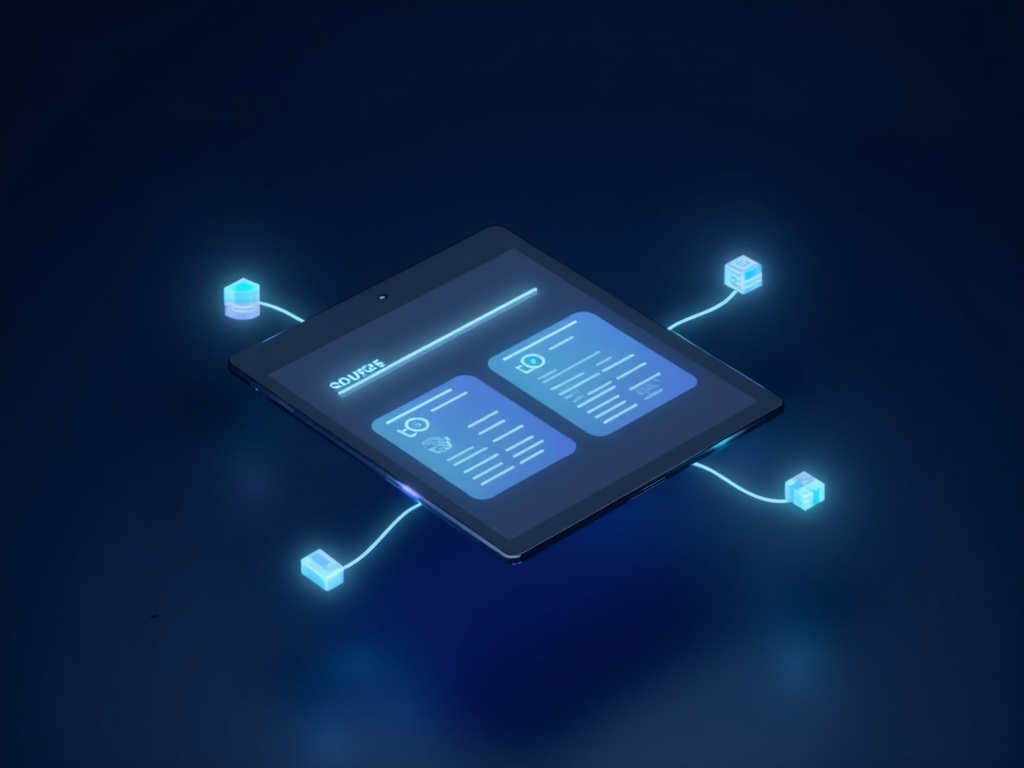
RAG concept render: a floating tablet showing a generated answer with three inline citation chips and a stacked sources panel below, connected by glowing blue lines to three floating source objects (a document, a database cylinder, a knowledge base) — the visual story of a sourced grounded AI answer
RAG67% OF FORTUNE 500 NOW RUN AT LEAST ONE RAG SYSTEM IN PRODUCTIONMcKINSEY 2026
70–90%¹
Hallucination rate reduction with properly implemented RAG
$9.86B²
Projected global RAG market by 2030, growing at 38.4% CAGR
340%³
Average first-year ROI on enterprise RAG deployments

What is Retrieval-Augmented Generation?

Retrieval-Augmented Generation (RAG) is an AI architecture that combines a language model with a retrieval system — the model fetches relevant documents from your data before generating a response, and cites the source. The result: answers grounded in your verified content, not in the model's training data.

RAG was introduced in a 2020 paper by Meta AI researchers (then Facebook AI Research) as a way to give language models access to specific, current, and proprietary information without retraining them. The technique proved foundational. By 2026 it's the default architecture pattern for enterprise AI — used wherever accuracy and source attribution matter more than creativity.

The architecture has three core stages: retrieval (find the most relevant chunks of your data using vector similarity or hybrid search), augmentation (inject those chunks into the prompt as context), and generation (the LLM produces a grounded answer with citation markers). When properly implemented, RAG reduces hallucination rates by 70–90% compared to a vanilla LLM and enables every answer to be traced back to a specific source document.

The numbers behind RAG's enterprise momentum

Three published 2025–2026 data points that explain why RAG has moved from a research technique to enterprise default architecture.

Chart 1 · Accuracy

Hallucination rate · vanilla LLM vs RAG

Hallucination rate · vanilla LLM vs RAGRAG reduces hallucinations 70-90% across every task type measured. Vanilla LLM rates: 25-60%. RAG rates: 4-12%.0%20%40%60%Domain-specific Q&A39%5%Medical / clinical28%4%Legal interpretation35%7%Supply chain reasoning60%12%Open-domain general25%8%Vanilla LLMRAG-augmented

Vanilla LLM hallucination rates are persistently in the 25–60% range on domain-specific work. RAG drops them to single digits or low double digits.

Source: MIT Sloan · Journal of Medical Internet Research · Makebot Enterprise RAG Benchmarks 2025

Chart 2 · Adoption

Enterprise RAG adoption · Fortune 500 in production

Fortune 500 RAG adoption · 2024 to 2026Enterprise RAG adoption tripled in two years, moving from experimental to production-default. 67% of Fortune 500 ran at least one RAG system in production in 2026.0%20%40%60%80%23%41%67%2024202520262024 → 2026~2.9× growth

Fortune 500 RAG adoption nearly tripled in two years. The tipping point is now — RAG has moved from experiment to production-default.

Source: McKinsey Annual Enterprise RAG Adoption Report 2026 (via Ailog)

Chart 3 · Market size

RAG market size projection · 2025 → 2030

RAG market size · 2025 → 2030 projectionGlobal RAG market projected to grow from $1.94B in 2025 to $9.86B by 2030, a 38.4% CAGR driven by enterprise demand for grounded citable AI.$0B$2B$4B$6B$8B$10B$1.94B2025$2.69B2026$3.72B2027$5.15B2028$7.13B2029$9.86B20302025 → 2030 CAGR+38.4% per year

RAG market grows from $1.94B in 2025 to $9.86B by 2030 — a 38.4% CAGR, driven by enterprise demand for grounded, citable AI.

Source: MarketsAndMarkets RAG Market Report 2025–2030

How a production RAG system actually works

Five stages — every production RAG system we ship has all five. The details vary; the architecture doesn't.

Production RAG architecture · 5 stagesIngestion → Chunking + embedding → Vector store → Retrieval → Generation with citations. Every production RAG system we ship has all five stages.1INGESTIngestion2CHUNKChunking + embedding3STOREVector store4RETRIEVERetrieval5GENERATEGeneration + citations
  1. 1
    INGEST

    Ingestion

  2. 2
    CHUNK

    Chunking + embedding

  3. 3
    STORE

    Vector store

  4. 4
    RETRIEVE

    Retrieval

  5. 5
    GENERATE

    Generation + citations

1

Ingestion

Your source documents (PDFs, web pages, Notion exports, Confluence, Salesforce knowledge base, Slack archives) flow into a pipeline that normalizes them, extracts text and structure, and prepares them for embedding. This stage is unglamorous but produces 80% of the quality — garbage data in, garbage answers out.

2

Chunking + embedding

Documents are split into semantically coherent chunks (typically 200–1000 tokens), then each chunk is passed through an embedding model (we default to OpenAI text-embedding-3-large or Voyage-3-large) that converts the text into a vector representation. Chunk boundaries matter: bad chunking is the second most common reason RAG projects fail.

3

Vector store

Embeddings are persisted in a vector database optimized for similarity search. Our defaults: PostgreSQL + pgvector for small-to-mid projects (the embeddings live in the same Postgres tables as your relational data), Pinecone or Weaviate for projects where scale demands a dedicated vector store, Supabase for projects on our standard stack.

4

Retrieval

When the user asks a question, the system embeds the query, runs a hybrid search (vector similarity + keyword search + metadata filters) against the vector store, and returns the top N most relevant chunks. We layer reranking models on top for production systems — a second-pass scoring step that improves precision substantially.

5

Generation with citations

Retrieved chunks are injected into a prompt template, the LLM (typically Claude Sonnet 4.6 or Opus 4.7) generates the answer, and the system attaches source citations linking each claim back to the specific chunk it was grounded in. The citations are the trust mechanism — they let users verify the answer without leaving the interface.

RAG vs the alternatives

RAG isn't the only way to ground an LLM on your data. Here's the honest comparison after building all four approaches in production.

RAG
OUR DEFAULT FOR GROUNDED AI
Fine-tuningLong contextAgentic retrieval
What it doesRetrieves relevant docs at query time, injects as contextRetrains the model weights on your dataStuffs all relevant docs into one large promptAgent decides what to retrieve and when, multi-step
UpdatesReal-time — change source data, system updatesRequires retraining for every data changeUpdates instantly but token-cost scales with corpusReal-time, with retrieval logic improving over time
Source attribution✓ Citations on every answer✗ Model doesn’t know what it learned◐ Possible but expensive✓ Yes, plus retrieval reasoning trace
Setup costMedium — pipeline + vector store + integrationsHigh — training infrastructure + datasetsLow — just a promptHigh — agent framework + retrieval tools
Per-query costLowLowest (after training)Highest (token-heavy)Medium-High (multiple LLM calls)
Hallucination riskLow (70–90% reduction vs vanilla)Medium — model can still confabulateMedium — gets confused with large contextsLow — but new failure modes (wrong retrieval)
Best forKnowledge Q&A, support, contract analysis, internal searchDomain-specific reasoning, voice / style adoptionSmall corpus, short-lived tasksComplex multi-step research, tool use
Our verdictDEFAULT FOR GROUNDED AINICHE USESMALL CORPORA ONLYFOR COMPLEX RESEARCH

Most production AI systems combine these — RAG for the bulk of grounded answering, fine-tuning where domain style matters, agentic loops for complex multi-step tasks. We design the right combination per project.

Six RAG use cases we ship

Six patterns that cover ~80% of the RAG briefs we scope. If your idea resembles any of these, we've built it before and can quote on the scoping call.

Internal knowledge Q&A01

Internal knowledge Q&A

Employees ask natural-language questions across your docs, policies, contracts, call transcripts, Slack history.

Example

“What’s the refund policy for Enterprise customers in the EU?” → grounded answer with source citation.

Built with

PostgreSQL + pgvector, Claude Sonnet 4.6, Next.js frontend

$15k–$35k · 4–6 weeks
Support tier-1 deflection02

Support tier-1 deflection

Customer support bot grounded on your help center, ticket history, and product docs — handles tier-1, escalates with summary.

Example

Customer asks “how do I cancel my subscription” → grounded answer with source link, marked resolved if confirmed.

Built with

Hybrid search, Supabase, Claude, embedded in your existing support widget

$20k–$50k · 5–8 weeks
Contract & document analysis03

Contract & document analysis

Lawyers, ops teams, and compliance teams query a corpus of contracts, regulations, or policies — "show me all clauses about IP assignment."

Example

Legal team uploads 500 vendor agreements; analyst asks for clauses with renewal-notice periods under 30 days, gets a list with quotes.

Built with

Document chunking strategy, hybrid retrieval with metadata filters, citations to sections

$30k–$80k · 6–10 weeks
Research & synthesis agents04

Research & synthesis agents

Automated competitive intel, market scans, scientific literature review — RAG over external + internal sources with synthesis.

Example

Nightly scan of competitor pricing pages, regulatory filings, and analyst reports; structured report into Slack.

Built with

Scheduled ingestion pipeline, multi-source retrieval, summarization prompts

$25k–$60k · 5–8 weeks
Sales enablement assistant05

Sales enablement assistant

Sales reps ask the assistant about prospect industries, objection-handling, comparable customers — grounded on your CRM, case studies, and call recordings.

Example

“How did we handle the data-residency objection at [similar customer]?” → grounded answer with link to the original call transcript.

Built with

CRM integration, call-transcript ingestion (Gong / Chorus), customer-specific RAG

$20k–$60k · 5–8 weeks
Regulated-data RAG06

Regulated-data RAG

RAG inside healthcare, legal, or financial environments — air-gapped retrieval, audit logging, citation traceability for regulatory review.

Example

Clinician asks about drug interactions across patient history + medical literature; answers cite specific source sections.

Built with

On-prem or VPC deployment, encryption at rest, audit logging on every retrieval

$50k–$150k+ · 8–14 weeks

Our RAG stack

We pick per project. These are the tools we reach for most when shipping production RAG systems.

LLMs we ground
  • Claude Sonnet 4.6 / Opus 4.7our default for grounded reasoning
  • OpenAI GPT-4o / 5.3when the integration demands it
  • Groq + open-source modelslow-latency inference at scale
  • Self-hosted Llama / Mistralregulated environments
Vector stores + retrieval
  • PostgreSQL + pgvectordefault for small-to-mid; embeddings live next to relational data
  • Pineconemanaged scale
  • Weaviatehybrid search with object metadata
  • Supabaseour standard backend, ships with pgvector
  • Cohere Rerank, Voyage rerankersreranking for higher precision
Embedding models
  • OpenAI text-embedding-3-largehigh-accuracy default
  • Voyage-3-largedomain-specialized retrieval
  • Cohere embed-v4multilingual cases
  • Open-source (BGE, GTE)self-hosted or regulated
Frameworks + orchestration
  • LangChain + LangGraphorchestration when complexity demands it
  • LlamaIndexingestion + indexing patterns
  • MCP (Model Context Protocol)connecting RAG to enterprise systems through a single standard
  • Custom Python pipelinesmost production systems we ship are direct, not framework-heavy

When RAG isn't the right answer

Honest take after 35+ AI projects. RAG is the right architecture for a specific shape of problem — and the wrong answer for several others.

✓ RAG fits well

  • Q&A over your proprietary documents — policies, contracts, knowledge bases, ticket history
  • Source attribution is required — regulated industries, legal review, medical decision support
  • Knowledge changes frequently — daily updates without retraining
  • Mid-to-large document corpus — hundreds to millions of pages
  • Audit trail matters — every answer can be traced to specific source chunks

✗ RAG usually doesn't fit

  • The task needs creativity, not accuracy — copywriting, brainstorming, creative drafting
  • The corpus is tiny — under ~50 pages, just put it all in the prompt (long-context wins on simplicity)
  • The task needs reasoning, not retrieval — math, code generation, scenario analysis
  • You need the model to learn a writing style or voice — that's fine-tuning territory
  • Your data is mostly numeric / tabular — use SQL + LLM-over-results instead
  • You need real-time conversational memory across sessions — that's a different architecture

We say so before we quote. The most expensive RAG project is the one that should have been a SQL query or a fine-tune. We'd rather lose the contract than ship the wrong architecture.

Industries we ship RAG into

Proof · Clients

Real founders who hired NerdHeadz for grounded AI.

On shipping RAG that actually cites its sources and earns its quarter-payback target.

01 / 07

This system has been a dream of mine for almost a year. I have tried to build it myself and finally came to the conclusion I needed help. The NerdHeadz team has built me exactly what I was dreaming about and more! Working with them has been an absolute pleasure. I can't thank them enough.

Amy Olson
Founder & Airbnb Listing Strategist, Smart Hosting Hub
3+
Years of industry leadership
30+
Experts ready to build
60+
Projects delivered on time
90%
Client retention

Why teams pick NerdHeadz for RAG work

Architecture depth.

Architecture depth.

We don't ship 'ChatGPT over your PDFs.' Our production RAG systems include ingestion pipelines, hybrid retrieval, reranking, citation traceability, audit logs, and observability. The architecture survives scale.

Stack-flexible.

Stack-flexible.

Most agencies ship one stack regardless of fit. We've shipped RAG into Next.js, Bubble, FastAPI, and custom enterprise systems — the right tools per project, including self-hosted models for regulated environments.

AI-assisted build velocity.

AI-assisted build velocity.

Claude Code in every project accelerates the boilerplate, integration, and refactor work. We ship production RAG in 4–8 weeks instead of the industry 3–6 months.

Honest about RAG fit.

Honest about RAG fit.

We've told ~20% of scoping clients that RAG isn't the right architecture for their problem. Sometimes it's fine-tuning. Sometimes it's a SQL query with an LLM wrapper. We pick the right architecture and tell you when it isn't ours to ship.

Frequently asked questions about RAG

RAG is an AI architecture that combines a language model with a retrieval system. When you ask a question, the system first searches your data for the most relevant chunks, then passes those chunks to the LLM along with the question. The model generates an answer grounded in the retrieved content, with citations linking back to source documents. RAG was introduced by Meta AI in a 2020 paper and has become the default architecture for enterprise AI in 2026 — 67% of Fortune 500 companies run at least one RAG system in production.

Sources & citations

  1. MarketsAndMarkets, RAG Market Report 2025–2030marketsandmarkets.com
  2. McKinsey via Ailog, Enterprise RAG Adoption Study 2026
  3. Makebot AI Research, Enterprise RAG Benchmarks 2025
  4. Mordor Intelligence, RAG Market Size 2024–2030
  5. MIT Sloan, LLM Hallucination Rates by Task Type 2024
  6. Journal of Medical Internet Research, peer-reviewed study on LLM hallucination in systematic-review tasks
  7. NVIDIA, What is RAG reference documentation
  8. Pinecone, RAG architecture patterns and evolution to agentic retrieval
  9. Lewis et al., Retrieval-Augmented Generation for Knowledge-Intensive NLP Tasks, Meta AI (FAIR), 2020
  10. NerdHeadz internal data, 35+ AI projects shipped, 2022–2026
Let’s scope

Ready to scope your RAG project?

30-minute scoping call. Bring the documents your team can't find answers in fast enough — we'll come back with an architecture, a stack, a fixed-price quote, and an honest read on whether RAG is the right approach.