Skip to content
Logistics · Industry

Logistics software development that moves goods at scale — without going down

Logistics software doesn’t just inform operations; it runs them. When it can’t handle peak volume or it goes down, trucks sit idle and parcels stop moving. We build TMS, WMS, dispatch, and supply-chain platforms for the real-time, high-volume, zero-downtime reality logistics demands — proven at a launch handling 300,000 parcels a day.

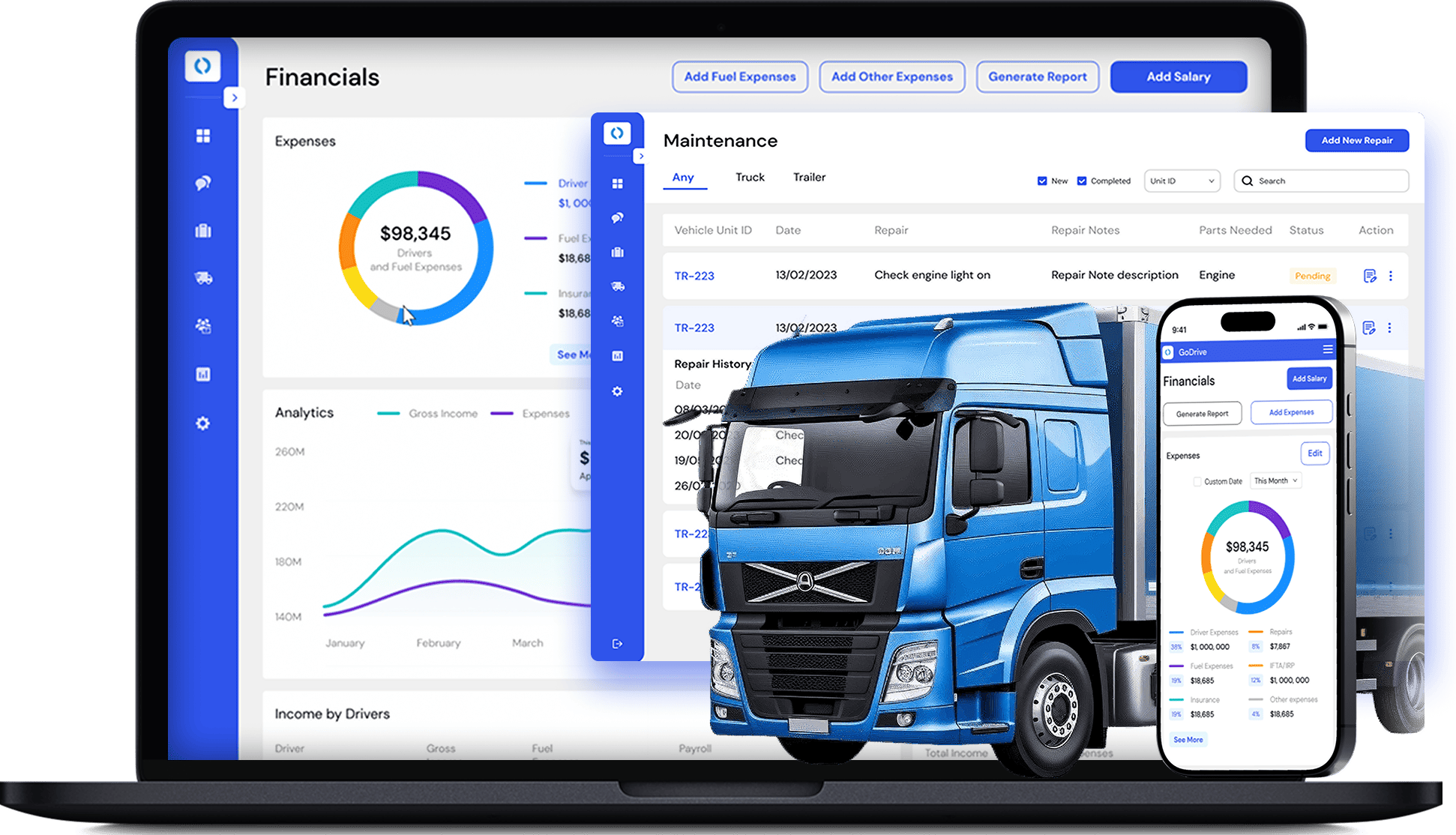
Logistics dispatch command-center with live route map, throughput metrics, and parcel-scale flowA large monitor showing a logistics ops dashboard with route map, live metrics, dispatch list; parcel-flow scale motif behind; companion phone with driver POD view.
BUILT FOR THE OPERATIONAL REALITY300,000 parcels/day at launch · Trucking88 dispatch + CRM + ERP + payroll in one platform
300,000*
Parcels per day handled by our biggest logistics launch — NerdHeadz proof
5–20%¹
Logistics-cost reduction from AI in distribution operations
72%²
Of logistics employees adopted AI tools in 2024 — the highest of any industry

Logistics software for smarter supply chains

In most industries, software supports the work. In logistics, software is the work — it dispatches the trucks, routes the parcels, runs the warehouse. When it fails, goods stop moving. That’s a different standard to build to.

Efficient logistics can make or break a business, and the right software is the key to getting it right. NerdHeadz builds custom logistics and supply-chain software that helps shippers, carriers, freight brokers, and warehouse operators move goods faster, cheaper, and with full visibility. From last-mile delivery apps to enterprise TMS platforms, our solutions optimize every link in the supply chain — and hold up under the real-time, high-volume load that logistics operations actually run at.

Our logistics development covers transportation management systems, warehouse management platforms, route optimization engines, shipment-tracking dashboards, dispatch and fleet systems, and load-matching marketplaces. We integrate with GPS tracking, ELD systems, carrier APIs, and customs databases for end-to-end visibility, and we build for the complexity of multi-modal shipping, cross-border logistics, and dynamic pricing — while maintaining the performance and uptime that real-time logistics demands.

Whether you’re a logistics startup building a digital freight platform or an established 3PL upgrading legacy systems, we deliver software that reduces costs and improves delivery performance. Our clients have cut transit times, reduced empty miles, improved on-time rates — and run entire operations on platforms we built. Let’s build the technology infrastructure that powers your logistics competitive advantage.

Proven where it counts: at scale, in real operations

Most agencies talk about logistics software in the abstract. Here’s us, specific — the scale and the operation, both real, both ours.

Scale · Live operation
300,000parcels / day

A launch built for peak volume

Our biggest logistics launch handles 300,000 parcels a day. That’s the real-time, high-volume, zero-downtime reality logistics lives in — the exact thing that’s hardest to get right and most expensive to get wrong. When a system at that scale slows or fails, goods stop moving. Ours doesn’t.

Platform · Live operation
Trucking88/ Dispatch Trux

A whole trucking operation, one platform

Trucking88 isn’t a tracking screen — it’s the operational backbone of a trucking business: dispatch, a CRM for shippers and carriers, ERP for operations, payroll for drivers, fleet management, and chat and mobile apps, all in one platform we built. The hard part of logistics software isn’t the map; it’s the operations underneath — and that’s what we build.

Trucking88 is also why our CRM, HRMS, and ERP capabilities are proven together — it runs all three at once, in a live logistics operation.

The logistics opportunity, in numbers

A large, fast-digitizing market where AI is delivering hard cost savings — and where logistics teams are adopting AI faster than any other industry. Two data points that frame the opportunity.

Chart 1 · Market

Logistics software vs AI in supply chain · 2026 → 2035

Logistics software market vs AI in supply chain · 2026 → 2035Logistics software market doubles ($17.6B → $34.7B); AI in supply chain grows 24× ($9.9B → $236B).$0B$50B$100B$150B$200B$250B$17.6B$9.9B2026$21.4B$22B2028$25.8B$50B2030$30B$110B2032$34.7B$236B2035Logistics software marketAI in supply chainLOGISTICS SOFTWARE BY 2035$34.7B · ~2× growthAI IN SUPPLY CHAIN BY 2035$236B · ~24× explosion

The logistics software market roughly doubles to $34.7B by 2035 — but the real explosion is AI in supply chain, on track from $9.9B to $236B. AI is the layer where the next decade of logistics value is being created.

Source: Precedence Research, Logistics Software Market 2026–2035; AI in Supply Chain Market 2026.

Chart 2 · Impact

Where AI cuts cost in logistics

McKinsey finds AI cuts inventory 20–30%, logistics costs 5–20%, and procurement 5–15%. With 72% of logistics workers already using AI — the highest adoption of any industry — and an average 190% ROI, the returns are real and proven.

Source: McKinsey (AI in distribution operations); ActivTrak / Open Sky Group; Gartner, Supply Chain Technology 2025.

Built for the operational reality of logistics

Logistics software runs physical operations in real time. That raises the bar on four things ordinary software gets away with ignoring.

  • Real-time, high-volume performance

    Peak season, a volume spike, a Black Friday surge — the system has to hold up. We architect for high throughput with the caching, queuing, and horizontal scale that keep operations fast under load. Proof: a launch handling 300,000 parcels a day.

  • Zero-downtime reliability

    Logistics runs 24/7 across time zones; downtime is stopped operations, not a minor inconvenience. We build for resilience — redundancy, monitoring, graceful degradation — because when goods are in motion, the software can’t stop.

  • Integration-heavy by nature

    GPS, ELD, carrier APIs, customs, WMS, TMS, ERP — logistics software lives on integrations, and TMS/WMS integration alone can consume 30–40% of a project. We’ve done the hard integration work, including a data backbone tying dispatch, CRM, ERP, and payroll into one platform.

  • Operational depth, not just tracking

    The easy part is a tracking screen. The hard part is the dispatch, operations, and payroll backbone that actually runs the business — exactly what we built in Trucking88. We build the operational core, not just the dashboard on top of it.

Opportunities for growth in logistics

  • Transportation management (TMS)

    The largest logistics-software segment — carrier selection, freight audit, dispatch, and real-time tracking. Transport is up to 55% of total supply-chain cost, so this is where the operational savings live.

  • Route optimization

    Engines that streamline delivery paths for faster, cheaper deliveries and fewer empty miles — increasingly AI-driven, optimizing dynamically as traffic, weather, and capacity change in real time.

  • Warehouse & inventory (WMS)

    Software for stock tracking, picking, packing, shipping, and automated reordering — with ML demand forecasting that keeps the right inventory in the right place at the right time.

  • Freight & dispatch platforms

    Systems managing carrier selection, load matching, invoicing, and real-time shipment tracking — the operational backbone, like the dispatch platform we built into Trucking88.

AI in logistics: where the next decade of value is

Logistics adopted AI faster than any other industry — 72% of workers used AI tools in 2024 — because the ROI is concrete. As an AI-first agency building with Claude, here’s where we apply it.

  • AI route & load optimization

    Dynamic routing and load-matching that adapt to traffic, weather, and capacity in real time — cutting empty miles and fuel cost. Route and load optimization is where transport cost (up to 55% of supply-chain spend) gets attacked directly.

  • Demand forecasting

    ML models that predict volume and demand so warehouses stock the right inventory and carriers position capacity ahead of need — AI cuts inventory 20–30% in distribution operations.

  • Autonomous disruption resolution

    AI that detects exceptions — a delayed shipment, a capacity shortfall, a customs hold — and resolves or reroutes automatically. Gartner expects 60% of supply-chain disruptions resolved without human intervention by 2031; we build toward that.

  • Document & customs automation

    AI extraction and RAG over bills of lading, customs paperwork, and carrier contracts — turning logistics’ document mountain into queryable, automated workflows.

Smart, simple solutions for all areas of logistics

Freight & Cargo Management

AI-powered systems that optimize routing, improve scheduling efficiency, and track real-time cargo location with intelligent monitoring. Carrier selection, load matching, freight audit, and the dispatch backbone — the operational layer that runs at the volume of moving physical goods.

Custom software development services for logistics

Ship faster with a senior team that understands OTIF, empty miles, dwell time — and software that runs real operations at scale.

Why logistics teams pick NerdHeadz

  • Proven at scale — 300,000 parcels/day.

    Our biggest logistics launch handles 300,000 parcels a day. We build for the real-time, high-volume, zero-downtime reality logistics actually runs at — the hardest thing to get right, and we’ve gotten it right.

  • We build the operational core, not just tracking.

    Trucking88 runs a whole trucking operation — dispatch, CRM, ERP, payroll, fleet — on one platform we built. The hard part of logistics software is the operations underneath, and that’s exactly what we do.

  • We’ve done the hard integrations.

    GPS, ELD, carrier APIs, customs, WMS, TMS, ERP — logistics lives on integrations that can eat 30–40% of a project. We’ve built the data backbones that tie these systems together, so it’s experience, not a first attempt.

  • AI where logistics gets ROI.

    Route optimization, demand forecasting, autonomous disruption resolution, document automation — the AI use cases that cut real cost (5–20% on logistics, 20–30% on inventory), built with Claude. We’re AI-first in the industry that adopts AI fastest.

3+
Years of industry leadership
30+
Engineers ready to build
60+
Projects delivered on time
90%
Client retention

Logistics work we’ve shipped

Trucking88 (also Dispatch Trux) is a full dispatch platform running a trucking operation — CRM, ERP, payroll, fleet, chat, mobile, all in one system. And our biggest logistics launch handles 300,000 parcels a day. The two flagship logistics proofs together: a real operation, and a real scale.

View full portfolio →

Proof · Clients

Real teams who hired NerdHeadz to run operations at scale.

On the operational backbone — dispatch, CRM, ERP, payroll, fleet — and the throughput that keeps physical goods moving in real time.

01 / 07

This system has been a dream of mine for almost a year. I have tried to build it myself and finally came to the conclusion I needed help. The NerdHeadz team has built me exactly what I was dreaming about and more! Working with them has been an absolute pleasure. I can't thank them enough.

Amy Olson
Founder & Airbnb Listing Strategist, Smart Hosting Hub
3+
Years of industry leadership
30+
Experts ready to build
60+
Projects delivered on time
90%
Client retention

Logistics software development FAQ

Off-the-shelf platforms work well when your operation fits standard workflows. Custom development wins when you have unique processes, need deep integration across dispatch/CRM/ERP/payroll, run at a scale or with margins where per-seat licensing hurts, or when your logistics software is your competitive advantage. We give you the honest assessment — sometimes a configured off-the-shelf system is right, and we say so. But when you have outgrown the template, custom is how you get the operation your business actually runs.

Sources & citations

  1. Precedence Research, Logistics Software Market 2026–2035 — market sizing ($17.6B → $34.7B), ~7% CAGR.
  2. Precedence Research, AI in Supply Chain Market 2026 — $9.9B → $236B by 2035, ~24× growth.
  3. McKinsey, Succeeding in the AI supply-chain revolution — inventory 20–30%, logistics 5–20%, procurement 5–15% reduction from AI.
  4. ActivTrak, Supply Chain AI Statistics — 72% of logistics employees adopted AI in 2024 (highest of any industry).
  5. Gartner, Supply Chain Technology 2025 — 190% average AI ROI; 60% of supply-chain disruptions autonomously resolved by 2031.
  6. NerdHeadz portfolio — Trucking88 / Dispatch Trux dispatch platform and a 300,000-parcels/day scale launch.
Let’s scope

Building logistics software that can’t afford to fail? Let’s talk.

30-minute scoping call. Tell us what you’re moving and where the bottleneck is — dispatch, routing, warehouse, last-mile. We’ll come back with an architecture built for your volume, an integration and AI plan, and a fixed-price quote — from a team that’s shipped logistics software at 300,000 parcels a day.