
Founder testing a marketplace
Two-sided flow, fake-data seeding, demo-ready in 10 days.
A real, clickable, deployed product — not a Figma file. Built with the same stack you'll scale on, so day-15 work picks up where the prototype left off.
Most "prototypes" you see are slide decks, Figma frames, or Bubble apps held together with duct tape. They demo well in a meeting, then fall apart the moment a real user clicks something the founder didn't think about. By day-15 you're rebuilding from scratch or convincing a dev team to inherit a no-code mess. We do it differently — and the rest of this page is the long answer to "how."
Rapid prototyping is the practice of going from a written idea to a deployed, clickable, real-data product in 1–2 weeks. Not a wireframe, not a Figma file, not a Bubble app — a real Next.js application on a real URL, backed by a real database, that real users can actually use.
The point is to compress the riskiest part of building a product: the gap between "this idea sounds good" and "I've watched someone use it." That gap can take six months in a traditional dev cycle. With the right stack and the right team, it takes fourteen days.
A good prototype answers three questions: does the core flow work, do users finish it, and would someone pay for this? Everything else — polish, edge cases, scale — is a v1 problem.

A NerdHeadz prototype runs on a fixed 14-day clock with five visible checkpoints. Day-01 you get a live URL with auth scaffolding and a connected DB. Day-03 the first user flow is real — sign up, create the thing, see the result, with real data writes. Day-07 a second flow plus the first integration lands; Stripe, Clerk, Twilio, OpenAI, whichever third party makes the demo feel real. Day-12 is polish, edge cases, mobile, and copy. Day-14 is handoff or scale.
We hold one to two prototype slots per month, and the entire thing is run by a founder-led pair: a senior engineer (sometimes two) and one designer. There are no PMs, no daily standups, and no Slack channel with twenty stakeholders. Decisions get made in 15 minutes instead of a week, which is the only way 14 days actually means 14 days.
Lock the question the prototype answers, the success criteria, the stack.
Working scaffold deployed to Vercel preview. Auth + primary flow wired.
Real APIs, real data, no mocks left. End-to-end flow runs.
Error states, empty states, basic accessibility, demo-ready quality.
GitHub access, README, 30-min walkthrough call. Prototype shipped.
A deployed Next.js, Python, or TypeScript app on a subdomain like your-prototype.nerdheadz.dev, a private GitHub repo, two real user flows, one integration, and the artifacts to hand it off cleanly. The grid below is the full list.
What you don't get: pixel-perfect polish, every edge case handled, internationalization, role-based access controls, or audit logs. Those are v1 features. A prototype that tries to be all of them is no longer a prototype.
The pattern is consistent: someone needs to feel a product before committing to build it. The four scenarios we see most often are below.
It's not the right call when your end goal is "a Bubble app we'll never replace" — we build prototypes that graduate to production codebases. It's also not right if you already have validated paying users, in which case you should jump straight to custom software development.
Two-sided flow, fake-data seeding, demo-ready in 10 days.
Auth + core flow + Stripe checkout, real users on day 12.
Investor-grade polish, real data feed, walkthrough scripts.
Quick internal tool replacing 4 spreadsheets, ships in 2 weeks.
Two years ago a 14-day prototype was an aggressive promise. Today it's the normal pace, because AI has compressed the boilerplate that used to eat the first five days of any build. Auth scaffolding, CRUD endpoints, form validation, basic UI components — work that was 30–40% of a sprint is now an afternoon.
We use Claude Code, GitHub Copilot, and our own internal prompt library to do that compression. AI writes 60–70% of the boilerplate; humans review every line before it commits, and humans own every architecture decision. The result is the same code quality you'd get from a senior engineer — at a fraction of the time.
That's why a 14-day prototype today does the work a 6–8 week prototype did in 2024. Read more about how we use AI in the build process.

We use the same stack we'd use for production: Next.js for the application layer, TypeScript end-to-end, Payload CMS or Supabase for the database and auth, Tailwind CSS for styling, and Vercel or Cloudflare Pages for deployment. Integrations we wire often: Stripe, Clerk, Auth0, Twilio, Resend, OpenAI, Anthropic, Pinecone.
We can use Bubble, Webflow, FlutterFlow, or other no-code tools when the use case genuinely fits — they're great for some shapes — but our default is AI-coded custom code on a real stack. The reason is the rebuild problem: no-code tools start creaking the moment your prototype starts working. Building on a real stack from day one means the prototype is the v0, and there's no migration step before v1.
On day 14 you have three good options: hand it to your in-house team, hand it back to us for a production-grade build, or keep iterating with our AI-assisted retainer. What you don't have to do is rebuild — the prototype is the v0, and the same codebase carries forward.

A Figma prototype is a clickable mockup — it looks like a product but does nothing. Our prototypes are deployed Next.js apps with real backends, real databases, real auth, real integrations. You can hand the URL to a real user and they can use it for real, today.
Because every additional week we spend, the more it stops being a prototype and starts being a product. 14 days is the sweet spot: enough time to ship two real flows and one integration, not enough time for scope to balloon. If your idea genuinely needs 6 weeks, that's a custom-software project, not a prototype — and we'd rather scope it that way honestly.
Scale, in almost every case. We use Next.js, TypeScript, Payload CMS or Supabase, deployed on Vercel — the same stack our production clients run on. The prototype skips polish and edge cases, not engineering quality. Day-15 work picks up exactly where day-14 left off; nobody throws anything away.
You do. From day one. We push to a private repo under your GitHub org, you get full admin access, and on day 14 we hand it over completely. If you want us to keep building, we will. If you want to take it in-house, take it.
Almost always yes. We hold one or two prototype slots open per month. Talk to our AI for a 60-second scope and you'll get a delivery window the same day.
Tell us on day 3, not day 7. We share progress every other day in Loom, with a Linear board you can comment on. The kill switch is built in: if by day 5 we haven't locked in the right direction, we pause, regroup, and either reset scope or refund the unused portion. Honestly, this has happened twice in five years.
AI is in the loop, not in charge. We use Claude Code and similar tools to write 60-70% of the boilerplate, but every line goes through human review before it commits, and architecture decisions are always human-led. The result is the same code quality you'd get from a senior dev — just faster.

Started as a 2-week prototype to validate two-sided demand. Now a live marketplace with real transactions.
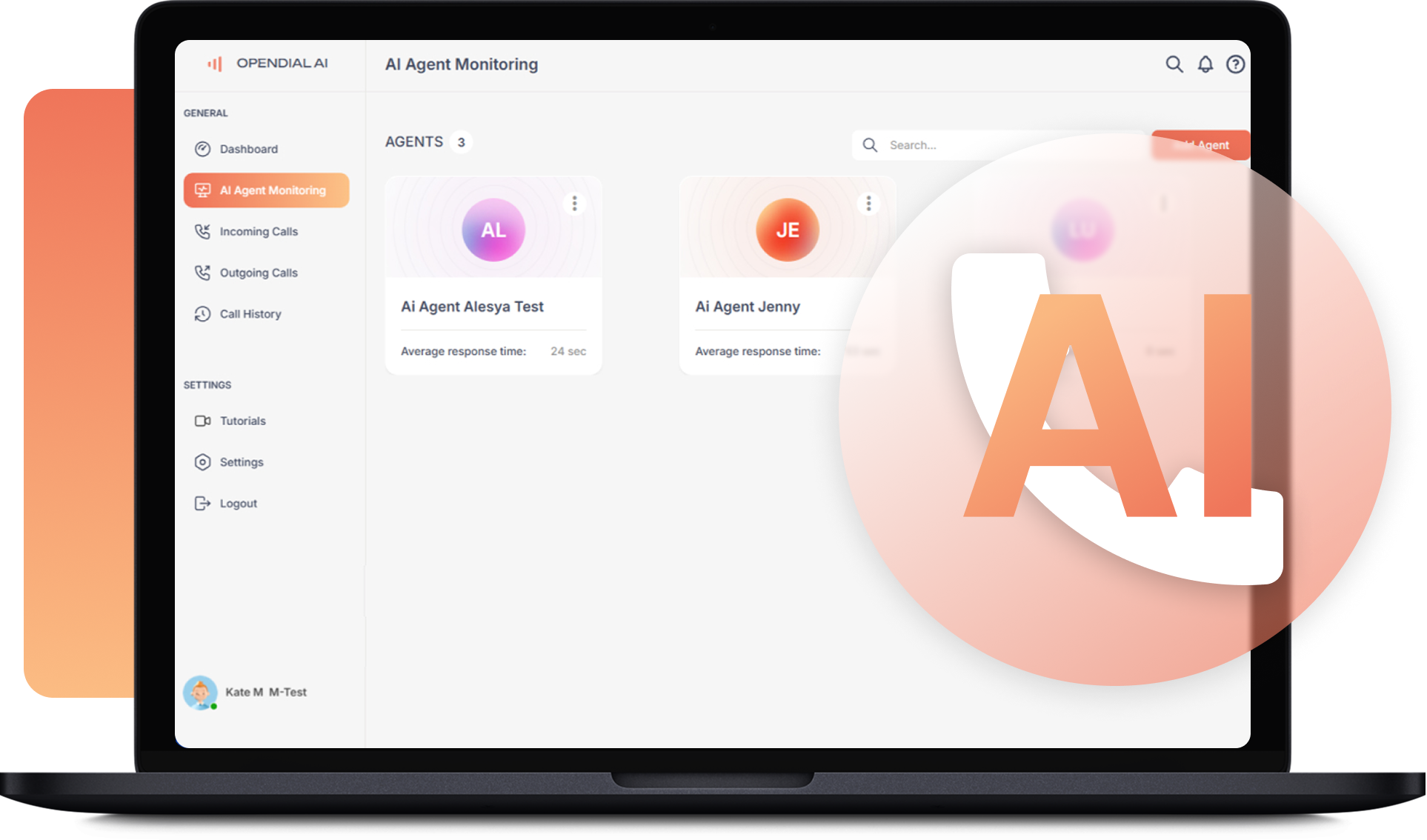
Prototype to test sub-second voice latency. Today it routes inbound calls for production teams with CRM writeback.
Talk to an AI for a 60-second scope, or book a 30-min call with the founder.