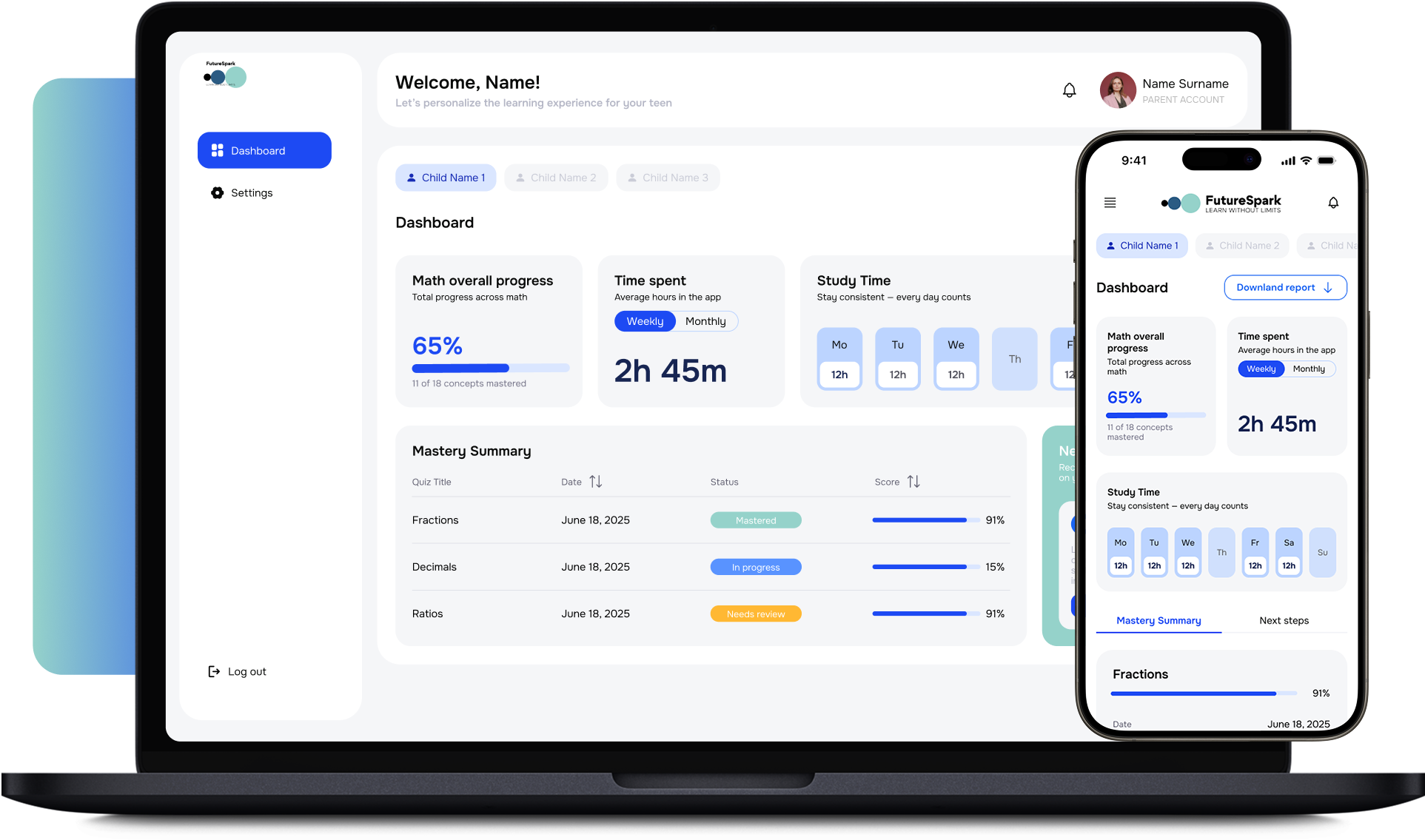
Web applications built for production — not demo day
SaaS platforms, dashboards, marketplaces, portals, internal tools with real backend logic, real authentication, and real users. Next.js, Node.js, PostgreSQL — wired up with AI-assisted engineering so we ship in weeks, not quarters.
Websites present content. Web applications run businesses.
If your product has user accounts, persistent data, and people who depend on it daily — you don’t need a website. You need an application.
Web application or marketing website?
The simplest test: does the product have user accounts and persistent data? If yes, you’re looking at web application development. If no, you’re looking at web design services — same agency, different lane, lower budget.
Web application
Marketing website
Primary job
Process data, manage state, serve users
Present content, capture leads
Backend needed
Required (auth, database, API, business logic)
Optional (form handler, CMS)
Real users with logins
Yes
No
Data persistence
Live, transactional, multi-user
Static or CMS-driven
Performance bottleneck
Query performance, concurrency, deploy uptime
Page load + Core Web Vitals
Sounds like
“Users sign up, do work in the app, come back tomorrow”
“About page, services, blog, contact form”
Typical cost range
$30k–$200k+
$5k–$25k
NerdHeadz service
You’re on the right page.
Web design services
Web app, native app, or PWA?
Three viable shapes for the same idea. Each wins on a different axis. The right pick depends on what your users are doing, where they're doing it, and how fast you need to ship.
Compared on
Web applicationBrowser, any deviceDefault pick
Native mobile appiOS + Android, app storesWhen device APIs lead
PWAWeb app + service workerMiddle ground
Best for
SaaS, dashboards, B2B portals
Desktop-first products with real backend logic, multi-user state, and frequent updates.
Consumer apps, offline workflows
Apps that need camera, GPS, push, biometrics, or offline-first behaviour as core UX.
Light cross-device apps
Read-mostly apps where installability + offline cache is nice-to-have, not load-bearing.
Time to first user
4–8 weeks
Ship a URL. No app store review, no install friction.
8–16 weeks
App store review adds 1–2 weeks; two codebases or React Native bridge.
4–8 weeks
Same browser shipping path as web app, with a service worker on top.
Distribution
URL — instant
Share a link, user lands in the app. No gatekeeper.
App stores
Apple + Google review every update. 15–30% revenue share on in-app purchases.
URL + "install"
iOS treats PWAs as second-class; Android installs cleanly to home screen.
Device capabilities
Standard browser APIs
Files, clipboard, basic camera, geolocation. No push on iOS Safari without PWA install.
Same web codebase + a service worker manifest. Marginal cost over web.
NerdHeadz service
You’re on the right page
Next.js + Node.js + PostgreSQL. The default unless mobile is the product.
Mobile development
React Native cross-platform, native iOS/Android when device APIs demand it.
Add to a web app
Light add-on after the web app is built — rarely the lead architecture.
In doubt? Most products start as a web application and add a native mobile app once there's traction and a clear mobile-only workflow. The PWA path is the lightest add-on — same web codebase, service-worker shim — and useful when installability matters but real native capabilities don't.
How we build web applications at NerdHeadz
API and data model first
Web applications are shaped by their data. We design the API contract and data model before writing a single UI component — authentication boundaries, entity relationships, indexing strategy, migration path. A well-designed schema survives ten UI redesigns; a polished interface on a poorly modeled database is a rewrite waiting to happen. PostgreSQL for relational data with stable shape, MongoDB for document-oriented workloads where schema flexibility matters.
Stack choice that matches the shape of the app
Next.js + Node.js + PostgreSQL for SaaS products and multi-tenant platforms. Next.js + Payload CMS + MongoDB for content-heavy platforms with admin workflows. Python + FastAPI when the application is data-intensive or ML-adjacent. Stack decisions up-front save rewrites later.
AI-assisted implementation
We write web applications with Claude Code in the loop — not as a gimmick, as a compounding speed advantage on production work every day. Boilerplate endpoints, CRUD, form validation, test scaffolding, type refinement — the mechanical layer is where AI assistance compounds. Features that took a week in 2022 take one to two days now without quality loss.
Production web applications need logging, monitoring, error tracking, and a deploy pipeline on day one — not in the hardening sprint before launch. We wire up Sentry, structured logging, health endpoints, CI/CD, and staging-prod parity from the first sprint. Every post-launch firefight traces back to a day-one decision that deferred observability.
Handoff or ongoing partnership
Every shipped application comes with a runbook, architecture documentation, and a walkthrough for the client’s engineering team. Teams that want to own the codebase get a clean handoff; teams that prefer a retainer get a dedicated engineer who knows the system. Same engineering discipline either way.
Five honest signals you need a web application, not a website
1You have users with logins. The moment your product needs authentication, role-based permissions, or “this user can see X but not Y” logic — you have a web application.
2Your data changes faster than your content. Live dashboards, transactional records, user-generated content, real-time integrations. Static-site generators can’t keep up.
3You integrate with systems people actually use. Stripe, Salesforce, HubSpot, Slack, industry-specific tools. Anything beyond a contact-form webhook needs an application.
4You bill based on what people do inside the product. Usage-based billing, per-seat pricing, metered features. Pricing logic lives in the application, not the website.
5Your team will keep building on it after launch. A website ships and stays. An application ships and evolves — new features, schema migrations, integrations every quarter. A different engineering problem.
If three or more describe your project, you’re on the right page. If none do, web design services is the right fit at a fraction of the cost.
What we build
SaaS platforms
Multi-tenant products with subscription billing, role-based access, and integrations.
Often built with: Next.js, Node.js, PostgreSQL, Stripe
Dashboards & internal tools
Operational software, admin panels, reporting interfaces with live data, filters, exports.
When custom web development actually delivers value
A custom web application is the right answer for a narrow set of problem shapes — and the wrong one for many others. Honest breakdown.
Works well
SaaS products with multi-tenant requirements and user-facing dashboards.
Internal tools with real workflow complexity that commercial software can’t cover.
Marketplaces and portals with role-based access, vendor onboarding, payments.
Live-data dashboards with filtering, export, permissions, scheduled reports.
B2B platforms integrating Stripe, Salesforce, HubSpot, or industry systems.
Usually doesn’t work
Marketing sites dressed up as apps. If it’s content + lead capture, web design services fits at a fraction of the cost.
Products that should be mobile-first. Build the React Native app first; web comes second.
Content-heavy sites Webflow or Payload CMS handles without custom code.
Admin dashboards for fifty users when Retool covers 90% at 10% of the cost. We’ll tell you.
Spreadsheet replacement without ROI math. Quantify the hours saved first.
Projects with no maintaining team yet. Without an owner post-launch, you’re funding orphan software.
We tell you which category your project lands in before quoting. We’d rather lose the contract than ship you a custom build that should have been Retool, Webflow, or a different agency.
The stack we build on
We pick per project, but these are the tools we reach for most. Stack philosophy: custom software development.
Why this stack? Cloudflare is our default edge layer — origin protection, edge caching, the deployment topology this site runs on. Supabase is our default backend when a project would otherwise wire Postgres + vector DB + real-time + edge as four stacks. When a build needs Python alongside Node, FastAPI runs as a sidecar — same box, separate process, type-checked at the HTTP boundary.
Founders who hired NerdHeadz to build real web applications — SaaS, MVPs, multi-tenant platforms.
01 / 06
“
This system has been a dream of mine for almost a year. I have tried to build it myself and finally came to the conclusion I needed help. The NerdHeadz team has built me exactly what I was dreaming about and more! Working with them has been an absolute pleasure. I can't thank them enough.
We architect data models, design API contracts, and think about race conditions. The engineer on your project has shipped multi-tenant SaaS, not just Webflow sites.
02
Day-one observability.
Logging, monitoring, error tracking, CI/CD wired from the first sprint. We’ve debugged enough 3 a.m. production incidents to know what’s worth wiring in advance.
03
AI-assisted velocity, human-quality output.
Claude Code accelerates the mechanical layer. Engineers own architecture, data modeling, and the judgment calls. ~3× faster than traditional builds, same quality bar.
04
You own everything.
Codebase, credentials, infrastructure, deployment scripts. Any engineer can pick up the project after handoff. No black-box hosting, no vendor lock-in.
Web applications - interactive platforms with user authentication, databases, APIs, and custom business logic: SaaS products, marketplaces, dashboards, CRMs, internal tools, customer portals. If you need a marketing site or content-driven website, web design services is the right fit.
Default stack: Next.js, TypeScript, React, Node.js, PostgreSQL or MongoDB, Payload CMS where it fits. Python with FastAPI for data-intensive or ML-adjacent work, Cloudflare for edge and deployment. We pick per project based on the shape of the application - you see the recommended stack in the scope doc before any code is written.
Most projects fall between $30,000 and $200,000+ depending on scope, integrations, and user-model complexity. Simpler builds (a focused internal tool, a v1 MVP with a small surface area) can come in at $15k-$30k. After discovery you get a fixed-price quote - no T&M surprises on scope-locked work.
Simple applications: 4-8 weeks. Complex platforms with multiple user roles, integrations, and advanced features: 12-24 weeks. We ship in two-week sprints with working software at the end of each - you see progress in your repo, not just in status decks.
Yes. Post-launch maintenance, bug fixes, performance optimization, feature development, security patches. Bugs introduced during the build are fixed free of charge within the support period. Ongoing work is either retainer (predictable monthly hours) or on-demand T&M.
Yes. We embed alongside in-house engineers, match their conventions, and hand off cleanly. We also pick up existing codebases - including legacy PHP, Rails, or Bubble apps that need rebuilding or extending. We audit the codebase first and tell you whether to extend or rebuild.
Yes - it is one of our most common engagement shapes. We rebuild the application on modern infrastructure (Next.js + your choice of database) while preserving features, SEO, and data.
You do. Full repository access, your infrastructure account, your credentials. We do not keep black-box copies or maintained-by-us hosting. Any engineer can take over after handoff.
Let’s ship
Ready to scope your web application?
30-minute scoping call, no pitch deck. Tell us about the product — we’ll come back with a feasibility take, recommended stack, and a fixed-price quote.