Skip to content
Mobile App Development

Mobile apps that ship to the right platform — not the loudest one

Native iOS and Android. React Native and Flutter cross-platform. Progressive web apps that skip app stores entirely. We pick the path per project — and tell you when you don’t need a native app at all. 30+ apps shipped. Built with AI-assisted engineering.

Three translucent rounded forms on a lavender stage — deep purple, warm amber, and pale periwinkle — representing native, PWA, and responsive mobile delivery paths

Three paths to mobile. Same engineering bar.

Native when the product needs the device. PWA when the product needs reach without app-store gatekeeping. Cross-platform when you need both app stores on a startup budget. Pick the path that fits the product — not the one the agency knows best.

Pick your path

Three real options when you need a mobile experience. Here’s the honest trade-off.

Native

Native mobile app

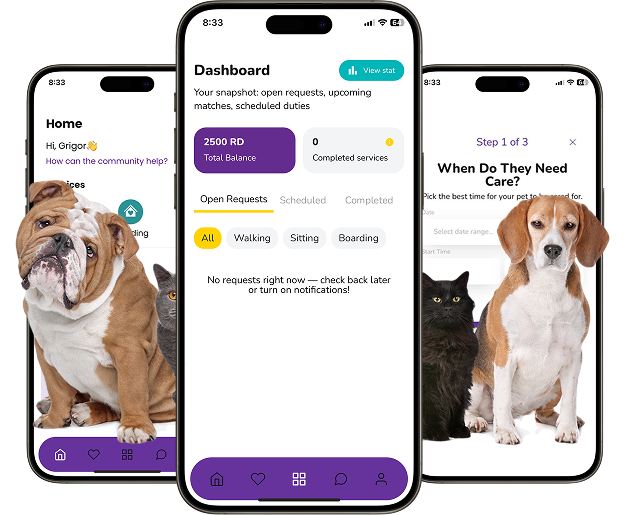
Cross-platform with React Native, Flutter, or FlutterFlow — or fully native Swift/Kotlin when warranted. Shipped to App Store and Google Play.

Best for
  • Consumer products with daily usage and push-notification engagement
  • Apps that need camera, GPS, biometric auth, offline storage, AR
  • Products billing through Apple/Google IAP and willing to accept the 15–30% cut
  • Brands where being in the App Store is the credibility signal
Trade-offs
  • App store review + rejection cycles add 1–4 weeks to launch
  • Apple takes 15–30% of in-app digital goods sales
  • User has to download — install friction is real
Built with

React Native, Flutter, Dart, FlutterFlow, Swift, Kotlin, Bubble (mobile)

Typical cost

$25k–$150k+ depending on scope and integrations

PWA

Progressive Web App (PWA)

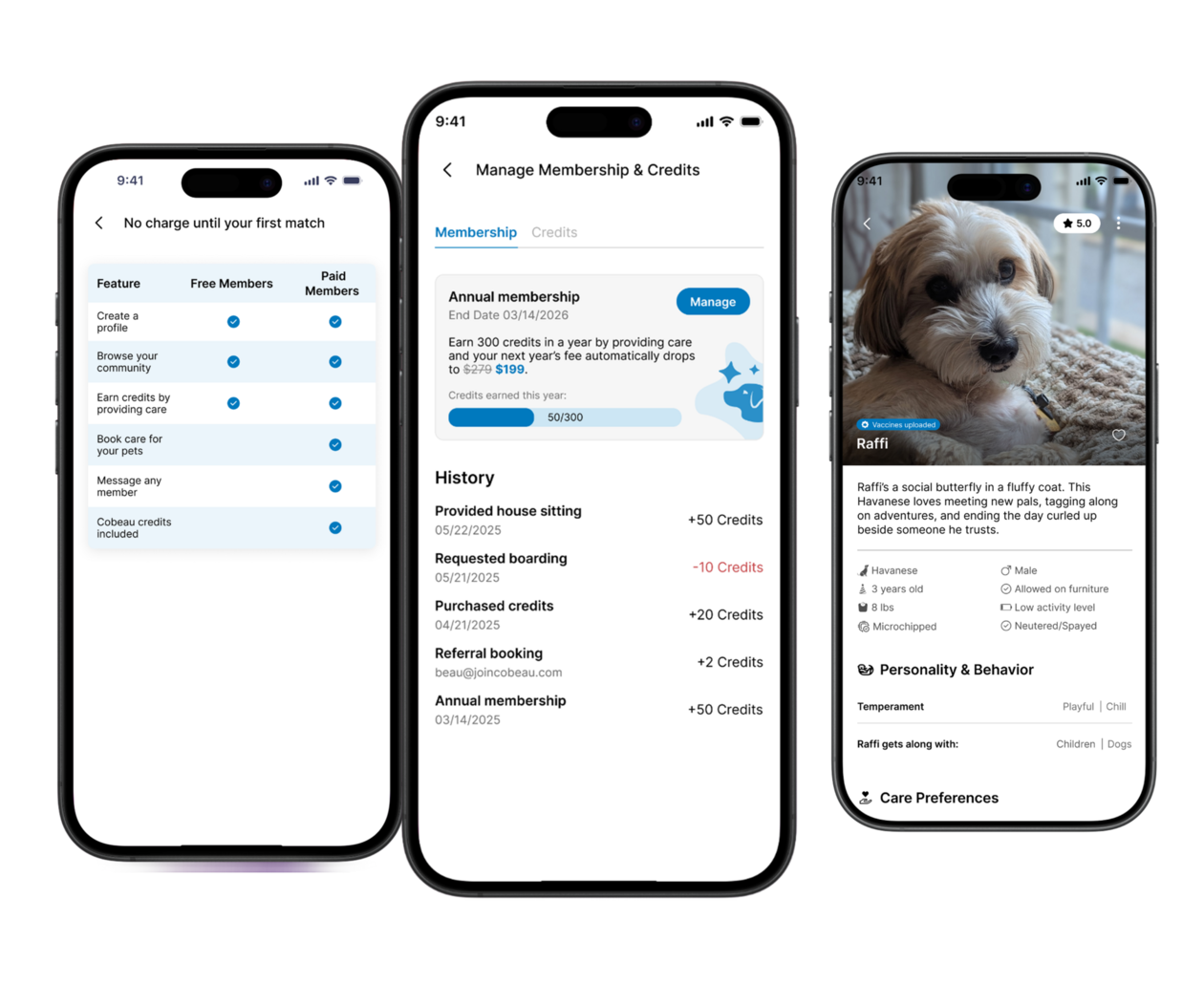
A web app that installs to the home screen, runs offline, sends notifications, and skips the app stores entirely. Built on whatever stack you already use — Next.js, React, Vue.

Best for
  • Products where install friction kills your funnel (“download our app to view” loses 80% of mobile traffic)
  • Digital goods, subscriptions, or marketplaces where Apple’s 30% cut breaks the unit economics
  • B2B tools that don’t need App Store discovery — your customers already know your URL
  • Faster iteration: ship updates instantly, no review queue
Trade-offs
  • No App Store credibility halo
  • iOS PWA capabilities are improving but still trail Android (push notifications now supported on iOS 16.4+, but with caveats)
  • “Install” flow is less discoverable than “Download from App Store”
Built with

any modern web stack — Next.js, React, Vue. PWA layer added at build time.

Typical cost

$15k–$75k — usually 30–50% cheaper than a native equivalent

The Apple-fee math

If you sell $1M/yr in digital goods through an iOS app, Apple takes $150k–$300k. A PWA selling the same goods through Stripe pays ~3% — about $30k. That’s $120k–$270k/yr that stays in the business. Worth the conversation.

Responsive

Responsive web app

A web application that adapts to mobile screens but lives in the browser. Not “mobile development” — but often the right answer when the question is “do we need mobile?”

Best for
  • Internal tools used on desktop most of the time
  • Content products read on mobile occasionally
  • Anything that doesn’t need device APIs or offline mode
Trade-offs
  • No home-screen install, no push notifications, no offline by default
  • Has to live with the device browser’s gestures and chrome
Built with

web development — same stack, mobile-aware layout.

Typical cost

part of a web application build, no separate mobile budget needed.

Native mobile: four delivery paths, one decision

Most agencies pick one tool and pitch it for every project. We use four — and tell you which one matches the shape of your build.

React NativeJavaScript / TypeScript

JavaScript/TypeScript codebase, near-native performance, largest ecosystem.

Best for

startups already on a JS/TS web stack, apps with heavy custom UI, products that may add web later.

Speed

~40–60% faster than full native

React Native development services →

Flutter + DartDart

Google’s framework. Single Dart codebase, pixel-perfect rendering, strongest motion/animation story.

Best for

apps where visual polish and consistent rendering across devices matter more than ecosystem size.

Speed

~40–60% faster than full native

FlutterFlowVisual Flutter builder

Drag-and-drop UI, generates real Dart code you can export and own.

Best for

MVPs that need to ship in 3–6 weeks. Founders who’ll be involved in the UI iteration.

Speed

~30–50% faster than custom Flutter — at the cost of some flexibility

Bubble (mobile)No-code

Bubble’s native mobile capability. Same Bubble app shipped to both stores.

Best for

teams already on Bubble for the web side who want a mobile companion without rebuilding from scratch.

Speed

faster on the build, slower on long-term scaling — we’ll tell you when that math works

Bubble development services →

Fallback path

Native Swift / Kotlin. We go fully native when the project needs AR, on-device ML, performance-critical graphics, or deep platform integration (HomeKit, HealthKit, CarPlay). About 20% of our mobile briefs.

Progressive web apps: the path most agencies don’t mention

A progressive web app is a web application that installs to the user’s home screen, works offline, sends push notifications, and behaves like a native app — without being one. No App Store submission, no review queue, no Apple cut on digital goods.

PWAs aren’t new — Twitter, Starbucks, Pinterest, and Spotify all ship production PWAs alongside (or instead of) their native apps. What’s new is that iOS finally supports the full PWA feature set as of iOS 16.4 — push notifications, badging, web share. The 2020-era “PWA on iOS is hobbled” objection no longer holds.

Three reasons to consider a PWA before committing to native

  1. The Apple cut. Apple charges 15–30% on digital goods sold through iOS apps via IAP. A PWA selling the same digital goods through Stripe pays ~3%. On $1M/yr that’s $120k–$270k that stays in the business.
  2. Install friction. Every step between “user discovers product” and “user has product in hand” loses 30–60% of users. A PWA installs with a single tap from a URL. A native app needs an App Store search, download, and onboarding.
  3. Iteration speed. PWA updates ship instantly. Native apps wait in Apple’s review queue — typically 24–48 hours, sometimes weeks if you trigger a policy review.
$1M$500k$0$300kAPPLE 30%$700kYOU KEEPNATIVE iOS · IAP$30k STRIPE$970kYOU KEEPPWA · STRIPE$1M/yr digital-goods revenue

Honest take: we ship more native apps than PWAs because most clients arrive with native already decided. But on at least 1 in 4 projects, the right move is a PWA — and we’ll tell you when. Skipping that conversation costs founders six-figure sums over the life of the product.

How we build mobile apps at NerdHeadz

Device-first prototyping

Device-first prototyping

Mobile design reviewed in Figma lies — a thumb-scroll and a haptic tap feel fundamentally different on glass than they look in a browser frame. We build shippable prototypes in React Native (or Flutter) within days so stakeholders can hold the app and validate the core interaction before production engineering begins. Claude Code generates navigation stacks and API stubs so the first testable build lands on a device in under a week.

Right path per project

Right path per project

React Native covers ~80% of briefs we evaluate. Flutter/FlutterFlow for visual-polish projects. Native Swift/Kotlin only when AR, on-device ML, or platform-specific APIs demand it. PWA when install friction or Apple fees would break the product. We tell you the path before we quote.

Backend and API integration

Backend and API integration

A mobile app without a backend is a demo. We design the API contract before the first screen component — auth boundaries, data entities, sync strategy. Backends in Node.js or Python alongside the app. Biometric auth, SSO, offline-first sync for fieldwork apps, push notifications through APNs and FCM properly wired.

App store submission and compliance

App store submission and compliance

App store rejections cost weeks. We handle Apple’s review (privacy nutrition labels, App Tracking Transparency, IAP compliance) and Google Play (data safety, target API levels). First submissions are rarely approved simultaneously on both stores — we budget a rejection-and-resubmit cycle into every timeline. 30+ apps shipped, both stores.

Post-launch telemetry

Post-launch telemetry

A launched mobile app is a starting line. Crash reporting via Sentry or Firebase Crashlytics, in-app analytics for funnel visibility, A/B testing on onboarding and paywall flows. The app improves with real user signals, not stakeholder opinions.

When a mobile app actually delivers value

A mobile app is the right answer for a narrow set of problem shapes — and the wrong one for many others. Honest breakdown.

Works well
  • Consumer products with a clear primary user action — ride-hailing, delivery, field service, health tracking.
  • B2B companion apps where mobile complements a larger platform (think: the field-tech app that pairs with the desktop ops dashboard).
  • Products where offline support, device sensors, or push-notification engagement are real differentiators — not nice-to-haves.
  • Subscription products with strong native acquisition channels — App Store/Play Store search is a meaningful funnel for your category.
Usually doesn’t work
  • “We need a mobile presence” without a defined user task. That’s a responsive website or a PWA.
  • Internal tools with fewer than 50 users. A mobile-optimized web app costs a fraction and skips app store gatekeeping.
  • Mobile apps as a marketing channel. Users don’t download marketing.
  • Apps where Apple’s 30% cut breaks the unit economics and you haven’t seriously considered a PWA.
  • Native-only builds when the budget can’t sustain two codebases long-term.
  • Apps launched without a user-acquisition plan. Building is the cheap part of mobile.

We tell you which bucket your project lands in before quoting. Rather lose the contract than ship you a native app that should have been a PWA, or a mobile app that should have been a responsive web app.

The stack we build on

We pick per project. These are the tools we reach for most. Stack philosophy: custom software development.

Native mobile
React NativeFlutterDartFlutterFlowSwiftKotlinBubble
PWA / responsive
Next.jsReactVueWorkboxCapacitor
Backend & infra
App store & telemetry
FastlaneEASSentryFirebase CrashlyticsRevenueCat

Industries we ship mobile apps into

Proof · mobile clients

And the apps keep shipping.

Founders who hired NerdHeadz to build real mobile products — native, PWA, B2B companion apps.

01 / 05

This system has been a dream of mine for almost a year. I have tried to build it myself and finally came to the conclusion I needed help. The NerdHeadz team has built me exactly what I was dreaming about and more! Working with them has been an absolute pleasure. I can't thank them enough.

Amy Olson
Founder & Airbnb Listing Strategist, Smart Hosting Hub
3+
Years of industry leadership
30+
Experts ready to build
60+
Projects delivered on time
90%
Client retention
Why NerdHeadz

Why teams pick NerdHeadz for mobile work

01

Path-agnostic.

Native, PWA, cross-platform — we use all of them and tell you which one fits. Most agencies pitch one and pretend the others don’t exist.

02

Apple-fee math, said out loud.

When Apple’s 30% cut would break your unit economics, we’ll tell you — and we’ll show you the PWA path that doesn’t. Most agencies skip that conversation because it’s a smaller contract for them.

03

AI-assisted velocity, native quality.

Claude Code accelerates the mechanical layer — boilerplate, scaffolding, type refinement. Engineers own architecture and the platform-specific decisions. ~3× faster than traditional builds.

04

30+ apps shipped, both stores.

We know Apple’s review rules. We know Google Play’s data safety section. We budget rejection-and-resubmit into every timeline so launches don’t slip three weeks because of a TestFlight technicality.

FAQ

Frequently asked questions

iOS and Android. We use React Native and Flutter for cross-platform builds (one codebase, both stores), FlutterFlow for fast MVPs, native Swift/Kotlin when the project needs platform-specific APIs, and Bubble for teams already on Bubble who want a mobile companion. We also build progressive web apps (PWAs) for projects that don’t need to be in the app stores at all.

Let’s ship

Ready to scope your mobile project?

30-minute scoping call. Tell us what the product does — we’ll come back with a recommended path (native, PWA, or responsive), a stack, and a fixed-price quote.