Marketplace apps built for liquidity, not just launch
Building the platform is the easy 20%. Solving the chicken-and-egg problem — getting both sides on board and transacting — is the 80% that decides whether a marketplace lives or dies. We’ve shipped 7+ two-sided marketplaces across service, labor, and product. We build for liquidity from the first screen.
Minimum liquidity score investors expect at Series A
The hard truth: the platform is the easy part
Anyone can build a marketplace platform. The hard part — the part that kills most marketplaces — is getting both sides onto it and transacting. "Build it and they will come" is the most expensive lie in marketplace development.
Every marketplace faces the chicken-and-egg problem at launch: buyers won’t come without sellers, and sellers won’t come without buyers. An empty marketplace is worthless to both sides, so the cold start is brutal. The technical build — listings, payments, search, reviews — is maybe 20% of what determines success. The other 80% is liquidity: can a buyer who arrives actually find and transact with a seller, fast?
We learned this in the hardest possible way. When we built Trucking88, the real challenge was never the code — it was that a transport marketplace is worthless until both carriers and shippers are on it in the same lanes at the same time. That lesson now shapes how we build every marketplace: we design for liquidity from the first screen, not as an afterthought once the platform ships.
This page is about how we do that — the onboarding that gets users active in seconds, the messaging that brings them back, the matching that makes the first transaction happen — and the 7 two-sided marketplaces where we’ve proven it.
The types of marketplaces — and which one you’re building
“Marketplace” covers wildly different models with different technical demands. Knowing exactly which one you’re building is the first step to building it right. Here’s the full taxonomy.
By what’s traded
Marketplace types by what is traded
Type
What’s exchanged
Example shape
Hardest part
Product
Physical goods
Amazon-style, multi-vendor retail
Logistics, inventory, returns
Serviceour specialty
Human services
Beauty, trades, pet care, consulting
Matching quality + trust
Labor / talentour specialty
Work & hiring
Job boards, freelance, staffing
Skills matching, vetting
Rental
Temporary access
Equipment, space, vehicles
Availability, deposits, damage
Digital goods
Files, content, access
Templates, courses, media
Delivery, licensing, piracy
By matching model
Marketplace types by matching model
Model
How buyers find sellers
Best for
Listing-based
Browse a catalog, pick a listing
Products, rentals
Matchingour specialty
Algorithm or request pairs the two sides
Services, labor, dating-style
Auction / bidding
Sellers compete for the buyer
Freelance jobs, procurement
Booking
Calendar / availability-driven
Appointments, rentals, experiences
By build approach
Generic / off-the-shelf (Sharetribe, Arcadier, CS-Cart) — fast and cheap to start, but you hit walls on custom matching logic, unusual transaction flows, and the differentiated experience that actually wins a market. Good for validating; rarely good for scaling.
Custom-built (what we do) — built around your exact matching model, transaction flow, and the onboarding/messaging experience that drives liquidity. The right call when the marketplace is the business, when your matching is non-standard, or when you need to own the experience end-to-end.
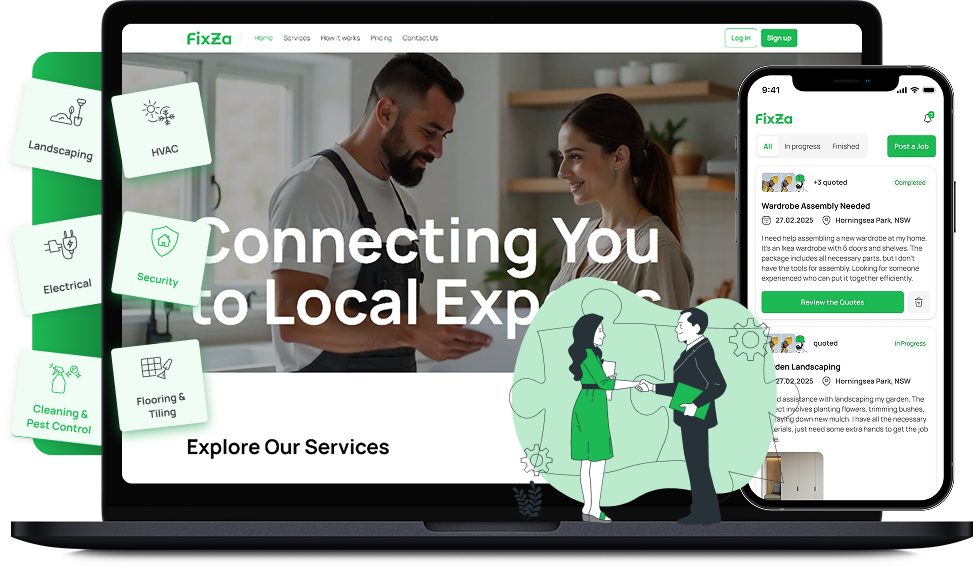
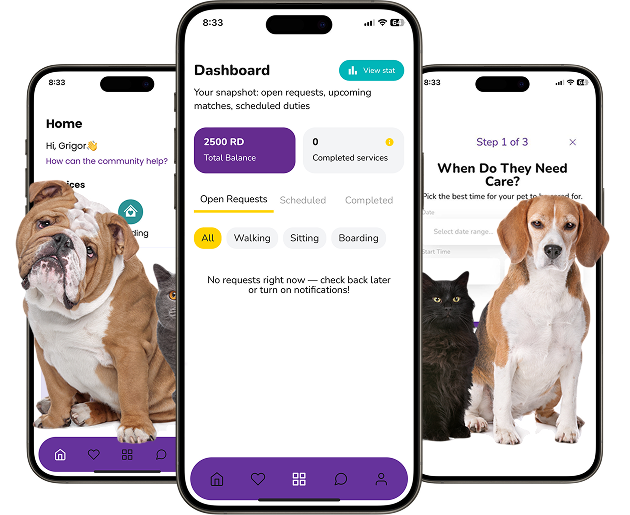
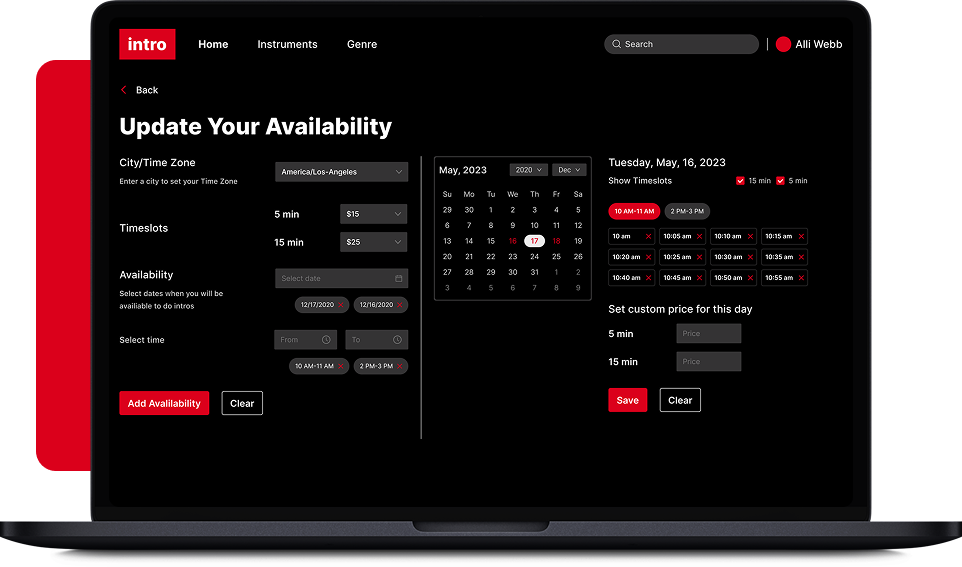
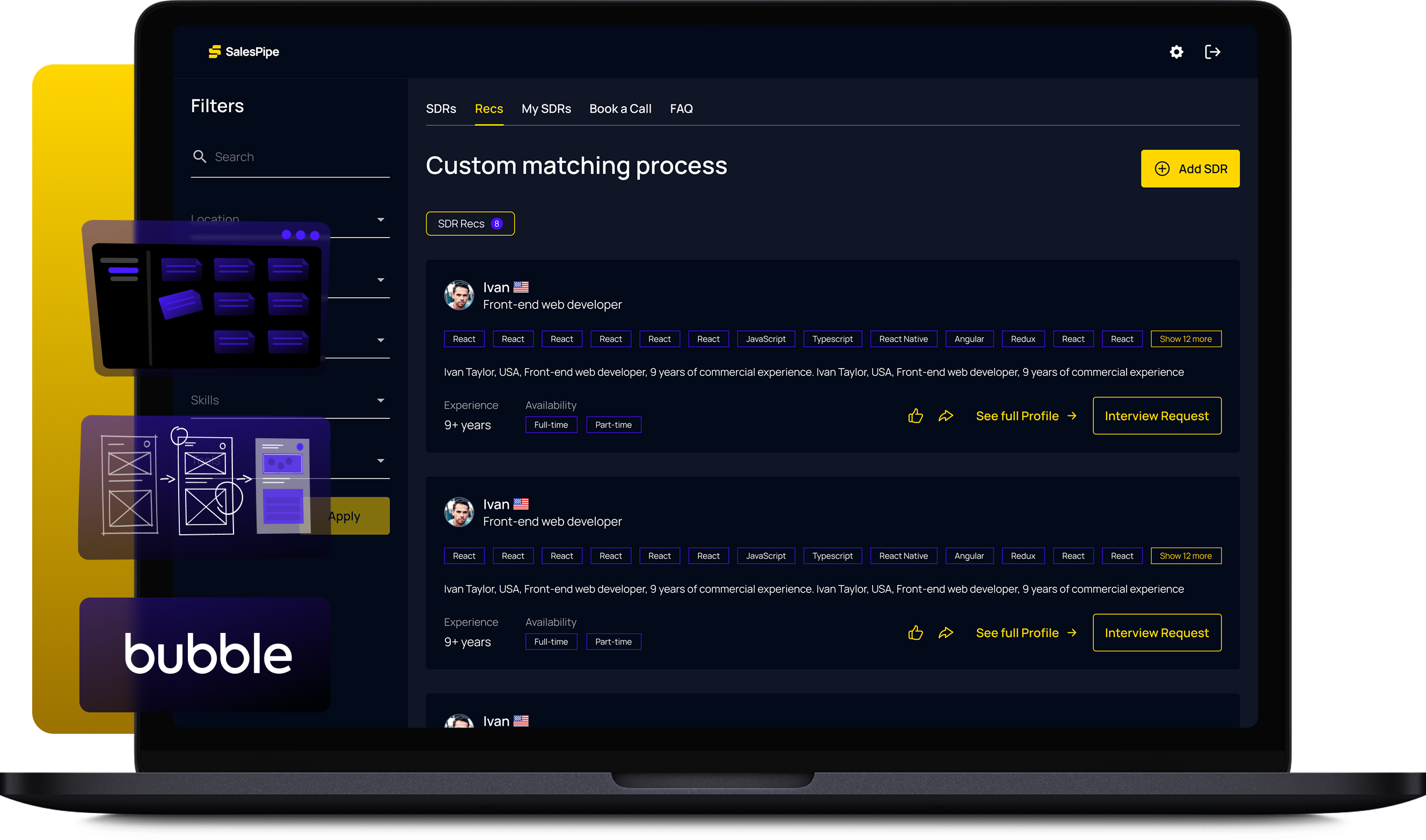
The quick read: service and labor marketplaces are the hardest to build well, because success depends on matching quality and trust rather than a product catalog — that’s exactly where most of our work lives (Swans, FixZa, RyuApp, Borderless, SalesPipe, Intro).
The chicken-and-egg problem — and how we build for liquidity
Liquidity is the single metric that decides a marketplace’s fate. Here’s what it is, why it’s hard, and the concrete ways we design for it.
Liquidity means a user who arrives can reliably find what they need and transact, fast. Once you hit it, network effects kick in: more buyers attract more sellers, more sellers attract more buyers, and growth becomes self-reinforcing. That flywheel is the holy grail — and getting it spinning is the whole game.
1More supply joins↓
2Better selection↓
3More buyers arrive↓
4More transactions↓
5Stronger network↻
The metrics investors actually watch
Marketplace founders raising a Series A are measured on marketplace-specific metrics: a liquidity score above 60%, a fill rate above 25%, GMV retention above 80%, and an LTV:CAC of 3:1+. Build the platform without designing for these and you’ll have software nobody uses.
How we build for liquidity from day one
01
Solve the cold start supply-first
The standard rule: start with the side that’s harder to acquire and has the stronger incentive to join early — usually supply. An empty marketplace destroys the buyer experience instantly, so we seed and onboard supply first, with tooling that makes the first providers successful.
02
Make the first transaction effortless
The faster a new user reaches their first successful match, the higher the chance they come back. Every screen shortens the path from "arrived" to "transacted."
03
Engineer for fill rate
Smart matching — not just a search box. FixZa uses AI-driven job creation and smart matching so a posted job reaches the right tradespeople fast. The higher the fill rate, the faster liquidity compounds.
04
Drive repeat behavior with messaging
Network effects only compound if users come back. The communication layer is the retention engine that turns one transaction into a habit.
Onboarding from the first page: the killer feature
The single highest-leverage feature in any marketplace is how fast a new user goes from landing on the homepage to actively engaging. Not after a six-step signup. From the first page.
Most marketplaces bury the value behind a wall: sign up, verify email, complete a profile, then maybe see what’s on offer. Every step bleeds users. The marketplaces that achieve liquidity do the opposite — they let a user experience the core value immediately, and ask for commitment only once the value is obvious.
Traditional onboarding
100%
Land → sign up
68%
Verify email
43%
Build profile
24%
Finally see value
~24% reach value
Liquidity-first onboarding
100%
Land → see value
91%
Browse / engage
81%
Capture at intent
76%
Active user
~76% reach value
For a buyer
Search or browse before signup — see real supply, prices, availability on the first visit — no "create an account to continue" wall
Start engagement from the homepage — post a job, request a match, or book immediately; capture the account at the moment of intent
Progressive profiling — collect info across the natural flow, not one intimidating form upfront
For a provider (supply)
Fast, guided setup — get listed and discoverable in minutes, with templates and smart defaults
Immediate proof of demand — show new providers the demand that already exists so they finish onboarding instead of abandoning it
Messaging & notifications: the retention engine
Most marketplace builders bolt on basic chat and call it done. But the communication layer is what turns a one-time transaction into a habit — and habits are what compound network effects. We build it as a first-class system.
Real-time messaging that closes deals
In-context conversations — tied to the listing, job, or booking — not a disconnected chat silo
Real-time delivery — typing indicators, read receipts, presence so both sides know the other is engaged
Media + structured messages — photos, quotes, booking confirmations, payment requests inside the thread
Moderation + safety — keep transactions on-platform — preventing disintermediation, the leak that kills marketplace revenue
Notifications that bring both sides back
Behavioral triggers — a new match, a new message, a price drop, a booking reminder — the right nudge at the right moment
Multi-channel — push, email, SMS, in-app — routed to where each user actually responds
Re-engagement intelligence — bring back a provider who hasn’t listed in 7 days; nudge a buyer who searched but didn’t book
Anti-spam discipline — notifications that drive action without training users to mute you
Done right, messaging and notifications aren’t a feature — they’re the engine that keeps both sides returning. We build them with the same rigor as the transaction core, because retention is where marketplace value actually accrues.
7 two-sided marketplaces we’ve shipped
Not stock illustrations — real marketplaces running real two-sided networks. Grouped by type, because the type determines the hard part.
The biggest marketplaces aren’t just a storefront connecting two sides — they run an entire operation behind the match. Once transactions flow, you need to manage relationships (a CRM), and you need to run operations: payouts, inventory or availability, dispatch, accounting, support (an ERP). The marketplace front-end is the visible tip; the operational backbone is what makes it sustainable.
Bali Love is a clear example — a marketplace that’s simultaneously a CRM and an ERP, where connecting the two sides is only the start. Trucking88 is the same story in logistics: a two-sided dispatch marketplace with a full operational platform underneath — invoicing, payroll, fleet, and chat.
This is where our operational-software depth compounds with our marketplace experience. We build the whole backbone — see our CRM development and ERP development for the adjacent surfaces, built by the same team.
Marketplaces are among the hardest businesses to get off the ground, and many ideas are better off as something simpler. We’ll tell you to reconsider when:
!
You can’t seed one side first
with no path to bootstrap initial supply (or demand), the cold start will starve the marketplace before it breathes
!
Transactions are rare and high-value
if a user transacts once a year, there’s no habit to build and network effects barely compound — a directory or service business may fit better
!
You’d be a worse version of an incumbent
competing head-on with an established liquid marketplace without a sharp wedge is a losing battle
!
The two sides don’t need a platform to find each other
if they already transact easily offline, a marketplace adds friction, not value
When the marketplace model genuinely fits, we go all in on liquidity. When it doesn’t, we’ll say so on the scoping call — and often point you toward a simpler model that gets you to revenue faster.
Real founders who hired NerdHeadz to build their marketplace.
On shipping two-sided platforms that reached liquidity — not just launched.
01 / 07
“
This system has been a dream of mine for almost a year. I have tried to build it myself and finally came to the conclusion I needed help. The NerdHeadz team has built me exactly what I was dreaming about and more! Working with them has been an absolute pleasure. I can't thank them enough.
We’ve felt the chicken-and-egg problem firsthand. Every marketplace we build is designed for the cold start, the fill rate, and the network-effect flywheel — not just the feature list.
7+ marketplaces shipped.
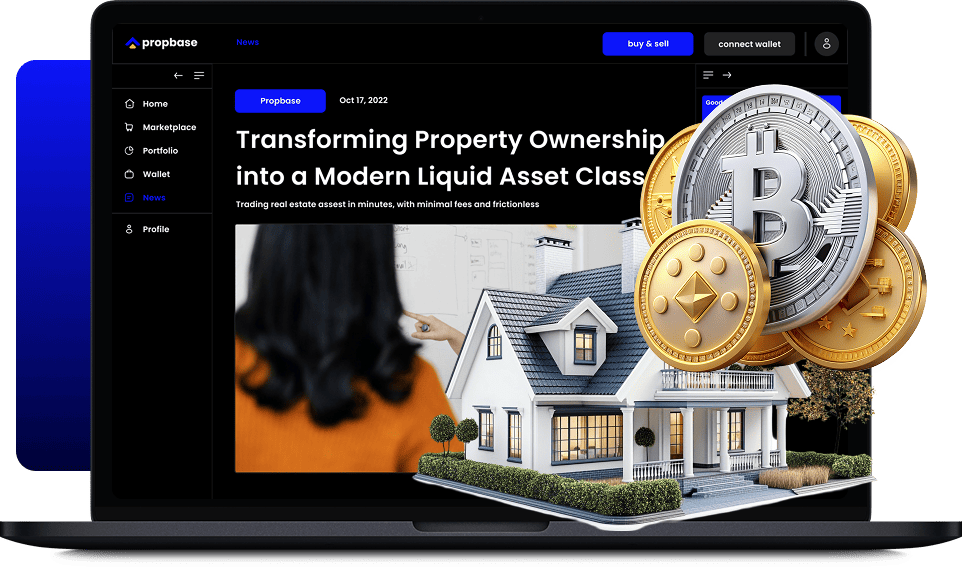
Swans, FixZa, RyuApp, Intro, Borderless, SalesPipe, Propbase — across service, labor, and product. Mostly the hardest type: two-sided service-provider matching where trust and matching quality decide everything.
Onboarding & messaging as first-class systems.
The killer features — frictionless first-page onboarding and the messaging/notification retention engine — get the same engineering rigor as the transaction core. That’s where liquidity is won.
The whole backbone, not just the storefront.
When your marketplace needs a CRM and an ERP behind the match — like Bali Love or Trucking88 — we build the full operational backbone, not just the front-end.
Frequently asked questions about marketplace development
A marketplace app is a platform that connects two (or more) distinct user groups — typically buyers and sellers — and facilitates transactions between them. Unlike a single-vendor store, a marketplace hosts many independent providers. Examples include product marketplaces (Amazon-style), service marketplaces (beauty, trades, pet care), labor marketplaces (freelance, hiring), and rental marketplaces. The platform earns revenue by taking a commission on transactions.
It’s the core challenge every marketplace faces at launch: buyers won’t join without sellers, and sellers won’t join without buyers. An empty marketplace is worthless to both sides, so getting the first users on board is brutally hard. The standard solution is to seed one side first — usually supply, since providers have a stronger financial incentive to join early — then attract the other side. Solving this is far harder than building the platform itself.
Liquidity is the ability of a user who arrives to reliably find what they need and transact, fast. High liquidity means buyers and sellers find each other effortlessly. It’s the single most important marketplace metric — once you achieve it, network effects compound and growth becomes self-reinforcing. Investors look for a liquidity score above 60% and a fill rate (the share of buyer requests that result in a match) above 25%.
Product marketplaces (physical goods, multi-vendor retail), service marketplaces (beauty, trades, pet care, consulting), labor/talent marketplaces (jobs, freelance, staffing), rental marketplaces (equipment, space, vehicles), and digital-goods marketplaces. By matching model, we build listing-based, algorithmic-matching, auction/bidding, and booking marketplaces. We’ve shipped 7+ across service, labor, and product.
A focused marketplace MVP (one matching model, core transaction flow, payments): $25k–$70k. A full custom marketplace with advanced matching, native mobile apps, and a rich messaging/notification layer: $70k–$250k+. Marketplaces with a full operational backbone (CRM + ERP behind the match) sit at the higher end. After scoping you get a fixed-price quote.
A marketplace MVP: 8–14 weeks. A full custom marketplace with mobile apps and advanced features: 4–8 months. We recommend launching with an MVP that proves your matching model and reaches initial liquidity, then iterating — building everything upfront before validating the model is the most common marketplace mistake.
Off-the-shelf builders (Sharetribe, Arcadier, CS-Cart) are fast and cheap for validating an idea, but you hit walls on custom matching logic, unusual transaction flows, and the differentiated onboarding/messaging experience that actually drives liquidity. If the marketplace is your business, your matching is non-standard, or you need to own the experience end-to-end, custom is the right call. We’ll honestly tell you which fits your stage.
Usually supply (the sellers/providers). Providers have a stronger financial incentive to join early, and an empty marketplace immediately destroys the buyer experience. For most B2C marketplaces, onboarding supply takes more effort (verification, profiles, listings), so it’s the harder, more valuable side to lock in first. We design the cold-start strategy as part of the build.
We integrate Stripe Connect (or similar) to handle split payments, escrow, and automated provider payouts, customized to your commission structure and payout schedule. Escrow is especially important for service and high-trust marketplaces — it holds funds until the transaction completes, protecting both sides.
Because they’re the retention engine. Network effects only compound if users come back, and the communication layer is what brings them back — a new match, a new message, a booking reminder, a re-engagement nudge. In-context, on-platform messaging also prevents disintermediation (the two sides taking the deal off-platform and cutting you out of your commission). We build messaging and notifications as first-class systems, not bolt-on chat.
Disintermediation is a real marketplace revenue leak. We design against it: keep high-value communication and payment on-platform, make the on-platform experience genuinely better (escrow protection, dispute resolution, reviews, scheduling), and use messaging moderation where appropriate. The goal is to make staying on-platform the obviously easier and safer choice.
Yes. Many marketplaces need both — a web platform for discovery and SEO (listing pages rank in search), plus native mobile apps for buyers and providers who transact on the go. We build the shared backend once and deliver web + iOS + Android against it. FixZa, for example, combined a Bubble app with a Webflow SEO layer.
Seven-plus two-sided marketplaces: Swans (luxury beauty artists), FixZa (local trades), RyuApp (pet caregivers), Intro (live creator video), Borderless Jobs (cross-border hiring), SalesPipe (SDR talent), and Propbase (web3 real estate). Most are service or labor marketplaces — the hardest type, where matching quality and trust matter more than a product catalog.
Yes — and the larger marketplaces need exactly that. Behind the match sits relationship management (CRM) and operations (payouts, inventory/availability, dispatch, accounting — effectively an ERP). We build the full operational backbone, not just the storefront. Bali Love and Trucking88 are both marketplaces with CRM and ERP functionality underneath.
Sources & citations
Qubit Capital, Series A Marketplace Metrics Playbook 2026 (liquidity, fill rate, GMV benchmarks)
Cobbleweb, Cracking the Chicken-and-Egg Challenge in Marketplace Startups
The Marketplace Guide, Cold Start Pattern (supply-first strategy)
Building a marketplace? Let’s talk liquidity first.
30-minute scoping call. Tell us about your two sides and how they should match. We'll come back with a cold-start strategy, an onboarding-first build plan, and a fixed-price quote — or an honest take on whether a marketplace is even the right model for your idea.