
The software is your product
When code is the deliverable, not a back-office utility.
Production-grade custom applications, internal tools, and SaaS platforms — engineered with AI-assisted development, owned by your team from commit one. No vendor lock-in. No black boxes. No rebuild tax in 18 months.
Most teams reach a point where the tenth SaaS subscription stops being a solution and starts being the problem. Workflows are stitched together with Zapier, exceptions live in spreadsheets, and the thing your business actually does — the thing nobody else does the way you do it — has no software around it. Custom software is what you build when off-the-shelf has run out.
Custom software development is the design, engineering, and delivery of software built specifically for one company’s workflows, instead of buying a generic tool and bending the business around it. A custom build makes sense when off-the-shelf software costs more in workarounds than the build itself costs, or when the software is the product. The deliverable is working code your team owns, deployed to your infrastructure, evolved on your timeline.

Off-the-shelf isn’t free — it costs in licenses, in workarounds, in integration spaghetti, in process drift, in the edge cases your business has that the vendor doesn’t care about. Below are the five scenarios where custom pays for itself. We’ve shipped all of them.
When code is the deliverable, not a back-office utility.
Off-the-shelf tools force compromise on your moat.
Regulatory requirements SaaS vendors won’t meet.
When patches cost more than a clean rebuild.
Not a chatbot bolted on — AI in the data layer, the UX, the loop.
Two-week discovery: product strategy, architecture decisions, scope and budget locked. Then iterative two-week sprints — design, engineering, and review running in parallel, not waterfall. AI-assisted development across the whole stack: code generation, refactoring at scale, test authoring, doc maintenance. One engineer using Claude Code outpaces three engineers from 2023, and the code quality is higher because the boring parts get the same attention as the interesting ones. You see working software every two weeks, deployed to staging. You ship to production when you’re ready, not when the contract says so.
Strategy, architecture, scope, fixed-price quote.
Two-week sprints. Working software in staging every cycle.
Cutover, monitoring, runbooks live.
Either we transition out cleanly, or we keep building.
Everything that matters lives in your GitHub, your cloud, and your wiki — not behind a NerdHeadz license. The grid below is the full inventory. The test we hold ourselves to: if we walk away tomorrow, your engineers can pick up the day after without us.
Most agencies in 2026 say “we use AI.” That usually means a copywriter prompts ChatGPT for a docstring. We mean something different. Our engineers ship through Claude Code. Architecture reviews include LLM-driven code analysis. Tests are generated and refactored in the same loop as the code. Deployment scripts get the same AI scrutiny as features. The result is a 4–8x throughput gain on most projects, with code quality that holds up under audit. This isn’t a roadmap claim — it’s how every project shipped in 2026 was built.
The practical effect: builds that quoted at $80K from traditional shops in 2023 ship from us at $10–30K today, on faster timelines, with the same or better code quality. The longer answer is here: AI-assisted development.

Frontend: TypeScript, React, Next.js, React Native, Tailwind. Backend: Node.js, FastAPI, Go where latency matters. Data: Postgres, Redis, ClickHouse for analytics, pgvector or Pinecone for retrieval. AI layer: Claude, GPT-5, Gemini, plus open-source models when the use case earns it. Infrastructure: AWS, GCP, or your existing cloud — Kubernetes if you have an ops team, serverless if you don’t. Auth: Clerk, Auth0, or self-hosted Keycloak. Payments: Stripe. We pick the boring, well-documented option for the parts that don’t matter and the right tool for the parts that do.
Three shapes, depending on what you need. The cards below cover all three. Most engagements start with a 14-day prototype to lock scope before any larger commitment, then move into the model that fits. We’ll tell you which fits your situation in the first call.
The day the project ships isn’t the end — it’s when the questions get harder. We stay engaged on whatever shape makes sense: maintenance retainers, feature work, on-call coverage, security reviews. Either path, you own the product. We’re a partner, not a vendor. The split below shows how the partnerships actually run.
Most builds we ship land between $10,000 and $150,000 for a complete v1. AI-assisted development changes the cost math — what used to take a 4-engineer team for $80K now takes 1 engineer plus Claude Code for a fraction of that. A focused internal tool with one user role and 2–3 integrations runs around $10–20K. A multi-tenant SaaS platform with auth, billing, AI features, and admin tooling runs $40–80K. Enterprise platforms with complex compliance scale higher. We send a fixed-price quote within 5 business days of the discovery call.
Most v1 builds ship in 8–16 weeks. A simple internal tool can be production-ready in 6 weeks. A complex multi-role platform with AI features takes 12–20 weeks. We commit to a fixed timeline before the first sprint, and we hit it. If scope changes mid-build, we re-baseline transparently.
SaaS is software you rent — generic, shared, evolving on the vendor’s timeline. Custom software is software you own — specific to your workflow, on your infrastructure, evolving on your timeline. SaaS wins when your needs match the vendor’s roadmap. Custom wins when they don’t, or when the software is itself the product.
Yes, from commit one. Code lives in your GitHub organization. We have access only while the project is active. When the engagement ends, we revoke our own access and hand you everything — source, infrastructure code, secrets, runbooks. There’s no escrow, no licensing trick, no vendor lock-in.
Yes — about 40% of our clients are non-technical at the time we start. We translate technical decisions into business language, give you the framework to make architecture calls without needing to read the code, and write documentation that survives your future engineering hires. If you want to learn the technical side as we build, we’ll teach. If you want to stay focused on the business, we’ll handle it.
Yes. We do this regularly — companies inherit legacy systems, lose engineering teams, or hit a wall with previous vendors. We start with a 1–2 week audit (architecture, code quality, security, tech debt), deliver a written assessment, and propose either a refactor path or a rewrite path with cost and timeline for each. About half the time, the refactor is cheaper than the rewrite. We tell you honestly which one your situation is.
Two-week sprint cycles mean problems surface fast. We re-baseline scope, timeline, or budget transparently the moment a risk shows up — not at the end. If we miss a commitment we made, we eat the difference. If you change scope, we quote the change before we build it. We’d rather have a hard conversation in week 4 than a disaster in week 12.
Yes. NDA before the first scoping call if you want one. Mutual NDAs by default. We don’t reuse client code, designs, or domain insights with other clients.
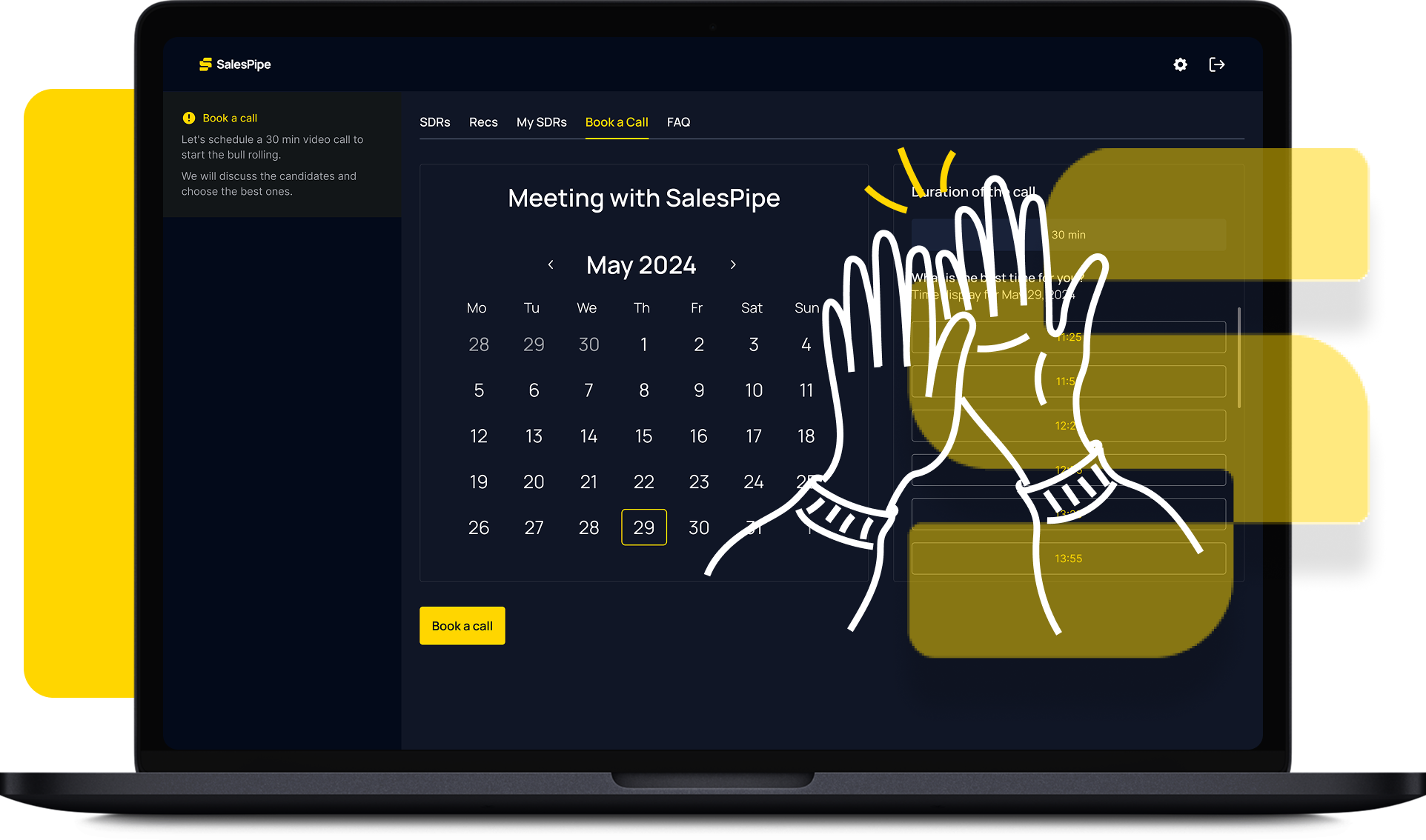
Multi-tenant pipeline platform with embedded AI scoring. Shipped v1 in 9 weeks; embedded team continues monthly.
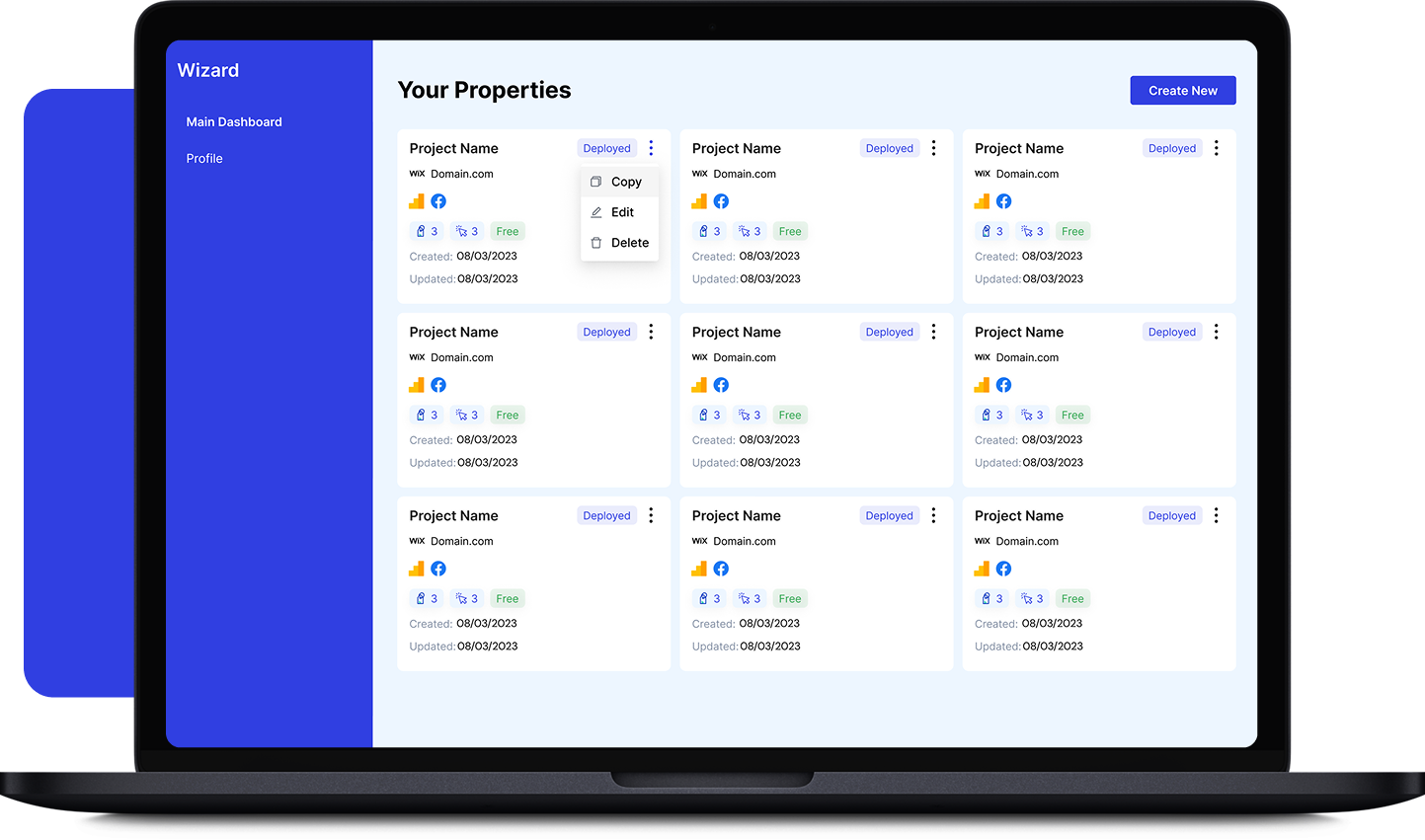
Internal tool that became the product. Three years of continuous build, same team, same repo.
Talk to an AI for a 60-second scope, or book a 30-min call with the founder.