
Bootstrapped founders
You need an MVP that scales into a real product without hiring a CTO-level engineer on day one. The product matters more than the title chart.
Senior engineers paired with AI coding tools — Claude Code, Cursor, Copilot — to ship production software 3× faster and at a fraction of agency cost. Human judgment stays in control. The AI writes the code. We write the product.

Experienced engineers drive the process. AI handles the typing. You get production software in weeks, not quarters — at a price point that used to require either a scrappy co-founder engineer or a six-figure retainer.
Generic AI tools won’t ship your product. They don’t know your users, your data model, or your deployment target. Somebody has to do the thinking — break the work into tasks, judge quality, fix what the machine gets wrong, ship to production, talk to the first customers.
That’s where we come in. AI-assisted development, the way NerdHeadz practices it, means experienced engineers drive the process while AI handles the typing. We architect the system, review every piece of generated code, own the deployment, and ship. The AI accelerates the work. It doesn’t replace the engineering.
The output: modern, production-grade software at a pace and price point that used to require either a scrappy co-founder engineer or a six-figure retainer. Neither is most founders’ reality.
Four real options when you need a product shipped. Here’s the honest trade-off table.
Most of our clients have tried at least one of the other three before they call us. The most common path: started in no-code, outgrew it, can’t afford a $200k agency rebuild and can’t wait six months to hire. That’s the gap this service fills.
You need an MVP that scales into a real product without hiring a CTO-level engineer on day one. The product matters more than the title chart.
You want to own your codebase and not be locked into a no-code platform. You’ve heard the no-code horror stories and want real software.
Bubble, Glide, Webflow, Airtable — you shipped something, found users, hit the platform ceiling. Now you need real engineering.
Skunkworks projects that need to move faster than IT can approve a vendor. You need a real product without the procurement runway.
If you’ve ever said “I’d hire an engineer but I can’t afford one for six months” — this is the service.

Production infrastructure, not demo-ware. Real authentication, real databases, real deployment.
Stack: Next.js, Payload CMS, TypeScript, PostgreSQL or MongoDB.

Admin panels, data pipelines, ops software. The work that runs the business but doesn’t justify a full dev hire.
Stack: Next.js, Payload CMS, TypeScript, PostgreSQL or MongoDB.

Marketplaces, SaaS products, customer portals. The kind of build that would normally cost $80k+ from a traditional agency.
Stack: Next.js, React Native, TypeScript, PostgreSQL or MongoDB.

Bubble apps that outgrew the platform. Webflow sites that need custom backends. Lovable or v0 prototypes ready for production. We rebuild on modern infrastructure at AI-assisted speed.
Stack: Next.js, Payload CMS, TypeScript, PostgreSQL or MongoDB.
Most projects fit cleanly into one of two commercial shapes.
Most real projects start fixed-price for the known scope and shift to T&M as new requirements emerge. That’s the model.
Async discovery, then one call. We come back with a scope doc, a tech-stack recommendation, and a fixed-price quote (or T&M estimate if scope is too ambiguous to fix).
User flows, data model, integration list. The spec is where most “bugs” actually live; we spend the time here so we don’t pay for it later.
Senior engineers driving Claude Code, Cursor, and Copilot through the work. Daily commits visible in your repo. Weekly check-ins, not status theater.
Production deployment, runbooks, monitoring. Documentation any engineer can read. Optional retainer for post-launch work.
We’re not tool-agnostic out of false neutrality. We have opinions because we use these tools every day on production work.

Primary driver. Agentic, handles multi-file refactors, reads the whole codebase. We run it in production terminals.
Where: most production builds.

Tight feedback loops on individual files. Fastest autocomplete for known languages.
Where: per-file work, frontend polish.

Background assist, inline suggestions. Works well alongside Claude Code.
Where: every editor session, low-friction.

Agent-style builds where we want the AI to drive longer chains of work autonomously.
Where: greenfield agentic projects.
The choice of tool per project depends on what we’re building. We don’t sell tools — we use them. You own the codebase, the credentials, and the output. No lock-in.
Dogfooding isn’t a marketing line. We use AI-assisted development on our own production work, so we know what the methodology actually ships versus what breaks under load. A few examples we can talk about:
Next.js, Payload CMS, TypeScript, Cloudflare. ~30,000 lines of code, ~400 indexed pages. Built and maintained with Claude Code.
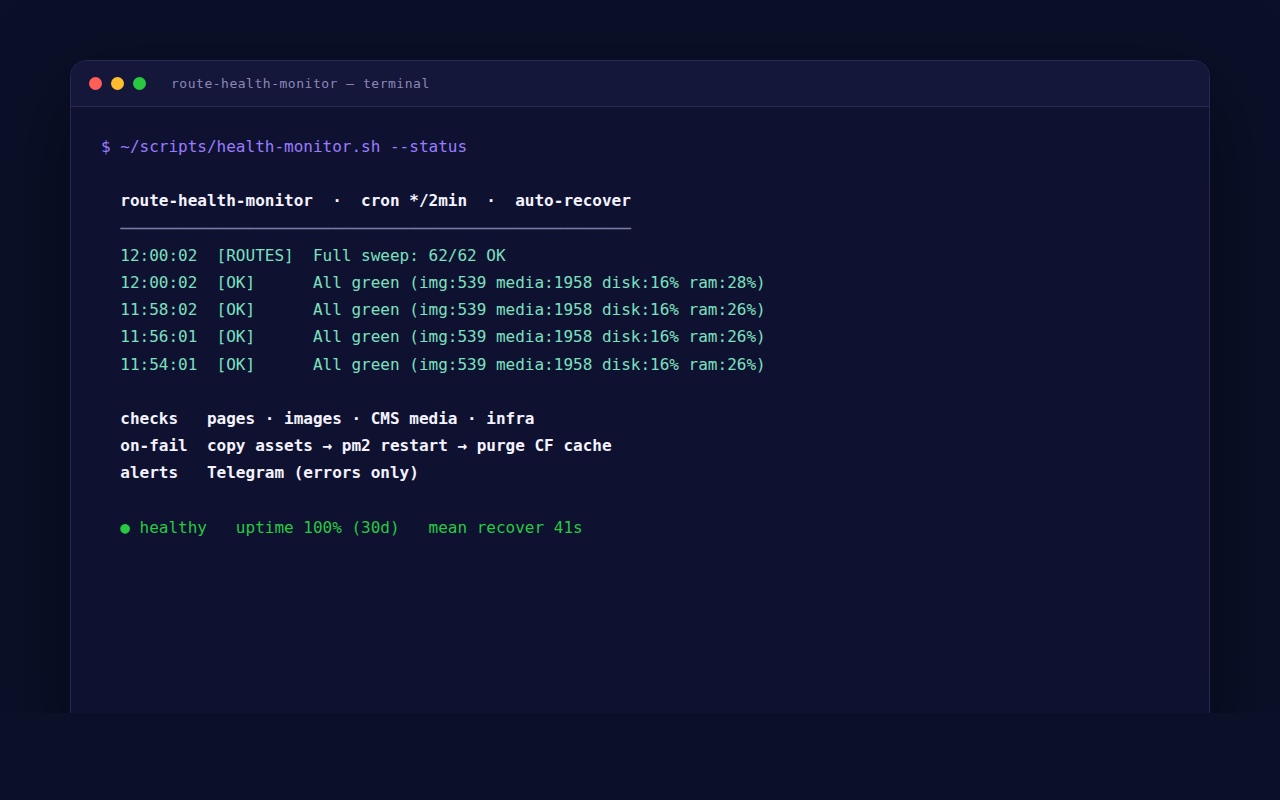
Cron-driven health checks across 60+ tracked routes, auto-recovery, Telegram alerts, Cloudflare cache purge integration. Built in a weekend.
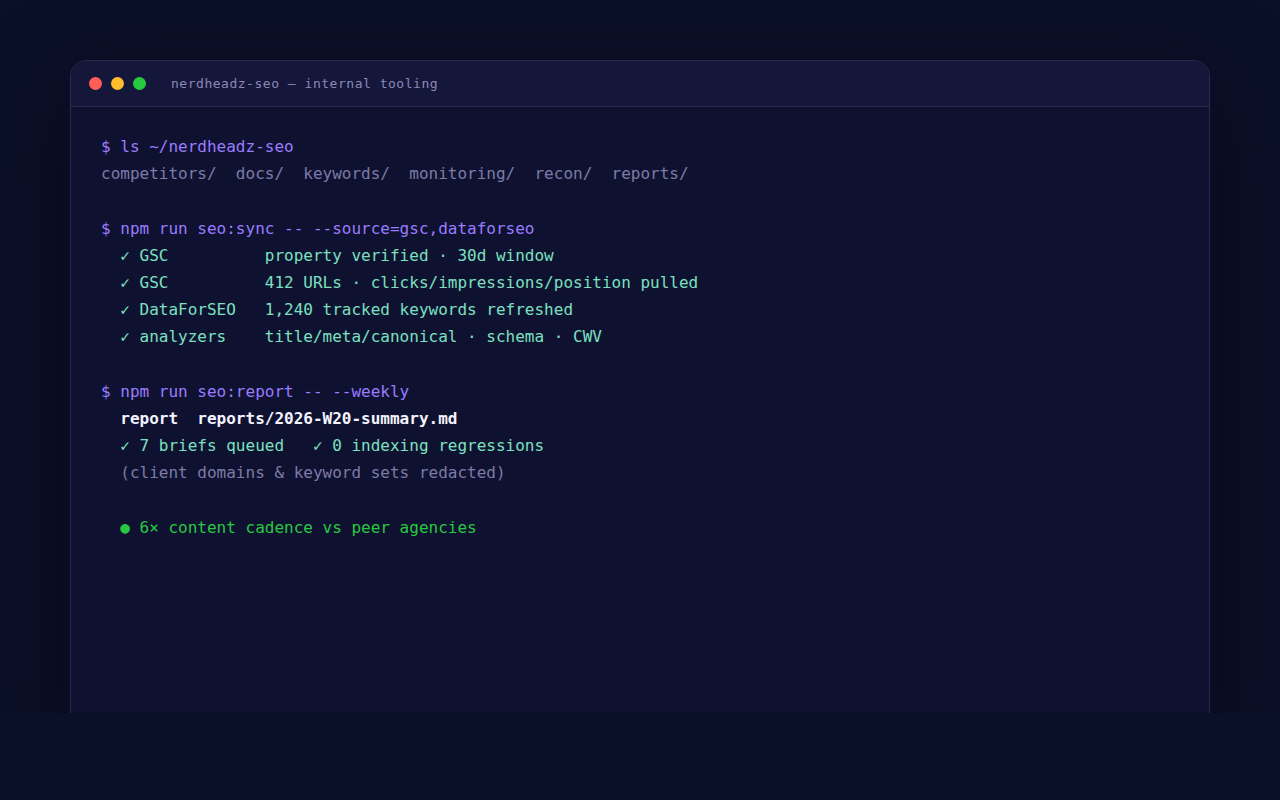
DataForSEO + GSC + custom analyzers. The reason we publish content on a 6× faster cycle than most agencies our size.
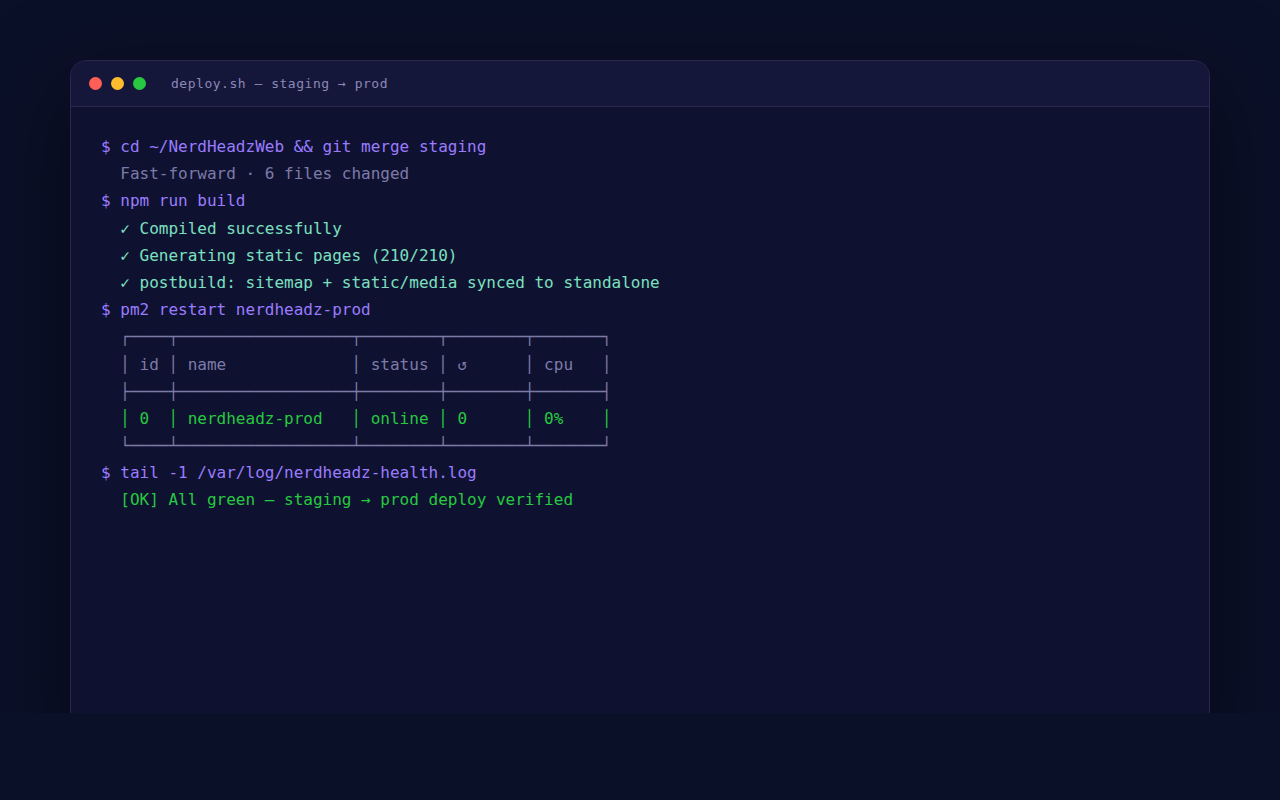
Staging worktree auto-sync, MongoDB dump/restore, PM2 process management. Zero CI/CD vendor lock-in.
Every one of these was built using the same AI-assisted methodology we’ll use on your project. We can show you the commit history.
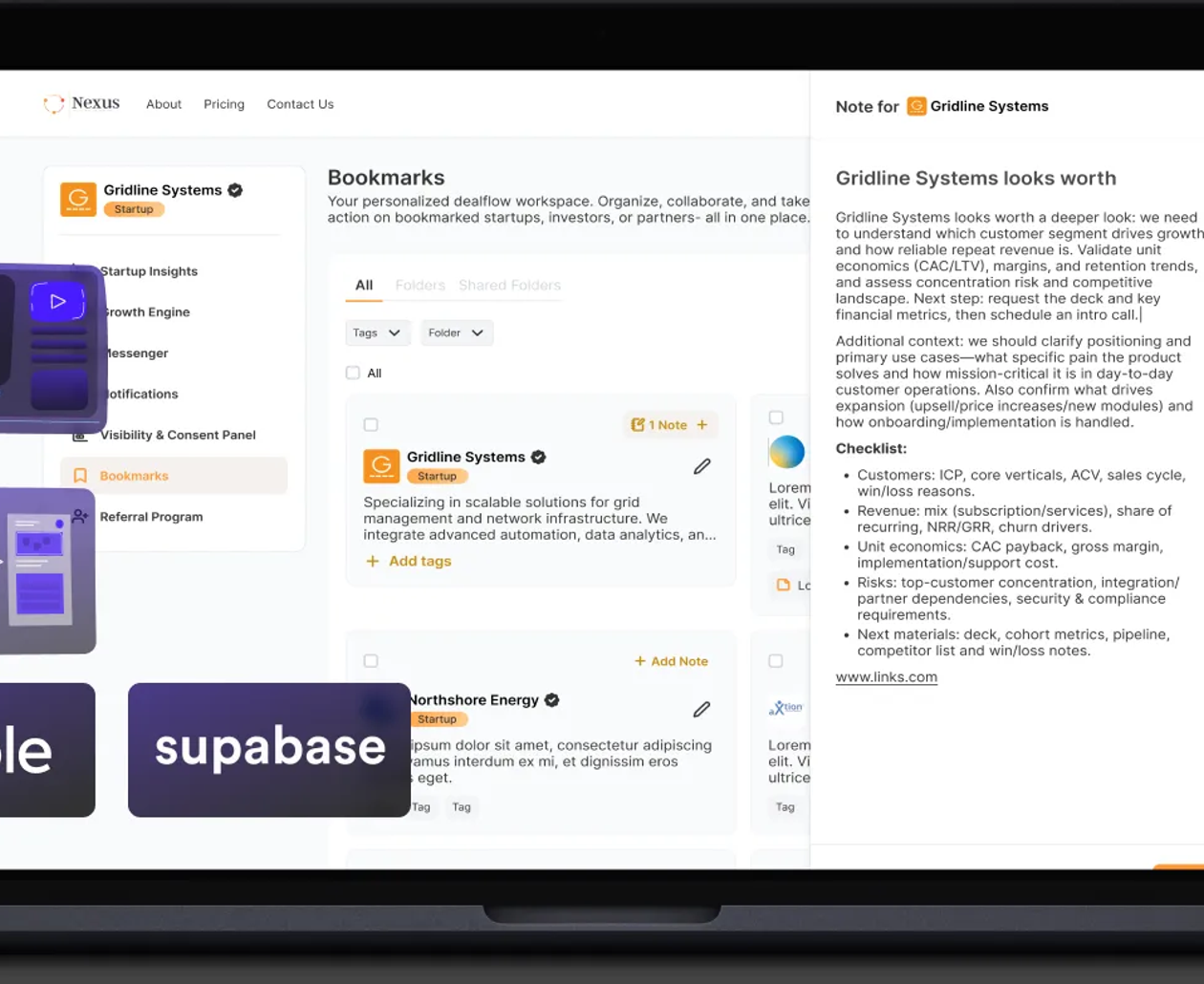
A B2B SaaS venture-intelligence platform — AI agent reasoning, a Growth Engine, and multi-tenant architecture across 11 core services.
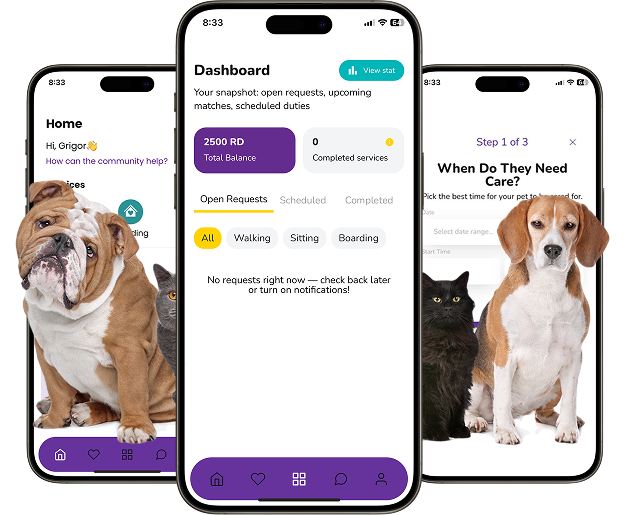
Caregiver–pet matching platform shipped on a bootstrapped budget — production auth, payments, and infra.
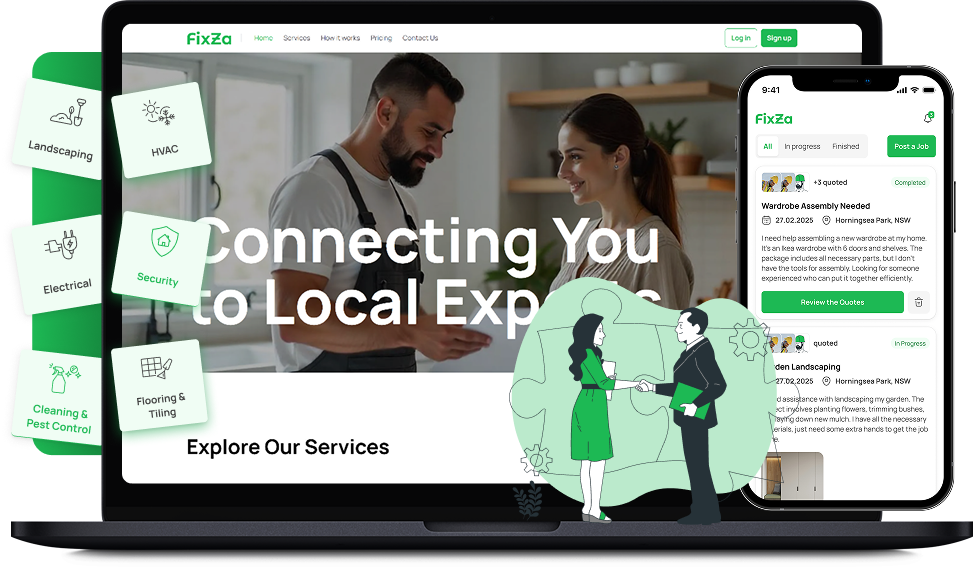
On-demand services marketplace built fast on modern infrastructure — owned codebase, no platform lock-in.
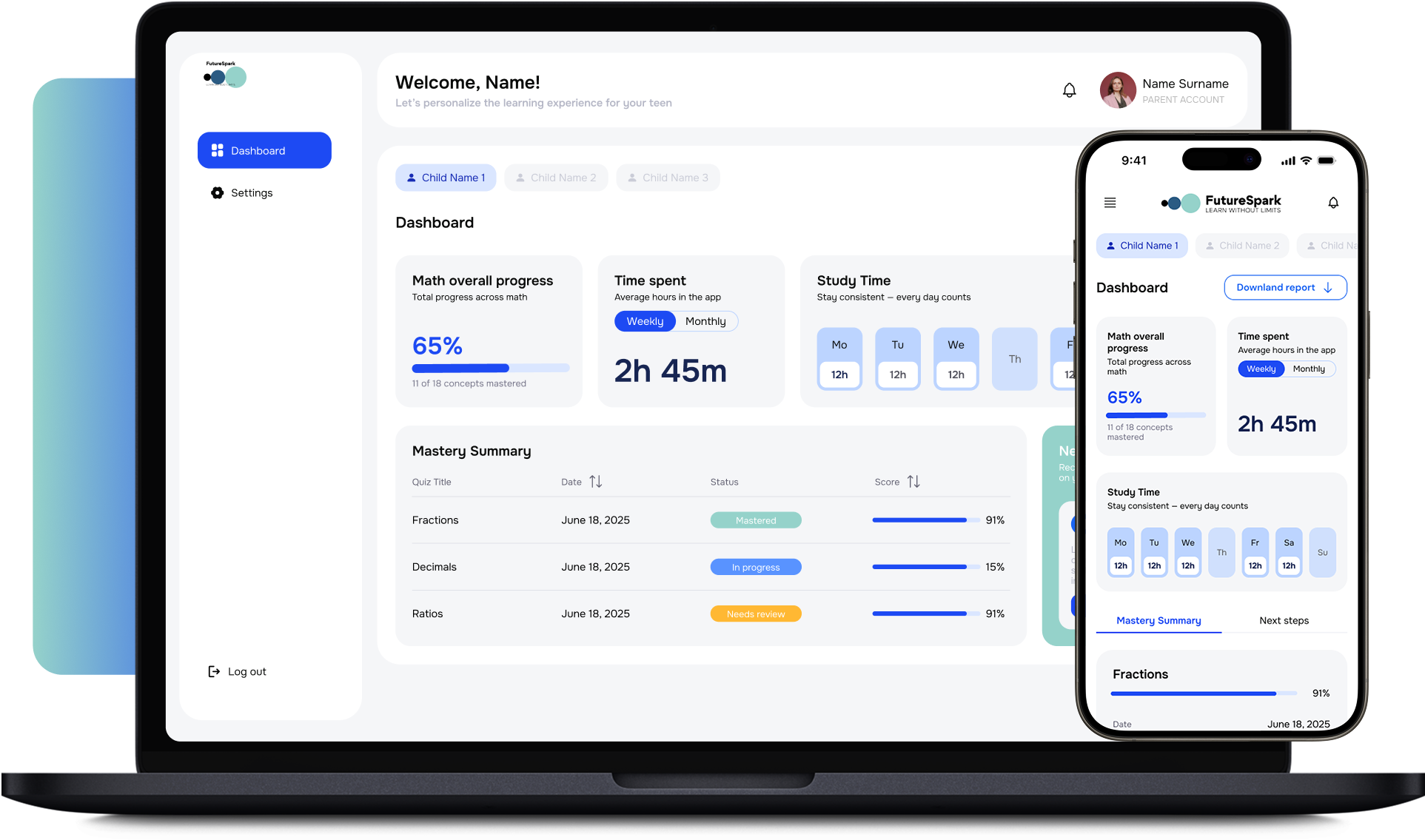
EdTech SaaS platform delivered in weeks, not quarters, with a clean engineer-readable handoff.
Hear it straight from our customers.
This system has been a dream of mine for almost a year. I have tried to build it myself and finally came to the conclusion I needed help. The NerdHeadz team has built me exactly what I was dreaming about and more! Working with them has been an absolute pleasure. I can't thank them enough.
No “AI does the work, junior reviews it” pipeline. The engineer on your project has shipped production software for years.
We use these tools on our own production work daily. The methodology we sell is the methodology we live in.
You own the code, the credentials, the infrastructure. Any engineer can pick it up after we hand off.
No T&M surprises during the build. If scope changes mid-project, you see the time logs.
No. No-code platforms lock you into their tools and pricing. AI-assisted development produces real code in your repository, running on your infrastructure. You own it. You can hire any engineer to continue it.
Every line is reviewed by an experienced engineer. The AI writes drafts at human-level quality; we test, refine, and ship. Most bugs come from ambiguous requirements, not the AI — which is why we spend upfront time on spec and not on “prompt engineering.”
AI accelerates the typing, boilerplate, and first-draft work — the parts that typically eat the most hours. What remains is engineering judgment, which is what you’re actually paying for. Fewer hours to the same output = lower cost. Typical project comes in at roughly half what a traditional agency would charge.
You do. Full repository access, your infrastructure, your credentials. We don’t keep copies or maintain black-box hosting.
Yes. We embed alongside existing engineers, match their conventions, and hand off cleanly. Many of our projects involve an internal developer learning our workflow and continuing it after we leave.
Common — most projects aren’t, at first. The first phase (Scope + Spec, 1–2 weeks) is designed to make scope concrete enough to fix-price. If after that phase the scope is still genuinely ambiguous, we move to T&M and you see hourly logs.
Default modern web stack: Next.js, TypeScript, React, Node.js, PostgreSQL or MongoDB, Payload CMS where it fits, Cloudflare for deployment. For mobile: React Native. For AI features inside the product: Claude or OpenAI APIs. We pick per project — you’ll see the recommended stack in the scope doc.
30-minute scoping call, no pitch deck. Bring the idea — we’ll tell you what’s realistic, what’s expensive, and what’s possible in six weeks.