In this article06 +
Gemma 4 Is Changing What "Local AI" Means for Builders

On April 2, 2025, Google DeepMind released Gemma 4 — a family of four open models ranging from 2B to 31B parameters that prioritizes intelligence per parameter over raw scale. As covered by The Turing Post, the release triggered a wave of adoption among OpenClaw users looking for a capable, cost-free alternative to expensive closed-model APIs. We've been watching this shift closely because it directly affects how we architect local and hybrid AI systems for clients.
What makes this release significant isn't just the benchmark numbers. It's the philosophy behind it: DeepMind is optimizing for hardware reality, not hardware aspiration. The same architectural ideas — sparse activation, efficient attention, multimodal processing — are expressed differently depending on whether the deployment target is a smartphone, a workstation GPU, or a high-end accelerator. That's a meaningful shift in how open models are designed.
What Gemma 4 Actually Is

Gemma 4 is a deployment-aware model family structured around two distinct hardware tiers.
The E2B and E4B variants are edge-optimized dense models built for phones, embedded systems, and devices like a Raspberry Pi or Jetson board. They support text, images, and audio natively, run fully offline, and are designed for near-zero latency with minimal battery draw. These are the models that make on-device AI feel genuinely practical rather than theoretical.
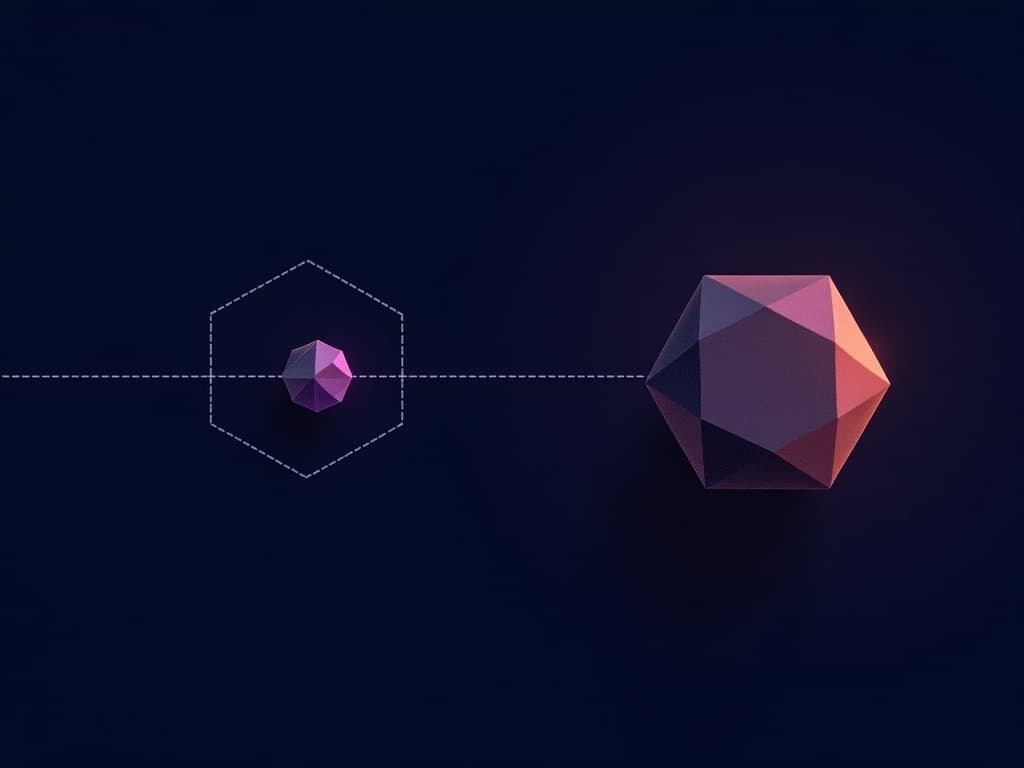
The 26B A4B (Mixture-of-Experts) and 31B dense variants are built for local frontier-level reasoning. The MoE model activates only ~3.8B parameters during inference despite having 26B total — meaning you get the capability profile of a large model at a fraction of the compute cost. In BF16 precision, both fit within a single 80GB H100. With quantization, they run on consumer workstation GPUs. The 31B currently sits at #3 on the Arena AI open model leaderboard.
Across the entire family, Gemma 4 ships with native support for function calling, structured JSON output, system-role instructions, and 140+ languages. These aren't optional add-ons — they're the baseline. That makes Gemma 4 a genuine reasoning engine for agentic workflows, not just a capable chat model.
If you're building applications that depend on structured outputs and tool use, our RAG & LLM Development practice has been integrating open models like this into production pipelines — and the agent-native design of Gemma 4 matters a lot in that context.
The Architecture Behind the Efficiency

Understanding why Gemma 4 performs the way it does requires looking at how it handles attention. Every model in the family interleaves local sliding window attention with periodic global attention layers. Local layers attend only to a fixed window of nearby tokens (512 for smaller models, 1024 for larger ones), reducing attention cost from O(n²) to O(n·w). Global layers periodically re-align the model with the full context. The final layer is always global — a deliberate choice that ensures the model integrates the complete sequence before generating output.
To make global attention viable at scale, DeepMind applied five targeted optimizations: grouped query attention with 8 query heads per KV head, doubled key dimensionality to preserve capacity, setting keys equal to values to reduce memory bandwidth, and partial RoPE (p-RoPE) that applies positional encoding to only 25% of dimensions. This last change is particularly important — it lets the model generalize to very long contexts (up to 256K tokens) without overfitting to positional distances seen during training.
The MoE variant adds another layer of efficiency. A routing mechanism activates only 8 of 128 available experts per token, plus one shared expert that's always active. You pay the compute cost of ~4B active parameters while benefiting from the learned diversity of a 26B parameter space.
Working on something similar? Talk to our team about how we're applying open model architectures like this in production AI builds.
Vision and Audio: Multimodality Done Practically

Every Gemma 4 model processes images. The vision pipeline uses a Vision Transformer encoder to split images into patches, applies 2D RoPE to encode spatial position along horizontal and vertical axes independently, and uses adaptive resizing with padding to preserve aspect ratios. A soft token budget (ranging from 70 to 1,120 tokens) lets developers trade resolution for inference speed depending on the use case.
The E2B and E4B models go further by adding native audio processing. A conformer-based audio encoder converts raw speech into embeddings using spectrograms and convolutional layers, then projects them into the same embedding space as text and images. This allows continuous multimodal input — relevant for real-time applications where audio, vision, and text arrive together.
The larger 26B and 31B models skip audio intentionally. They're designed for complex reasoning and planning tasks where audio input would add overhead without meaningful benefit. This kind of deliberate specialization is exactly the design discipline that makes Gemma 4 deployable rather than just impressive.
Why OpenClaw Users Are Making the Switch
The adoption signal among OpenClaw users is strong, and the reasons aren't mysterious. Gemma 4 combines free inference, Apache 2.0 licensing, strong size-to-capability ratios, and day-one availability across Ollama, NVIDIA, and Google AI Studio. For developers paying for both an Anthropic subscription and API credits, a capable local model that costs nothing per token is a genuinely compelling alternative.
The most common pattern we're seeing discussed is using Gemma 4 as a local triage layer — handling routine tasks locally and routing only the hardest reasoning jobs to Claude or GPT-4. This kind of multi-model routing is a core pattern in modern AI development, and Gemma 4's native function calling and structured output support makes it a viable first-tier model in that architecture.
The Gemma family has now crossed 400M downloads and 100K community variants on Hugging Face, and Gemma 4 is currently trending at #1 on the platform. That's not benchmark theater — that's real adoption pressure from developers making practical infrastructure decisions.
Where Gemma 4 Still Falls Short

Not everyone is staying. Some OpenClaw and LocalLLaMA users report that Gemma 4 struggles with tool use and maintaining agent context across long conversation turns — a critical failure mode for complex agentic workflows. Competing models like Qwen3 are still preferred by some users for harder multi-step reasoning.
The integration itself can be brittle. OpenClaw's large system prompt, hardcoded timeout behavior, and local backend quirks can make Gemma 4 appear broken until properly tuned. The official inferrs documentation even warns that some Gemma configurations require setting supportsTools: false to function reliably.
This is the honest picture: Gemma 4 is genuinely good enough for a wide range of local AI tasks, but the agentic workflow integration is still maturing. Users are routing to it where it performs well and keeping fallbacks in place for everything else. That's a reasonable posture for a model that's been publicly available for weeks, not years.
For teams building production agentic systems, understanding when to use open models like Gemma 4 versus hosted APIs is a core architectural decision — one we work through with clients regularly. Our approach to retrieval-augmented generation and LLM orchestration gives useful context on how these routing decisions play out in practice.
Ready to build? NerdHeadz ships production AI in weeks, not months. Get a free estimate.
“Gemma 4 collapses multiple constraints at once — compute, cost, licensing, and deployment — which is exactly why local AI builders are paying attention.”
Gemma 4 represents a genuine step forward in making frontier-level AI capability accessible across real hardware constraints — phones, laptops, and consumer GPUs included. Its combination of efficient architecture, permissive licensing, and native agentic features makes it one of the most practically deployable open models available today. The integration rough edges will smooth out; the underlying design philosophy is sound.
FAQ
Frequently asked questions
What is Gemma 4 and how is it different from previous Gemma models?
Gemma 4 is a family of four open models released by Google DeepMind in April 2025, ranging from 2B to 31B parameters. Unlike previous Gemma releases, it is explicitly structured around hardware deployment targets — edge devices for E2B/E4B and local GPU servers for the 26B/31B variants — and ships with native support for agentic workflows including function calling, structured JSON output, and multimodal input.
Why are OpenClaw users switching to Gemma 4?
OpenClaw users are switching to Gemma 4 primarily because it eliminates API costs, carries a permissive Apache 2.0 license, and delivers strong reasoning and coding performance on local hardware. It also supports the core agentic features — function calling, structured outputs, long context — that modern AI agent frameworks require, making it a viable local alternative to expensive closed models like Claude.
What are the limitations of using Gemma 4 for agentic AI workflows?
Gemma 4's main limitations in agentic contexts include weaker tool use reliability compared to models like Qwen3, occasional context loss across long agent turns, and integration friction with frameworks like OpenClaw that use large system prompts and strict timeout behavior. These issues are configuration-sensitive and partially addressable through tuning, but the integration is still maturing as of the initial release.