FlutterFlow development — native mobile, with a clean way out
FlutterFlow is the rare no-code platform that doesn’t lock you in. It’s a visual builder on top of Google’s Flutter framework, so the output is real native iOS and Android — and on Basic plans and above, you get 100% of the Dart code to take anywhere. We use it for cross-platform mobile MVPs where time-to-market matters and the option to graduate into hand-coded Flutter is preserved — and we’ll tell you honestly when scratch-Flutter, React Native, or custom native is the better call.
iOS + Android compiled from one Flutter codebase — not a web wrapper
Cross-platform apps built fast with FlutterFlow
Most no-code platforms ask you to trade speed for lock-in. FlutterFlow doesn’t. That’s the whole reason it’s in our stack.
FlutterFlow is a visual development platform built on top of Google’s Flutter framework. It enables drag-and-drop creation of beautiful, natively-compiled mobile applications for iOS and Android from a single codebase — and crucially, on Basic plans and above, it gives you 100% of the generated Dart/Flutter code to take anywhere. That single property — real code, fully exportable — separates it from every other no-code tool, and is the reason it survives our general thesis that no-code platforms produce lock-in nobody asked for.
Our FlutterFlow development services include custom UI component design, Firebase and Supabase backend integration, REST API connections, push notifications, authentication flows, custom Dart code injection where the visual builder runs out, AI Copilot-assisted UI generation (Prompt-to-Component and Image-to-Component, bundled in the Pro tier as of 2026), and app store deployment to both Apple and Google stores. We build everything from consumer-facing apps to internal business tools — all with native performance and pixel-perfect design.
FlutterFlow is ideal for startups validating a cross-platform mobile idea fast, and for established teams that want a high-velocity MVP path while preserving the option to graduate into hand-coded Flutter at scale. Every app we build is optimized for performance, accessibility, and a seamless experience across devices — and architected from day one so that the exit ramp (out of FlutterFlow into raw Flutter, or out of the visual editor into mixed-code) is clean when you need it.
Why we reach for FlutterFlow
Real native — same Flutter underneath
Output is genuine native iOS + Android compiled from Flutter — not a web wrapper. Performance is indistinguishable from a hand-coded Flutter app because it is a hand-coded Flutter app: the visual builder just authored the code.
100% Dart code export
On Basic and higher tiers, you download every line of the generated Dart code and continue in any Flutter IDE. No vendor lock-in, no proprietary runtime. The cleanest eject ramp in no-code.
Custom code injection anywhere
Drop into custom Dart and arbitrary Flutter packages at any point in the visual project. When the no-code ceiling shows up, we go through it without leaving the codebase.
Firebase + Supabase, configured visually
Auth, Firestore, Storage, Supabase Postgres — wired in the editor with native connectors. Hours of SDK setup compressed into clicks, with real backends, not a sandbox.
AI Copilot (Pro tier)
Prompt-to-Component, Image-to-Component — describe a UI in a sentence (or upload a screenshot) and FlutterFlow generates a configurable widget. Bundled in Pro as of 2026; we use it to compress the first-pass UI.
One-click store deployment
Deploy direct to Apple App Store and Google Play without touching Xcode or Android Studio — when you want to ship rather than yak-shave native build tooling.
The code-export story — why FlutterFlow is different
We’re generally cautious about no-code platforms. They sell speed and quietly charge it back in lock-in, multi-platform subscription stacks, and a one-way ticket when you outgrow them. FlutterFlow is the rare exception, and it’s the reason it sits in our stack at all.
01
Real Flutter, not a proprietary runtime
FlutterFlow is a visual layer on top of Google’s open-source Flutter framework — it generates standard Dart code. Other no-code platforms invent their own runtime, so when you outgrow them you’re rewriting, not migrating. FlutterFlow projects are Flutter projects; they always were.
02
Basic-tier+ export means real ownership
On the $39/mo Basic plan and above, you download 100% of the Dart source — clean, customizable, standard Flutter you can continue in VS Code, Android Studio, or any Flutter IDE. The "no lock-in" claim is verifiable: you keep the code.
03
The eject ramp is bidirectional
You can stay in FlutterFlow and inject custom Dart wherever needed (the most common pattern for us — visual where it’s fast, hand-coded where it has to be). Or export and never come back, continuing in raw Flutter. Or do both in stages — visual for the bulk, code for the parts that need control. The platform doesn’t punish either choice.
FlutterFlow vs the alternatives
The honest framing isn’t “FlutterFlow is great” — it’s “FlutterFlow fits a specific window, and here’s where it doesn’t.” Four real alternatives, with what each wins and where we’d pick it instead.
A common pattern we ship: FlutterFlow for the MVP (weeks, not months) → export Dart at the inflection point → continue in scratch Flutter for the scale phase. Same framework throughout, no rewrite. See our Mobile Development and React Native pages for the alternative paths.
The 2026 FlutterFlow platform
FlutterFlow has evolved meaningfully in 2025-2026. Here’s what’s actually in the box.
AI Copilot (Pro+)
Prompt-to-Component and Image-to-Component — generate widgets from a description or an uploaded screenshot, then refine visually or with follow-up prompts. Bundled into Pro as of 2026 pricing restructure. We use it for the first-pass UI on most projects.
Native backend connectors
Firebase (Auth, Firestore, Storage, Cloud Functions, Cloud Messaging) and Supabase (Auth, Postgres, Storage, Edge Functions) wired visually inside the editor. REST and GraphQL API connectors for anything else. Real backends, not sandboxes.
Direct App Store / Play deploy
Build and submit to Apple App Store and Google Play directly from FlutterFlow on Basic+ plans — without standing up Xcode, Android Studio, or your own signing pipeline. The fastest path from prototype to a downloadable app we’ve used.
Custom Dart + Flutter packages
Inject custom Dart actions, custom widgets, and any pub.dev Flutter package directly into a FlutterFlow project. The no-code ceiling is permeable — when the visual builder runs out, we drop straight into code.
The prototype → production path
Here’s how a typical FlutterFlow project we run actually flows — from MVP to scale, with the eject ramp built into the plan.
FlutterFlow01
MVP — weeks, not months
Build the cross-platform app visually in FlutterFlow with Firebase/Supabase backend, custom Dart where needed, AI Copilot for first-pass UI. Ship to App Store and Google Play. Validate with real users on real native iOS + Android.
→
FlutterFlow + custom Dart02
Growth — mixed visual + code
As features deepen, we inject custom Dart and Flutter packages directly into the FlutterFlow project. Visual builder for the bulk; hand-coded Flutter for the parts that need control. No platform jump.
→
Scratch Flutter03
Scale — export & graduate (if needed)
If complex state management, advanced animations, or enterprise architecture push past the visual builder, we export 100% of the Dart code and continue in scratch Flutter. Same codebase, not a rebuild. Many projects never need this; the option is what matters.
This is exactly the “no-code → custom software” arc, done well: speed where it helps, ownership throughout, graduation only when it earns its cost. We architect projects from day one to flow through these three stages cleanly — or stop wherever they should.
Pricing & the time-to-MVP math
Two honest pictures: what FlutterFlow itself costs in 2026, and how that compares to building the same MVP in scratch Flutter.
Chart 1 · FlutterFlow pricing tiers
4 tiers, with the code-export gate at Starter+
Free
$0
Editor, Firebase/Supabase connectors — no code export, no store deploy
Starter
~$30/mo
Code export + store deploy basics
Pro
DAILY DRIVER
~$39/mo
+ AI Copilot (Prompt/Image-to-Component), advanced features
Teams
$70/user/mo
+ shared workspace, RBAC, priority support
The Free plan is a try-before-you-buy: editor and backend connectors, but no code export and no store deployment, so it’s prototype-only. Real production starts at Starter or Pro — and AI Copilot moves to Pro as of the August 2025 pricing restructure. (Annual billing -25% on all paid tiers.)
FlutterFlow vs scratch Flutter — the MVP-phase math
FlutterFlow2–6 weeks
Lower · subscription + dev time
Scratch Flutter team8–16 weeks
Much higher · $70K–$100K typical for a Flutter team to ship the same MVP
For the MVP window — proving the idea, validating with real users — FlutterFlow’s economics are compelling: weeks instead of months, far below a scratch Flutter team’s total cost. The math flips at scale (complex state, deep architecture), which is why we plan the eject ramp from day one.
When FlutterFlow isn’t the right call — and we’ll say so
If your app has very complex state management, advanced custom animations, deep real-time architecture, or enterprise-scale concerns from day one, scratch Flutter or native is the better starting point — debugging visual logic at that complexity becomes harder than writing code, and we don’t pretend otherwise. If your team already lives in the React ecosystem and the cross-platform requirement is modest, React Native often fits better. And if the app needs deep OS-level integration — bespoke Bluetooth, advanced biometrics, custom camera pipelines — native (Swift/Kotlin) gives the control FlutterFlow’s abstraction lays over.
FlutterFlow is genuinely excellent for the specific window it’s designed for — cross-platform mobile MVPs and mid-complexity apps where time-to-market matters and the eject ramp into scratch Flutter is the safety net. Outside that window, “we used the no-code tool” is the wrong reason. We pick the right tool per project, including the choice to skip FlutterFlow entirely when scratch Flutter or native genuinely fits better — and we’ll tell you which case you’re in honestly.
Proof · Clients
Real teams who hired NerdHeadz to ship cross-platform mobile, the right way.
From a FlutterFlow MVP shipped in weeks to the production app with the eject ramp built into the plan — what a buyer evaluating a mobile partner actually cares about.
01 / 07
“
This system has been a dream of mine for almost a year. I have tried to build it myself and finally came to the conclusion I needed help. The NerdHeadz team has built me exactly what I was dreaming about and more! Working with them has been an absolute pleasure. I can't thank them enough.
Our FlutterFlow apps compile to native iOS and Android with Flutter’s actual framework underneath — performance, animations, and platform APIs that match hand-coded Flutter. No "mobile web" compromises.
Eject ramp built into the plan.
Every project is architected so exporting to scratch Flutter is a clean migration, not a rewrite — clear separation of business logic, custom Dart documented, dependencies pinned. Speed today without trapping tomorrow.
Custom code where the builder runs out.
We don’t stop at no-code’s ceiling — we inject custom Dart and Flutter packages anywhere the visual editor can’t express it. The no-code ceiling is permeable in our hands.
The migration story, when you need it.
When an app outgrows FlutterFlow — complex state, deep architecture, enterprise scale — we run the graduation: export the Dart, continue in scratch Flutter, no rebuild. The eject ramp, executed.
FlutterFlow development FAQ
FlutterFlow is a visual development platform built on Google’s Flutter framework. You design and build native iOS, Android (and web, if needed) apps via a drag-and-drop editor — and FlutterFlow generates real, clean Dart/Flutter code under the hood. It’s a no-code/low-code tool with a meaningful difference: the underlying code is exportable on paid tiers, so the platform doesn’t lock you in.
Real code, but with a tier gate. On the Basic plan and above (currently around $29/mo annual / $39/mo monthly), you can download 100% of the generated Dart source — clean, customizable, standard Flutter you can continue in any Flutter IDE. On the Free plan, code export is locked, which is why we deploy paid plans for any project that’s going beyond prototype.
Four tiers as of 2026: Free ($0, no code export, no store deploy), Starter (~$30/mo), Pro (~$39/mo, includes AI Copilot), and Teams ($70/user/mo, with shared workspace, role-based permissions, priority support). Annual billing saves 25%. Most production projects start on Pro or Teams. (The August 2025 pricing restructure moved some features around, including bundling AI Copilot into Pro — verify current rates at sign-up.)
Real native. FlutterFlow is a visual layer on top of Flutter — the framework that compiles to native iOS and Android binaries. Performance is identical to a hand-coded Flutter app because it is one: the visual builder authored the code. Not a Cordova-style web wrapper, not WebView, not "mobile web." Three apps we shipped in production confirm: same perf as scratch Flutter.
FlutterFlow when speed-to-MVP matters and the team isn’t already Flutter-fluent. Scratch Flutter when the app has complex state management, deep custom architecture, advanced animations, or the team is already Flutter-fluent and visual abstraction adds friction. The common path is FlutterFlow for the MVP, then export to scratch Flutter at the scale inflection — same codebase, no rebuild.
Depends on your existing skills. React Native if your team already lives in React/JavaScript and the cross-platform mobile requirement is modest. FlutterFlow (or scratch Flutter) if you want native-tier performance, a more consistent cross-platform UI, and your team has (or can build) Dart skill. Performance is generally a wash for typical apps; Flutter is slightly better on graphics-heavy work; both ecosystems are healthy.
Different lanes. Bubble is web-app focused (now with mobile in its newer plans); FlutterFlow is native-mobile focused with strong Firebase/Supabase integration. We use Bubble for web-app MVPs; we use FlutterFlow when the product is mobile-first or mobile-only. Crucially, FlutterFlow exports real code; Bubble’s lock-in is significantly tighter.
Very complex state management gets messy in the visual editor — easier to write in code. Advanced custom animations sometimes require manual Flutter coding. Large-scale enterprise architecture needs careful planning that exceeds the visual builder. Debugging visual logic can be harder than debugging code. None of these are blockers (we inject custom Dart where needed); they’re signs the project may belong in scratch Flutter from the start.
FlutterFlow’s built-in AI features. Prompt-to-Component lets you describe a UI in a sentence and FlutterFlow generates a configurable widget. Image-to-Component turns an uploaded screenshot or mockup into a starter widget. Bundled into Pro as of the 2026 pricing restructure. We use it for the first-pass UI on most projects, then refine visually or with custom Dart.
Native visual connectors for Firebase (Auth, Firestore, Storage, Cloud Functions, Cloud Messaging) and Supabase (Auth, Postgres, Storage, Edge Functions), plus REST and GraphQL API connectors for anything else. For most MVPs, Firebase or Supabase handles the backend completely; for more complex needs, we build a custom backend (FastAPI, Node, etc.) and connect it via REST/GraphQL.
Yes, directly. On Basic and above, FlutterFlow handles build configuration, signing setup, and submission to both stores from inside the platform — no Xcode or Android Studio gymnastics required. We’ve done this on production apps; the deploy story is genuinely smooth.
Typically 2–6 weeks for a feature-complete MVP, depending on scope. Compare to 8–16 weeks for the same MVP in scratch Flutter with a small team. The economics are where FlutterFlow earns its place — speed during the validation phase, then graduate when it matters.
Yes, and we design for it. We architect FlutterFlow projects with clean separation of concerns, well-documented custom Dart, and pinned dependencies — so when (or if) an app outgrows the visual builder, the exported Dart is a graduation, not a rewrite. Many projects never need this; the option being available is what matters.
Yes, common engagement. We pick up existing FlutterFlow projects, audit them for production-readiness (custom code patterns, backend security, performance), extend features, harden the architecture, and run the eject ramp if and when the project should graduate to scratch Flutter. We’re often invited in at the point a non-technical founder hits the no-code ceiling.
NoCode.mba, FlutterFlow Pricing 2026: Every Plan Explained — tier breakdown, code export gate.
LowCode Agency, FlutterFlow Pricing Explained 2026 — Hidden Costs & ROI — $70K-$100K scratch Flutter team cost benchmark.
Lovable, 8 Best FlutterFlow Alternatives 2026 — pricing realities, when alternatives fit.
Synergy Labs, FlutterFlow Pricing 2026 — Deep Dive — code ownership at higher tiers, native performance.
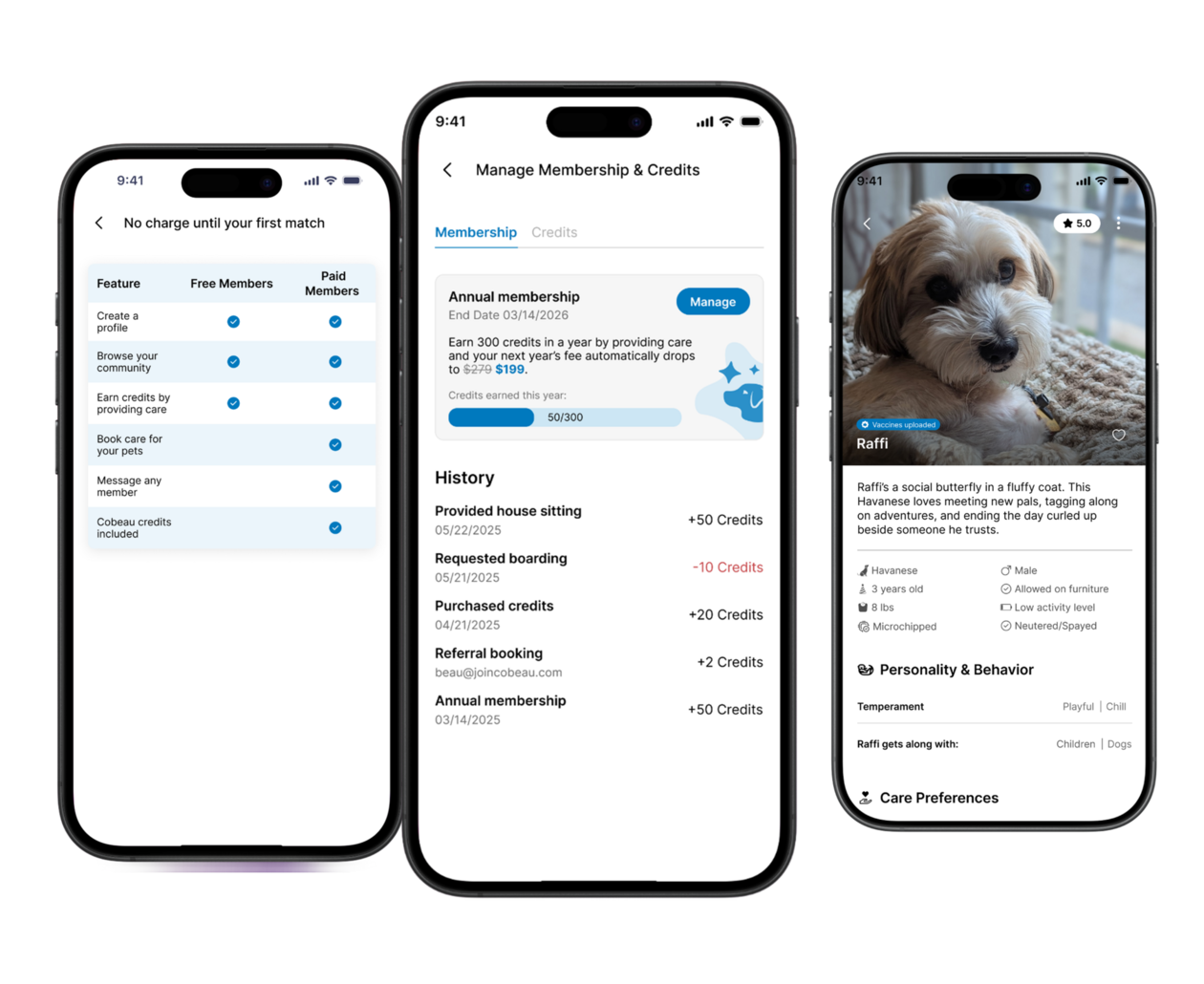
NerdHeadz portfolio: PetSitters App (FlutterFlow petcare marketplace) — the canonical FlutterFlow build, real users on iOS + Android.
FlutterFlow restructured pricing in August 2025 — tier names, prices, and feature gates are current as of 2026-Q2; we re-verify them before client engagements.
Let’s scope
Building a cross-platform mobile app? Let’s talk.
30-minute scoping call. Bring us the mobile idea and we’ll architect the right path — FlutterFlow MVP with a clean eject ramp, scratch Flutter from day one, or React Native if the React fit is stronger. Either way, real native iOS + Android, real code you own, and a fixed-price quote.