In this article05 +
A 1946 Math Problem Just Fell to a General-Purpose AI
In early May 2026, OpenAI announced that an internal AI reasoning model produced a new result in discrete geometry — specifically disproving a long-standing belief around the planar unit distance problem, a combinatorics conjecture Paul Erdős posed in 1946. Latent Space's AI News coverage flagged this as one of the most consequential technical events of the week, and for good reason.
What separates this from previous "AI does math" headlines is the architecture behind the result. The model was not a dedicated theorem prover, a Lean-scaffolded solver, or a domain-fine-tuned specialist. It was a general-purpose AI reasoning model — the same class of system you'd deploy for business logic, document analysis, or multi-step decision support. Mathematician Timothy Gowers called it the first genuinely clear example of AI resolving a well-known open math problem. The published reasoning trace reportedly ran to roughly 125 pages, underlining just how much test-time compute contributed to the result.
Why "General-Purpose" Changes Everything

A domain-specific AI winning at math is impressive but bounded. A general-purpose AI reasoning model doing the same work is a different kind of signal entirely.
It means the same underlying capability — extended, long-horizon reasoning across ambiguous problem spaces — is becoming available to non-math applications. Scientific literature synthesis, legal inference, complex supply-chain optimization, multi-step software architecture decisions: these are all problems that share structural DNA with hard geometry proofs. The model identifies patterns across a large search space, generates candidate constructions, evaluates them against constraints, and iterates. That's not a math trick. That's a reasoning loop.
OpenAI explicitly said the model was not pushed to its limits and is intended for eventual public release. That detail matters for practitioners. The ceiling is higher than what we saw demonstrated, and it's coming to production APIs.
For teams building AI-powered products today, this shifts the planning calculus. If you've been waiting to invest in AI development services because the models felt too narrow or too unpredictable for long-horizon tasks, the trajectory is now clear enough to build toward.
The Infrastructure Story Running Underneath
The math breakthrough dominated the conversation, but the week's other releases tell a parallel story about where the field is maturing: infrastructure, retrieval, and agent reliability.
Working on something similar? Talk to our team about your project.
Perplexity described a production context compression system that cuts token counts by up to 70% while maintaining or improving answer quality — a 50× compression ratio on benchmark tasks. Weaviate added diversity-aware reranking for vector retrieval. A new retrieval model called SID-1 claimed 1.9× recall over standard RAG pipelines at 24× the speed. These aren't research curiosities. They're the plumbing that makes AI reasoning model deployments economically viable at scale.
The agent benchmarking results were more sobering. InferenceBench found that frontier agents still struggle with system-level engineering tasks — dependency management, configuration, broad search across unfamiliar problem spaces. An inverse scaling effect appeared: larger models sometimes produced more brittle final states than smaller, more conservative ones. This matches what we see in production. Raw model capability and reliable agent execution are not the same problem.
What the Open-Weight Releases Signal
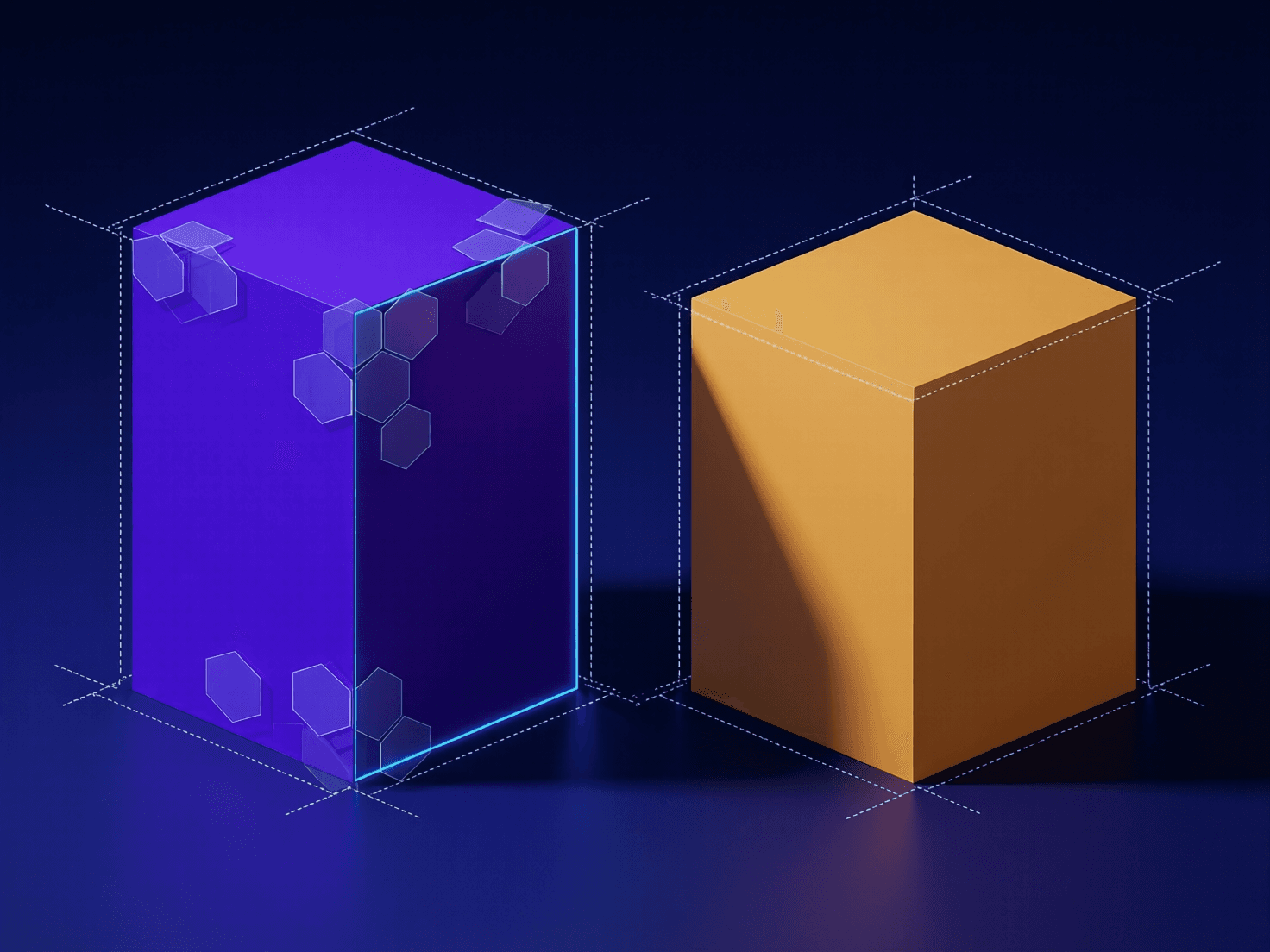
Cohere's release of Command A+ under Apache 2.0 deserves attention beyond the benchmark numbers. At roughly 218 billion parameters with only 25 billion active — a Mixture-of-Experts architecture — it runs on two H100s at aggressive quantization. The Apache 2.0 license means unrestricted commercial deployment, including on-premises and air-gapped environments.
The architectural choices are unusual enough to be instructive: parallel transformer blocks, large shared expert allocation, LayerNorm instead of RMSNorm, and a relatively shallow 32-layer depth. Whether those choices represent genuine innovation or practical compromise is an open question, but the community is treating the release as a meaningful data point, not just a model drop.
ByteDance's Lance model took a different approach — a 3B active-parameter multimodal system spanning image understanding, video generation, and editing. The actual memory footprint tells a more complex story: inference requires 40GB of VRAM, suggesting a composite architecture where multiple specialized submodels stay resident. The headline parameter count understates the real deployment cost, which is a pattern worth watching as "small" multimodal models become more common.
These open-weight releases matter for enterprise builders because they expand the design space. You don't have to route every workload through a frontier API. As we covered in our breakdown of agent infrastructure and decision model trends, the most durable architectures combine hosted frontier models for reasoning-intensive tasks with locally deployed models for high-volume, low-latency, or privacy-sensitive operations.
The Talent and Cost Signals Worth Tracking

Andrej Karpathy joining Anthropic was the week's most-discussed non-technical event, and it's worth reading as a signal rather than drama. Senior researchers moving to frontier labs reflects where they believe the most important work is happening. Anthropic's reported compute agreement — valued at $1.25 billion per month through 2029 — puts real numbers behind the infrastructure ambitions.
On the consumer side, Gemini Pro users reported hitting usage limits after eight minutes of conversation. The metering reality is that even well-resourced providers are rationing frontier model access as inference costs remain significant. This is an argument for building with cost-aware routing from day one, not retrofitting it when bills arrive.
The week's events underscore a through-line we've been watching closely: AI reasoning model capability is advancing faster than the infrastructure to deploy it reliably and economically. The teams winning in production are the ones closing that gap deliberately — with the right retrieval layer, the right model routing, and the right agent architecture for their specific workload. You can see the same pattern playing out in the recent agent security and model rivalry dynamics reshaping how production systems get built.
Ready to build? NerdHeadz ships production AI in weeks, not months. Get a free estimate.
“The model wasn't domain-specific — it was the same general-purpose reasoning system that could, in principle, work on your product.”
OpenAI's Erdős result isn't just a math milestone — it's evidence that general-purpose AI reasoning models are crossing into territory that changes what's buildable in production systems today. The infrastructure layer is maturing fast enough to support that capability, but only for teams who architect for it deliberately. The gap between impressive demos and reliable production AI is still real, and closing it is the actual work.
FAQ
Frequently asked questions
What is the OpenAI Erdős unit distance problem result and why does it matter?
OpenAI's general-purpose reasoning model disproved a long-standing belief around the planar unit distance problem, a discrete geometry conjecture from 1946. Unlike prior AI math results, this was produced by a general-purpose AI reasoning model — not a domain-specific solver — which suggests that long-horizon reasoning capabilities are generalizing beyond narrow mathematical domains.
How does a general-purpose AI reasoning model differ from a specialized math AI?
A specialized math AI is fine-tuned or scaffolded for formal theorem proving in a constrained environment. A general-purpose AI reasoning model applies the same extended reasoning loop — generating candidates, evaluating constraints, iterating — across any problem domain. The Erdős result demonstrates that this loop is now powerful enough to produce novel mathematical constructions without domain-specific architecture.
What should AI development teams take away from the OpenAI math breakthrough?
Teams should treat this as a signal that long-horizon reasoning is becoming a reliable primitive in production AI systems, not just a research artifact. The practical implication is that use cases requiring multi-step inference across ambiguous problem spaces — legal analysis, scientific synthesis, complex architecture decisions — are now more tractable to build. The remaining challenge is infrastructure: retrieval, cost-aware routing, and agent reliability.
Spotted via Latent Space