In this article06 +
*Last updated: November 23, 2026*
Almost everyone who tries to get AI to write in their voice starts the same way. They open a chat and type something like "write in a conversational, witty, direct tone, with short sentences and no jargon." The draft comes back conversational-ish, witty in a greeting-card way, and nothing like them.
The problem isn't the model. A list of adjectives is a weak specification. Thousands of writers would describe themselves as "conversational, witty and direct", and they all sound different. What makes your writing yours is the stuff adjectives can't carry: how you open, which jokes you never make, how long your sentences run before you break one off short, what you leave out.
The better approach is simple to state. Show the model your writing instead of describing it, then measure whether it worked. Mike Taylor, who runs evals at Every, wrote up a version of this in November after years of trying to get AI to write like him, and the research on style imitation backs it up. We turned the whole method into a step-by-step guide to making AI writing sound human, with copyable prompts, a SKILL.md template and a scoring script. This post is the short version and the argument for why it works.
Why describing your style fails

There are two reasons, and both are measurable.
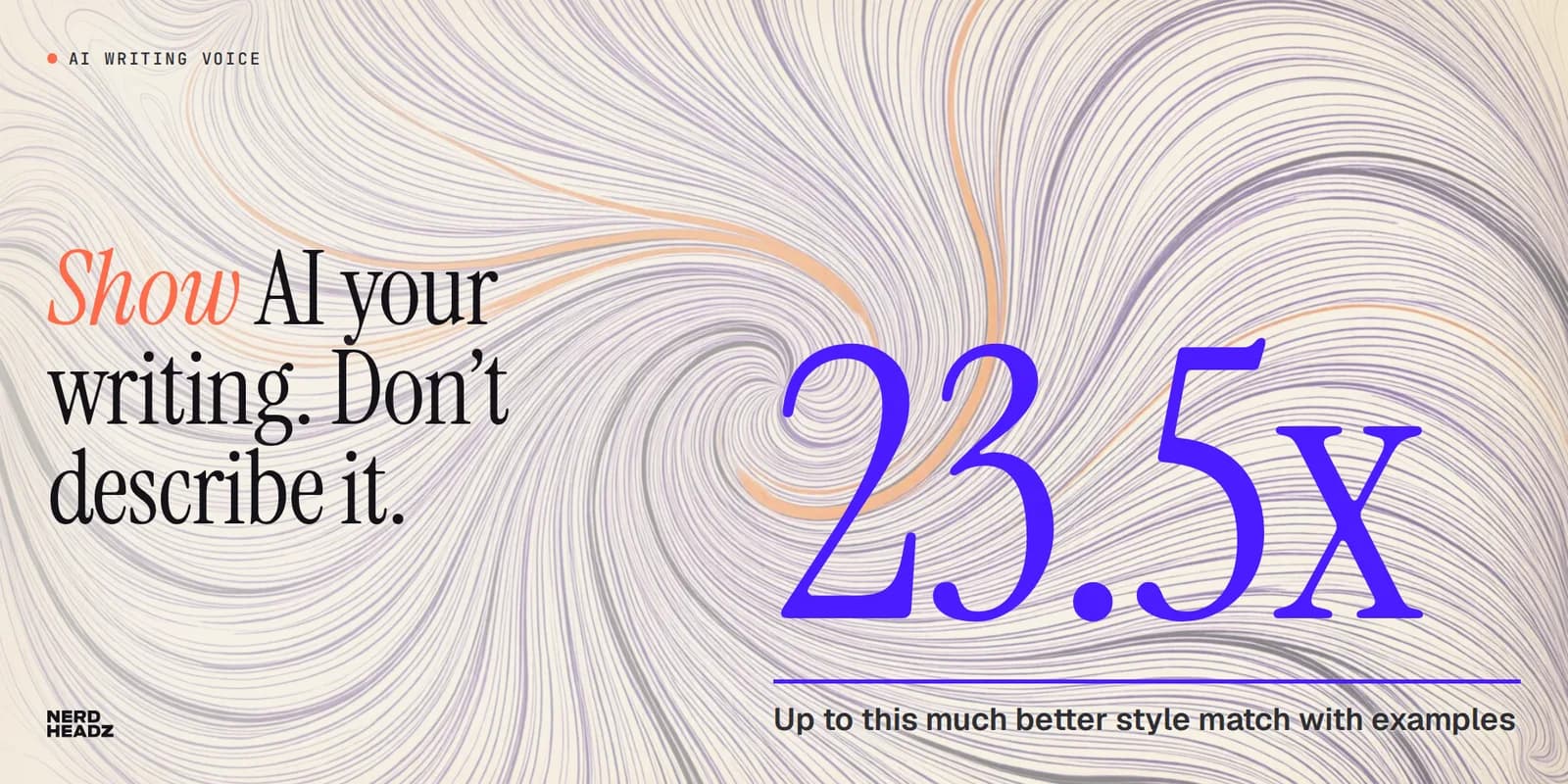
First, examples carry far more information than descriptions. In a 2025 study of open models (Llama, Qwen and Mixtral), few-shot prompts matched an author's style up to 23.5 times better than zero-shot prompts. Anthropic's own documentation for writing skills makes the same point: examples convey style "more clearly than descriptions alone", and its prompting guide recommends three to five of them.
Second, the model's default voice pulls hard. Chat models are tuned to be helpful to everyone, so their natural register is an average: formal, evenly paced, a little inflated. A PNAS study found instruction-tuned models overuse particular grammatical structures compared with human writers, and the gap grows with chat tuning. A huge study of scientific abstracts found words like "delves" and "underscores" surging after ChatGPT arrived. A few adjectives in a prompt rarely overcome that pull. A few pages of your actual writing often do.
There's a popular middle path: paste your articles in and ask the model to write a style guide from them. It's better than adjectives, but a guide like that describes your style without saying how to apply it. It works best as a companion to the examples, not a replacement.
The method: briefs, a judge and a skill
The clever part of the approach is how it creates an answer key. Here's the loop in brief:
- Collect 12–25 of your best pieces in one format, such as LinkedIn posts or blog articles, and lock 3–5 of them away for a final test.
- Have AI reduce each piece to a plain brief: the thesis, the points in order, every fact and quote, and nothing about tone. Now you have the substance without the voice.
- Ask the model to write each piece back up from its brief using your current writing skill. The facts are fixed, so the only difference between the draft and your original is voice.
- Let an AI judge compare your original with two drafts and pick the one that sounds more like you.
- Change one thing in the skill at a time and keep the change only if it wins more comparisons.
- Test the finished skill on the pieces you locked away. That's the only score you should trust.
The "skill" is a reusable package: a short SKILL.md file with a name, a description of when to use it, a few lines of workflow, and a folder of your example pieces. Anthropic created the format and released it as an open standard, and OpenAI's Codex and ChatGPT now read the same structure. A skill costs about 100 tokens of context until a writing task triggers it, so you can keep it installed permanently. The full guide has a template you can copy, plus where to put it in Claude Code, the Claude apps, ChatGPT and Gemini.
The judge is where most people go wrong
Pairwise judging (two drafts, pick one) is far more reliable than asking a model to score a text out of ten. But AI judges have well-documented biases, and ignoring them means optimizing toward noise.
- Position bias. In the well-known MT-Bench study, GPT-4 gave the same verdict after the two answers were swapped only 65% of the time. Older models did far worse. The fix: ask every comparison twice with the order swapped, and count a split as a tie.
- Self-preference. Models recognize their own writing (GPT-4 did 73.5% of the time in one study) and tend to favour it. Use a judge from a different model family than the one drafting.
- Length bias. Judges can be swayed by longer answers. Keep drafts close to the original's length and tell the judge to ignore length.
Before trusting the judge at all, check it against yourself: make 10–20 of the same calls blind and see how often you agree. A judge that doesn't share your ear will quietly optimize you toward its taste.
The surprise: a tuned skill can beat a bigger model

The most interesting claim in Every's write-up is that a writing skill tuned to one model can beat a stronger model running a generic skill. It fits what researchers have seen in style transfer. TinyStyler, a model of about 800 million parameters built for authorship style, reportedly beat GPT-4 at few-shot style transfer, and STEER beat a far larger GPT-3 model while being 226 times smaller. When the job is sounding like a specific person, fit seems to matter more than size.
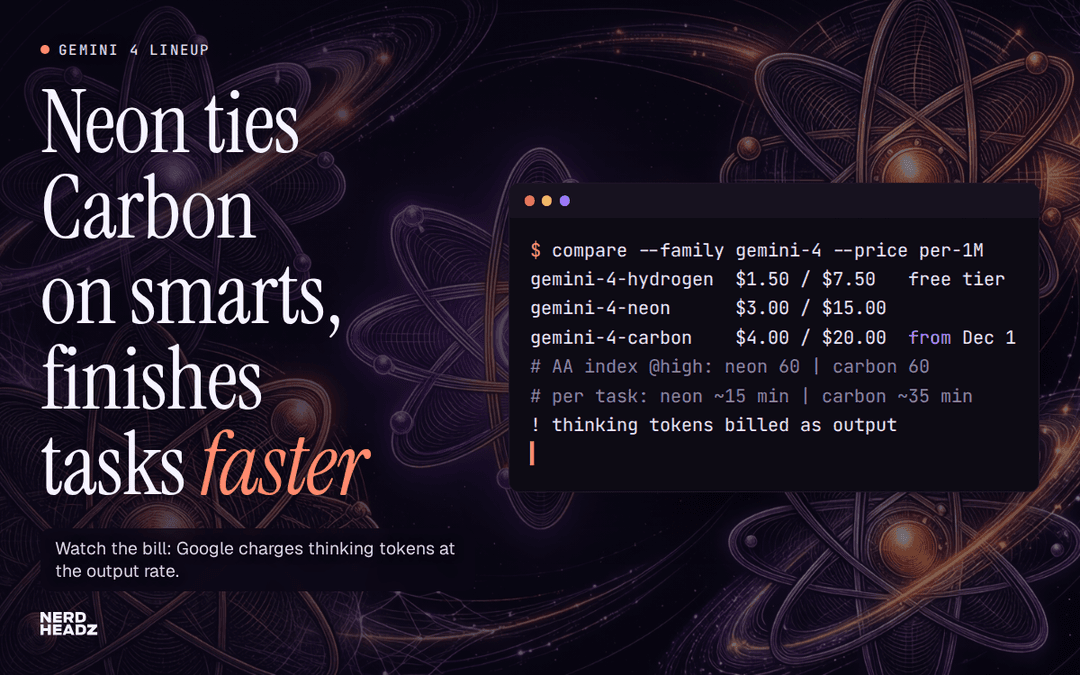
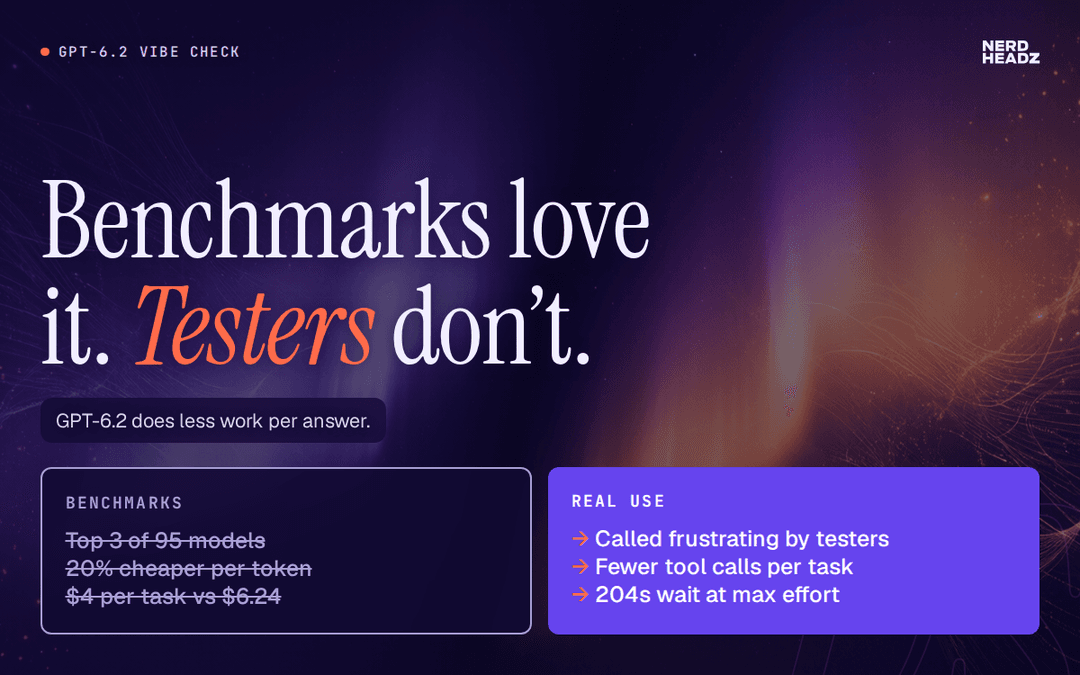
That has a practical upside. If a mid-priced model with your tuned skill wins most comparisons against a frontier model with a generic prompt, you get better drafts for less money. It also means a skill is tied to its model: switch drafting models, and you should rerun the eval before trusting the old skill. Our recent reviews of GPT-6.2 Astra and Sol and Gemini 4 Neon, Hydrogen and Carbon are a good place to pick candidates to test, including free and open-weight ones.
Don't chase "undetectable"
Plenty of advice on this topic promises AI text that slips past detectors. That's the wrong target. OpenAI retired its own AI text classifier in 2023 because it caught only 26% of AI writing and wrongly flagged 9% of human writing, and a Stanford study found detectors flagged, on average, 61% of essays by non-native English speakers as AI-generated. Detectors are a coin toss with a bias.
Readers are a different story. In a 2025 study, a panel of people who use ChatGPT heavily misjudged only 1 of 300 articles, even after the AI text had been run through "humanizer" tools. They weren't counting em dashes. They noticed generic substance: vague claims, tidy structure, nothing surprising. The only reliable way to pass that test is writing that sounds like a particular person and says specific, true things. That's what the method optimizes for.
Two ground rules come with it. The facts must come from you, which the brief-based approach enforces by design. And the voice should be your own, or one you have explicit permission to write in. Disclose AI help wherever your employer, school or platform asks you to.
Where to start this week

You don't need to build the whole loop on day one. A sensible progression:
- Today: pick five of your best pieces in one format and paste three of them into your AI tool as examples before your next writing request. Compare the result with your usual prompt.
- This week: put those examples into a skill, a custom GPT or a Gemini Gem with a short workflow, so you stop pasting them every time.
- This month: build the briefs and the judge, and run your first few optimization rounds. Keep a changelog of every change and its score.
The complete guide walks through each step with the brief prompt, the judge prompt, a SKILL.md template, a minimal Python optimization loop, a stylometry script that shows exactly where a draft's rhythm drifts from yours, an edit checklist of the most common AI tells, and an honest look at when fine-tuning is worth it (rarely, for now).
“Adjectives describe thousands of writers. Your own pieces describe one.”
Describing your voice to an AI gets you a generic voice. Showing it your own writing, packaging that as a reusable skill, and measuring the result with a pairwise judge that runs every comparison both ways gets you drafts that sound like you, and a number that tells you when to stop tweaking. Tune the skill on the model you actually use, test it on pieces it never saw, and keep the facts your own.\n\nReady to build yours? Follow the step-by-step guide to making AI writing sound human, with every prompt and template ready to copy. If you want a voice skill, eval loop and publishing workflow set up for your team, talk to us.
FAQ
Frequently asked questions
How do I make AI write like me?
Show it your writing instead of describing it. Give the model three to five of your own published pieces in the same format as examples, ideally packaged as a reusable skill, custom GPT or Gemini Gem. To make it reliable, have the model rewrite some of your older pieces from plain briefs and use an AI judge to check which version of your instructions sounds most like you.
Why doesn't telling ChatGPT or Claude my writing style work?
Style adjectives like conversational, witty or direct describe thousands of different writers, so they carry very little information. Research on style imitation found few-shot examples matched an author's style up to 23.5 times better than zero-shot prompts, and Anthropic's skill documentation says examples convey style more clearly than descriptions alone.
What is a writing skill in Claude or ChatGPT?
A skill is a folder with a SKILL.md file that holds a name, a description of when to use it and short instructions, plus optional files such as your example pieces. The model loads it only when a matching task comes up. Anthropic created the format as an open standard, and OpenAI's Codex and ChatGPT support the same structure.
Can I make AI writing undetectable?
That is the wrong goal. AI detectors are unreliable: OpenAI retired its own classifier after it caught only 26 percent of AI text and wrongly flagged 9 percent of human text. Experienced human readers are better at spotting AI writing, and they react to generic content, so aim for writing that is specific, true and in your own voice, and disclose AI help where it is required.