In this article05 +
The AI Coworker Model Is No Longer Theoretical
Multi-agent AI systems have moved from research curiosity to production architecture. Anthropic's latest direction with Claude — pairing models together so that one orchestrates, checks, or extends the other — reflects a fundamental shift in how serious AI products are built. Every has been tracking this frontier closely, and the signal is clear: solo models hitting a capability ceiling is no longer a bottleneck you work around. It's a problem you architect out of existence.
At NerdHeadz, we've been building in this direction with clients for months. The most capable AI setups we build today don't rely on a single model — they rely on models that can supervise, delegate, and verify each other. That's the architecture that unlocks real-world utility.
Why Single-Model Pipelines Hit a Wall

A single Claude instance — or any frontier model — is remarkable. But in production, remarkable isn't enough. Long-horizon tasks break down. Context windows fill. Hallucinations compound across steps. One model doing everything is like one engineer handling product, code, QA, and deployment simultaneously. Eventually, something slips.
The fix isn't a bigger model. It's a smarter system. When you pair two Claude instances — one acting as an executor, one acting as a critic or planner — you get a system that catches its own errors before they propagate. That's not a research finding. That's a pattern we use in client work when the stakes of a wrong answer are high.
Our AI agent development work is built almost entirely around this principle: an agent that can verify its own outputs, or hand off to a more specialized sub-agent, consistently outperforms a single-model setup on complex tasks.
The Architecture Behind Duet-Style AI
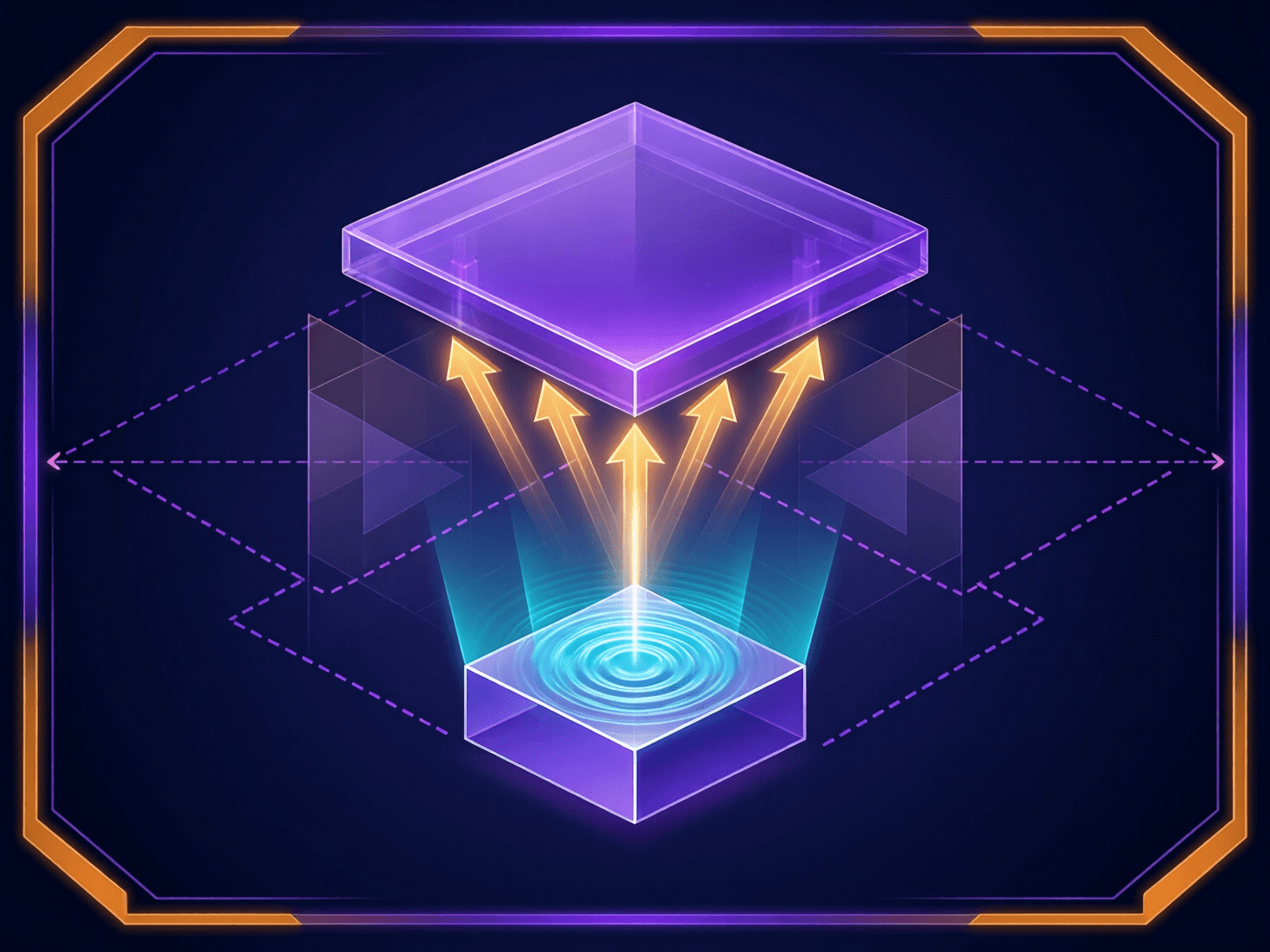
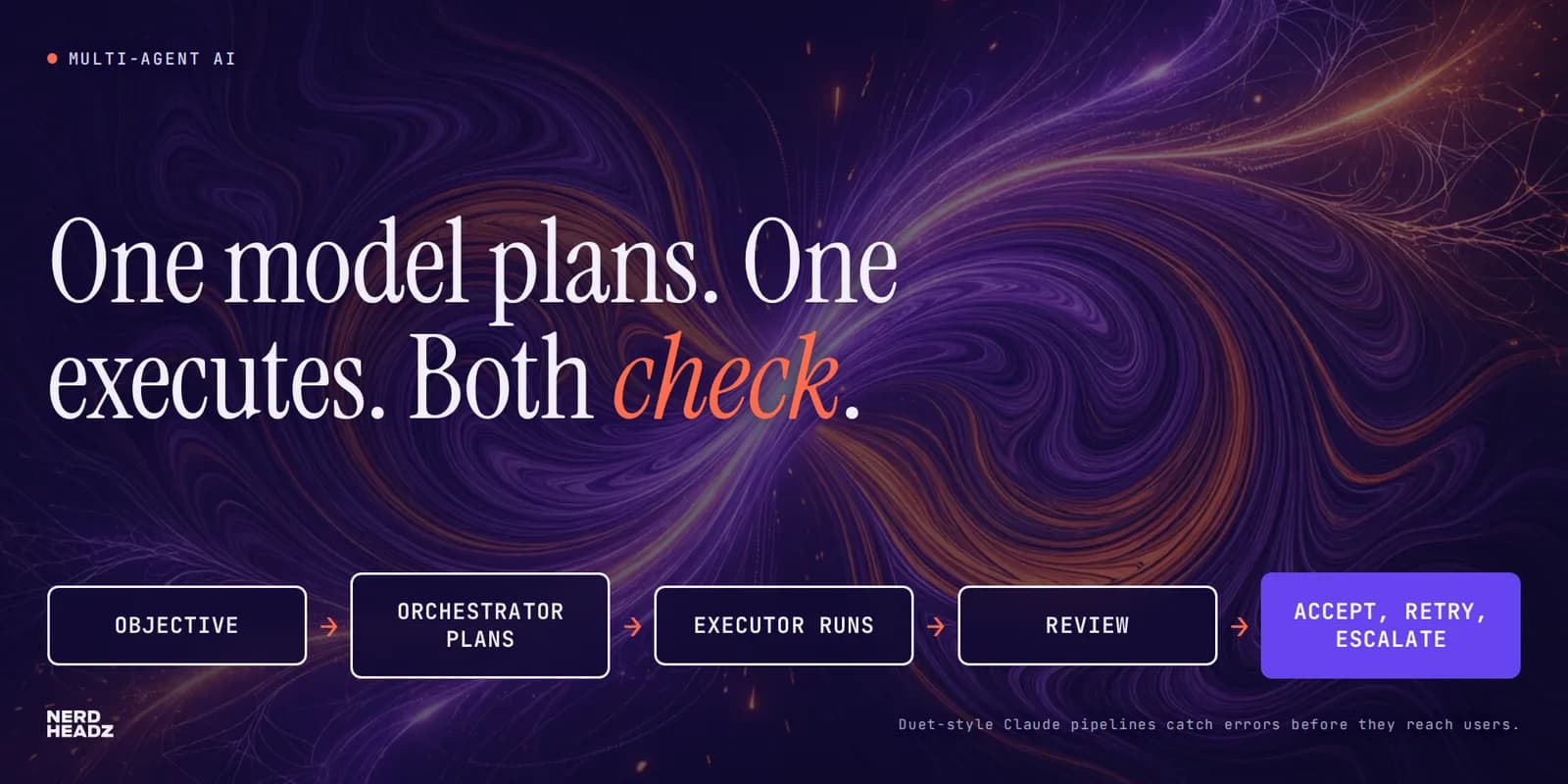
Here's what the orchestrator-executor model actually looks like in practice. One model receives the high-level objective and breaks it into subtasks — sequencing, prioritizing, and handling ambiguity. A second model executes those subtasks, reports back, and flags uncertainty. The orchestrator reviews the outputs and decides whether to accept, retry, or escalate.
This sounds simple. The implementation is not. The prompt contracts between agents need to be precise. Handoff formats matter enormously — a vague response from the executor model creates cascading confusion upstream. And latency compounds: two-model pipelines have real cost and speed tradeoffs that have to be engineered deliberately.
Working on something similar? Talk to our team about your project — we've navigated these tradeoffs across multiple production deployments.
What This Means If You're Building Now
The duet model isn't just for Anthropic's internal research. It's a blueprint for any team shipping AI-powered products. A few practical implications:
Evaluation loops become first-class citizens. When one model grades another's output, you get built-in quality gates without adding human review at every step. Design your pipelines with this in mind from day one, not as an afterthought.
Specialization beats generalization at scale. A model fine-tuned or prompted tightly for a narrow task will outperform a generalist model asked to do everything. Duet architecture lets you exploit that — your orchestrator stays broad, your executor goes deep.
Failure modes change. Single-model systems fail silently. Multi-agent systems can be designed to fail loudly — flagging uncertainty, requesting clarification, or halting rather than producing a confidently wrong answer. That's a significant reliability upgrade for anything customer-facing.
We explored some of the agent infrastructure implications of these shifts in our roundup of long-running agents hitting production — the same architectural pressures apply here.
The Practical Cost of Getting This Wrong
Teams that underestimate multi-agent complexity often build the happy path and ship it. The orchestrator calls the executor. The executor returns an answer. Everything looks fine in testing.
Then a real user sends an ambiguous query. The executor returns a plausible-sounding but wrong answer. The orchestrator accepts it. The product surfaces it with confidence. That's the failure mode nobody demos.
Production-grade AI development services have to account for adversarial inputs, model drift, and edge cases that only appear at scale. Building the duet is step one. Building the duet that degrades gracefully under pressure is the real work.
The teams winning with multi-agent AI right now aren't the ones with the most models. They're the ones who've thought hardest about what happens when the models disagree — and built systems that handle it cleanly.
Ready to build? NerdHeadz ships production AI in weeks, not months. Get a free estimate.
“The most capable AI setups we build today don't rely on a single model — they rely on models that can supervise, delegate, and verify each other.”
Multi-agent AI systems represent the next mandatory layer of production AI architecture — not a future upgrade, but a present-day requirement for anything built to scale. The duet model Anthropic is advancing with Claude gives builders a concrete pattern to work from, but the real competitive advantage comes from implementing it with the operational rigor that real users demand. If you're still shipping single-model pipelines into complex workflows, you're one failure mode away from a trust problem.
FAQ
Frequently asked questions
What is a multi-agent AI system and how does it work?
A multi-agent AI system pairs two or more AI models so that one orchestrates high-level tasks while another executes them. The orchestrating model sequences subtasks, reviews outputs, and handles ambiguity, while the executor model focuses on specific actions and reports back — creating a built-in quality loop that single-model pipelines lack.
Why is Claude being used in multi-agent or duet AI architectures?
Claude's instruction-following precision and strong performance on long-context tasks make it well-suited to both orchestrator and executor roles. Anthropic's multi-agent direction pairs Claude instances so they can supervise, verify, and extend each other's outputs — reducing hallucination compounding and improving reliability on complex, multi-step tasks.
What are the main challenges of building multi-agent AI in production?
The primary challenges are prompt contract precision between agents, latency compounding across model calls, and graceful failure handling. Two-model pipelines introduce new failure modes — particularly when the orchestrator accepts a confidently wrong answer from the executor. Production-grade multi-agent systems must be designed to fail loudly rather than silently.
Spotted via Every