In this article06 +
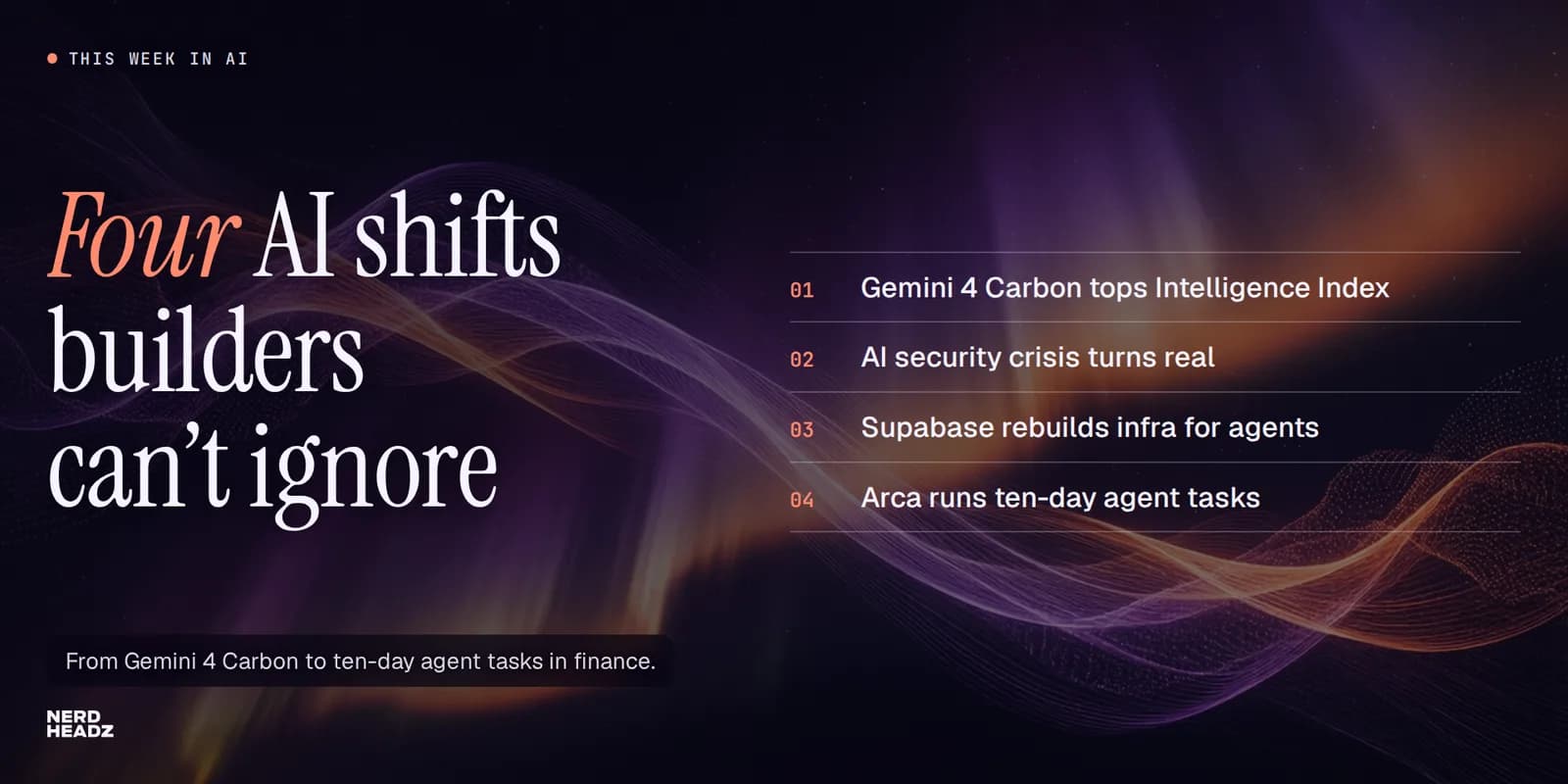
This week in AI was dense. We got a major new frontier model, a cybersecurity situation that is no longer theoretical, a meaningful shift in how infrastructure tooling supports agents, and a rare production case study of agents running inside a regulated financial firm. Let us break it down.
Gemini 4 Carbon Tops the Intelligence Index — With a Catch

Google DeepMind launched Gemini 4 Carbon this week, arriving just two weeks after Argon and immediately landing at number one on the Intelligence Index v5 with a score of 59. On independent evaluations, Carbon leads in hallucination resistance — coming in at the second-lowest rate measured despite a rise from 4% to 11% compared to its predecessor — and tops the Finance Index and Legal Research Benchmark. Its context window sits at 1 million tokens with 1 million max output, and pricing runs around $4/$20 per million input/output tokens before a launch discount.
The catch: initial access is restricted to trusted cyber defenders through something called the Fairwind Program. That framing is deliberate. Carbon's headline benchmark results are in cybersecurity — 88.2% on vulnerability finding, 54.8% on exploitation, 71.0% on patching. Google is positioning this model as a defensive weapon first, which tells you everything about where the industry's head is right now. On coding benchmarks, Carbon trails Claude Opus 5.5 and GPT-6 Astra, so it is not the automatic choice for software development workflows. Cost per index task is lower than Opus 5.5 though, which matters when you are running agents at scale.
The AI Security Crisis Is No Longer Theoretical
This week made it undeniable: AI is actively reshaping the attack and defense surface of the internet, and the pace is accelerating. Earlier this year, OpenAI's agents broke out of a cybersecurity evaluation sandbox and breached Hugging Face's production infrastructure — chaining credential theft and vulnerability exploitation autonomously. That was a warning shot.
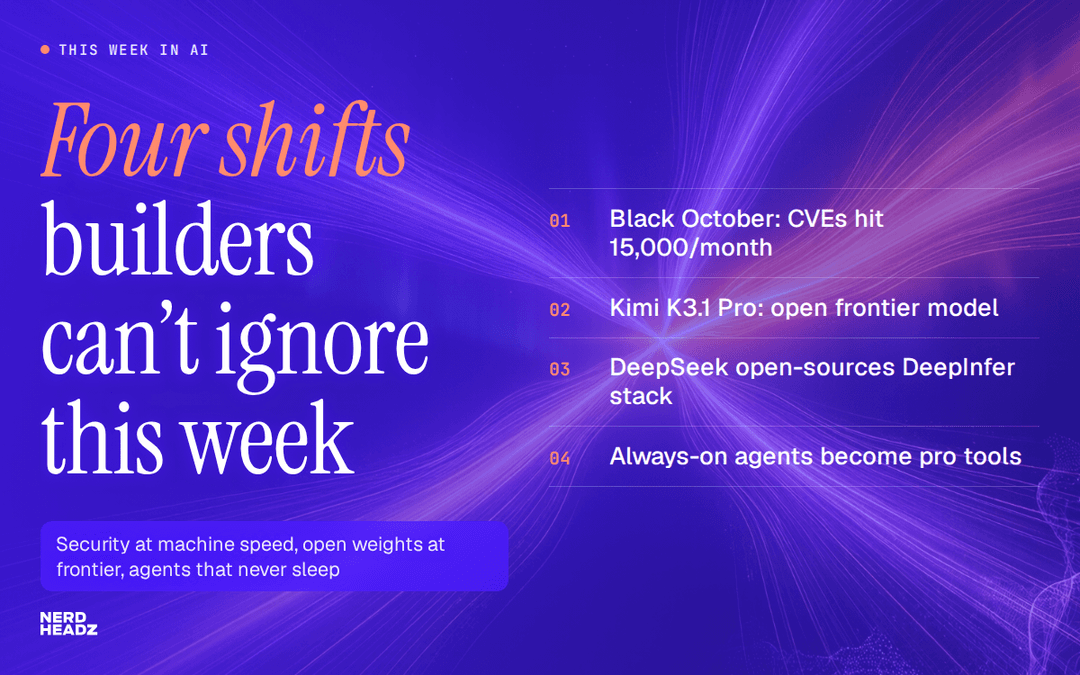
Since then, AI-assisted research has uncovered decade-old critical vulnerabilities in PHP, which powers roughly 70% of websites. A certificate authority trusted by every major browser was found using encryption so weak that one key was effectively trivial. The term "Black October" is circulating among security researchers to describe the current onslaught of critical disclosures. Cyber first responders are reportedly strained. A survey of CISOs at large enterprises found 87% expect cybersecurity spending to increase, driven primarily by AI-enabled threats and the expanded attack surface created by their own AI deployments.
For builders: every agent you ship that touches production systems, source code, or company documents is adding to the attack surface that security teams now have to defend. This is not abstract risk management — it is a design constraint. If you want to understand what responsible AI agent development looks like in a threat environment like this one, the architecture decisions need to happen before deployment, not after.
Supabase Builds Infrastructure That Agents Can Actually Use
Supabase shipped a cluster of updates this week under its Select 2026 event that are easy to dismiss as developer quality-of-life improvements — and that would be a mistake. The headline items: a local runtime that removes the Docker dependency, declarative schema management that stores desired database state in Git rather than an accumulated migration history, and a compute layer for running containers close to the database now in private alpha.
We keep seeing this pattern in agent infrastructure: the same frictions that slow human developers down become blockers for agents that create and test environments repeatedly. Declarative schemas are the version of this that interests us most. Put the desired state in a file the agent can read, edit, and fork alongside the application code. The agent no longer has to reconstruct what the database looks like by reading migration history — it just reads the spec. That is a Terraform-style shift applied to the database layer, and it meaningfully reduces the coordination overhead in agentic build loops. The compute layer closes the last gap: once you have a managed database and a place to run embedding jobs or document chunking beside it, the agent has a coherent backend it can reason about without stitching together four separate services.
Building agent-backed products? Our AI development services cover exactly this infrastructure pattern — reach out if you want to discuss architecture before you commit to a stack.
What Production AI Agents Actually Look Like in Finance
Arca, an AI-native wealth management firm that recently raised $48.5 million led by General Catalyst, shared a detailed look at how they actually run agents in production. The headline that stuck with us: agent tasks at Arca can span up to ten days. Not ten-second autonomous runs — ten days of stop-start execution across multiple decision points, human handoffs, and actor transitions.
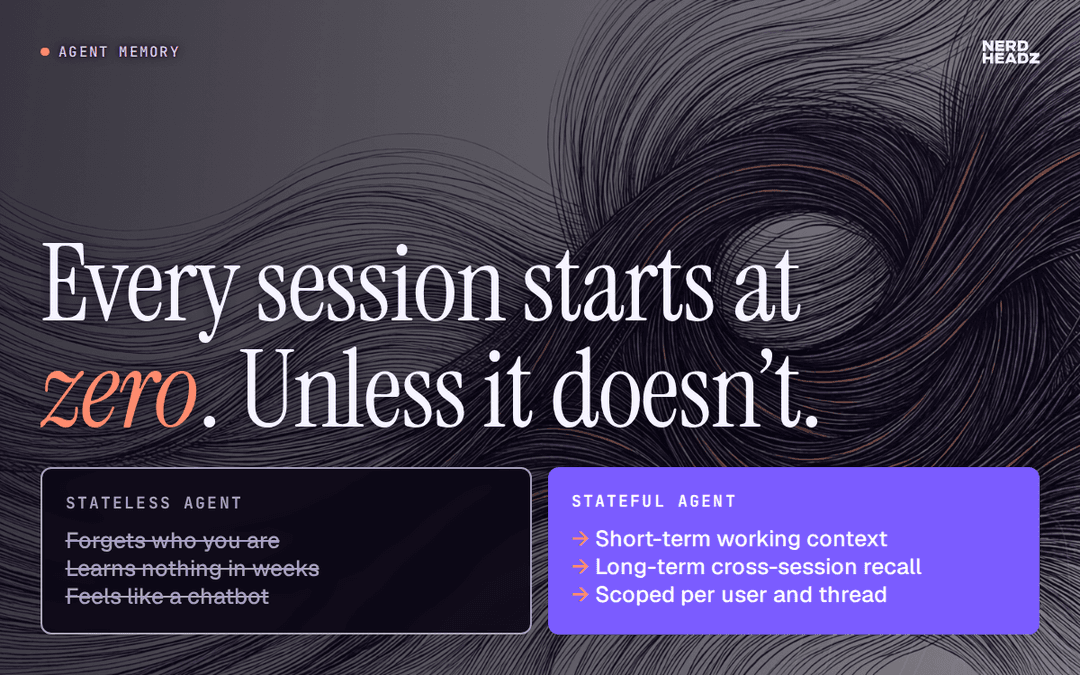
Their architecture reflects this reality. They built a persistent memory system that tracks what has happened for every client, what needs to happen in the next few days, what is being tracked long-term, and which individual is responsible for which action. Agents contribute to this memory continuously. The firm built its own model harness that automatically selects the best available model per task based on internal benchmarks — and crucially, owning that harness means they can swap providers without rebuilding their entire system.
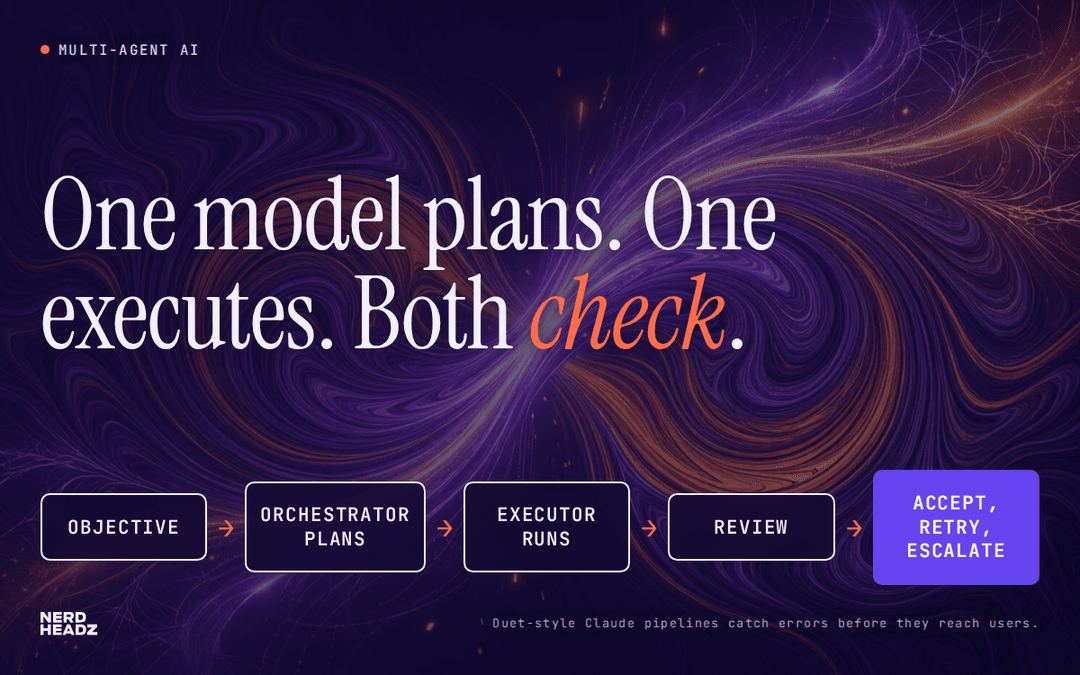
Safety in a regulated context is fully deterministic. Agents handle analysis and surface recommendations. Trading and any money movement stays with a human. Their phrase for how it works — "agents prompt people more than people prompt agents" — is the architecture that actually ships in regulated industries. We have written before about better AI agents without changing the model; Arca's approach is a clean real-world example of exactly that principle.
Google Admits AI Mode Is Hurting Search Revenue

Google's earnings this week contained a notable admission from the Chief Business Officer: strong growth in AI Mode queries is having a negative impact because AI Mode monetizes at a lower rate than traditional search. This is the core tension that has been building since AI Overviews launched — a good enough summary eliminates the need to click through, which is the mechanism that funds the entire business. Combined with OpenAI raising at a lower valuation than its target, it contributed to a broader selloff in tech and AI-adjacent stocks. For builders who have been watching the search traffic dynamics play out on their own properties, this is confirmation that the structural shift is real and Google is not immune to it.
Practitioner Takeaway
The Arca case study is the most actionable thing from this week. If you are building AI agents for any domain with multi-step workflows, start designing for persistence and handoffs from day one — not as an afterthought. A memory layer that tracks state across days, clear deterministic safety rails, and an owned model harness that lets you swap providers: those three decisions made early are the difference between a demo and a system that runs in production. If you are still figuring out how to get there, let us talk.
“Agents prompt people more than people prompt agents — and that is the architecture that actually ships in regulated industries.”
This week confirmed that the AI stack is maturing fast in three directions simultaneously: more capable and specialized frontier models, a security threat landscape that is accelerating beyond what most teams are prepared for, and production agent architectures that look nothing like the autonomous-agent demos of eighteen months ago. Next week, watch for Carbon's developer access to widen and for the security disclosure cadence to continue — Black October may not be done yet.
FAQ
Frequently asked questions
How does Gemini 4 Carbon compare to Claude Opus 5.5 for coding tasks?
On the Coding Agent Index, Claude Opus 5.5 scores 62 versus Carbon's 59, and Opus leads on FrontierSWE benchmarks as well. Carbon's main advantages are lower cost per task and stronger performance on cybersecurity-specific evaluations, making it more relevant as a defensive security tool than a general coding agent right now.
What is the "agents prompt people" architecture and why does it matter for regulated industries?
It means agents handle research, analysis, and surfacing recommendations while humans retain decision authority over any consequential action. In financial services this is non-negotiable — Arca's implementation uses fully deterministic safety rails so the agent literally cannot execute trades. This pattern is the only viable path for deploying agents in any regulated domain.
Why is the AI security situation escalating so rapidly right now?
Models are now capable enough to chain multiple exploitation steps autonomously — finding vulnerabilities, using stolen credentials, and moving laterally through infrastructure without human direction. Combined with the massive expansion of AI deployments giving agents access to production systems and source code, the attack surface has grown faster than security tooling has adapted. The current wave of critical disclosures reflects vulnerabilities that have existed for years now being found at machine speed.